

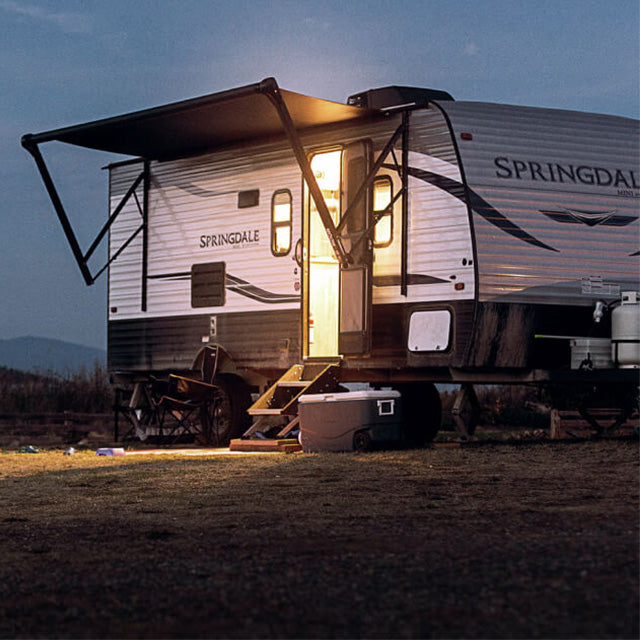

Boondocking — camping in an RV without electrical hookups — is the purest form of the RV lifestyle. No crowded campground, no site fees, no extension cord snaking to a pedestal. Just you, the landscape, and however much power you brought with you.
The appeal is obvious. The challenge is equally clear: when your shore power cord is hanging unused in the basement, every amp-hour in your battery bank is all you have.
Battery Tender® supports RV owners across the full spectrum of camping styles, and this guide addresses the specific power management disciplines that make boondocking trips extend from an uncomfortable 24 hours to a comfortable 5–7 days without a generator.
Understanding Your Boondocking Power Budget
Calculating Your Daily Amp-Hour Consumption
Every boondocking trip begins with an honest amp-hour budget. Add up your daily loads:
| Appliance / Load | Typical Draw |
|---|---|
| 12V LED lighting (4 fixtures, 3 hrs) | 12 Ah/day |
| Refrigerator (12V/propane) | 20–40 Ah/day depending on type |
| Water pump | 3–5 Ah/day |
| Furnace fan (propane heat) | 8–12 Ah/day |
| Smartphone/device charging (2 devices) | 3–5 Ah/day |
| Roof vent fan | 6–12 Ah/day |
| TV / entertainment (2 hrs) | 10–20 Ah/day |
| CPAP machine (without heat) | 20–30 Ah/night |
| Inverter loads (coffee maker 15 min) | 15–25 Ah per use |
Total these for your typical day and you have your daily consumption. A modest setup might use 50–80 Ah/day; a full-comfort camper with refrigerator, entertainment, and CPAP might use 100–150 Ah/day. This number drives your battery bank sizing decision.
Battery Bank Sizing for Boondocking
Lead-acid batteries — the most common in factory RV installations — should not be discharged below 50% of their rated capacity regularly. Doing so dramatically accelerates plate degradation and shortens service life. This means a 200 Ah battery bank provides only 100 Ah of usable capacity for boondocking purposes. To use 80 Ah per day safely, you need at minimum a 160 Ah bank, and 200 Ah provides comfortable headroom.
For a 3–4 day boondocking trip at 80 Ah/day without any solar input, you need 240–320 Ah of usable capacity — which means 480–640 Ah of total lead-acid battery capacity, accounting for the 50% depth of discharge limit. This is why serious boondockers often run large battery banks and/or upgrade to lithium batteries, which can be discharged to 80–90% without the same damage concerns.
Integrating Solar Charging for Boondocking
Solar is the boondocking power source that changes the math entirely. An adequate solar array can replenish daily consumption without running a generator, extending trips indefinitely in sunny conditions. The key is matching solar production to daily consumption.
A rule of thumb: 100 watts of solar produces approximately 30–40 Ah per day in average sun conditions. For an 80 Ah/day consumption target, 200–300 watts of solar provides comfortable replenishment with good sun exposure.
Solar Chargers and Controllers from Battery Tender
The Battery Tender solar lineup provides portable and mountable options for RV integration. The 17W Mountable Solar Charger (SKU: 021-1173) provides a starting point for maintaining battery charge during extended parking — sufficient for low-load setups where the RV is parked for extended periods with minimal use. The 35W Mountable Solar Charger (SKU: 021-1174) scales up for higher-consumption applications.
For serious boondocking with larger battery banks, pairing the solar panels with a Battery Tender solar charge controller optimizes charging efficiency. View solar options at BatteryTender.com.
MPPT vs. PWM Controllers
Maximum Power Point Tracking (MPPT) controllers extract 15–30% more energy from solar panels than simpler PWM (Pulse Width Modulation) controllers, especially in partial shade or when panel voltage is significantly higher than battery voltage. For a large RV solar installation, an MPPT controller's higher efficiency typically justifies its premium cost over a PWM unit.
Managing Your Battery Bank While Boondocking
The 50% Rule: Know Your State of Charge
Monitoring battery voltage tells you state of charge for lead-acid batteries:
| Battery Voltage (resting) | Approximate State of Charge |
|---|---|
| 12.7V or higher | 100% — fully charged |
| 12.5V | 75% — good condition |
| 12.4V | 50% — recharge soon |
| 12.2V | 25% — low, recharge immediately |
| 12.0V or below | Critical — immediate charging needed |
The 12.4V mark is your boondocking management threshold — when resting voltage drops to this level, it is time to run a generator, drive to a hookup site for a charge, or reduce consumption until solar production catches up.
Load Management Strategies
- Run high-draw appliances (inverter, coffee maker, microwave) during peak solar hours when solar is actively replenishing the bank.
- Schedule battery-heavy tasks for midday when solar production peaks.
- Reduce lighting loads after sunset — LED lighting is the easiest win for extending battery life.
- Pre-cool the refrigerator before disconnecting from shore power at the start of a trip — the battery load to maintain temperature is far lower than bringing a warm fridge to temperature.
- Use propane for cooking and heating wherever possible — propane is far more energy-dense than batteries for heat applications.
Recharging Your RV House Bank at Home
When the boondocking trip ends and the RV comes home, fully recharging the house bank before the next trip is essential. Driving the RV home does some charging through the alternator, but most RV chassis alternators are not designed to fully recharge a large house bank efficiently — it could take many hours of highway driving, and the house bank charge controller may not operate optimally from the alternator source.
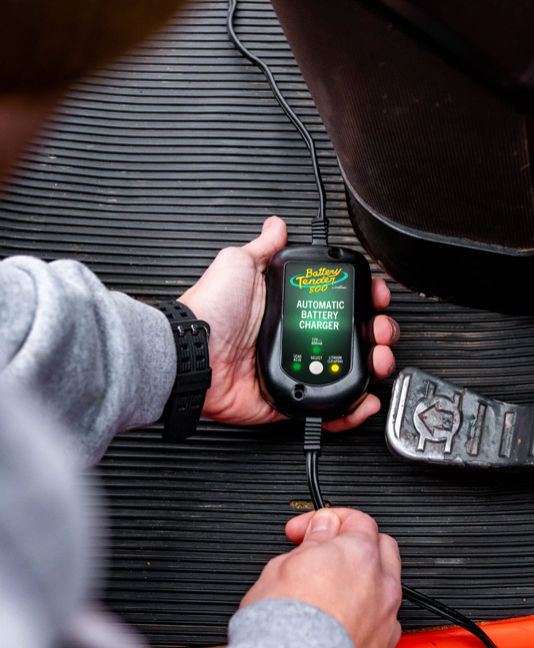
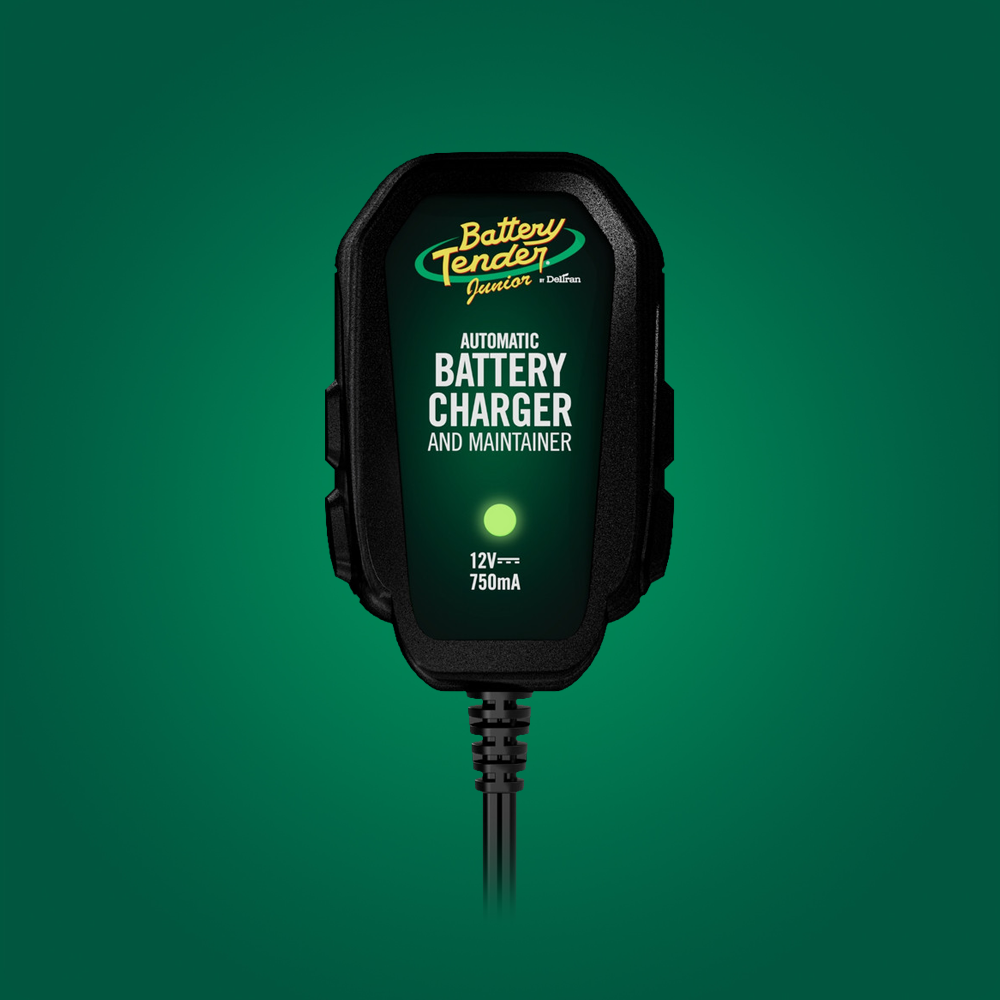
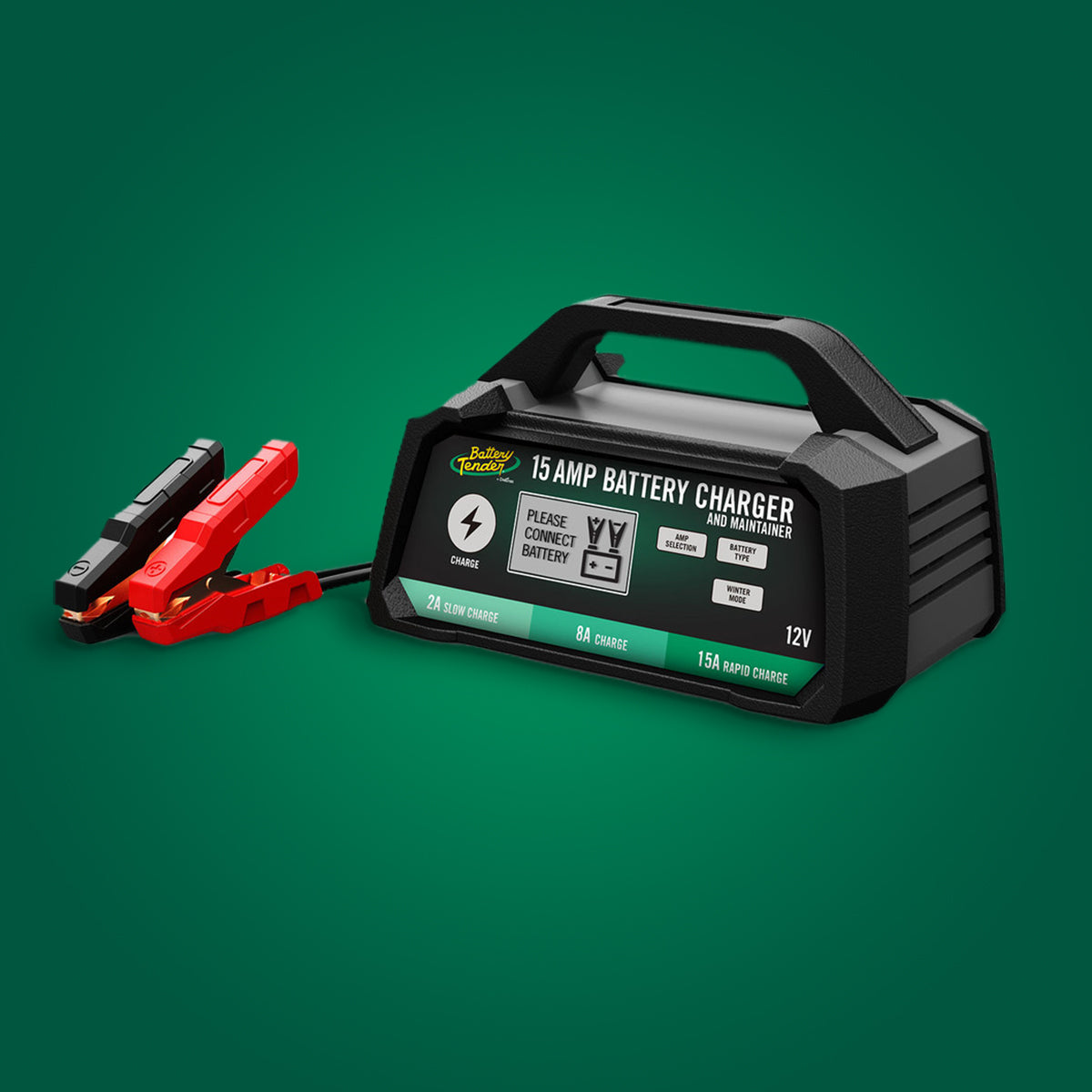
The correct approach is connecting a dedicated smart charger to the house bank when the RV is parked at home. The Battery Tender 8 AMP / 2 AMP Power Tender handles most RV house bank configurations and provides a complete ISM charge cycle that restores full capacity.
Shop the 8 AMP / 2 AMP Power Tender Selectable (SKU: 022-1005-DL-WH) for RV house bank charging between trips.
For RVs stored between trips, connecting a maintenance charger prevents sulfation during the days or weeks between outings — protecting the battery investment and ensuring the next trip starts with a full bank.
Frequently Asked Questions
How long will my RV battery last boondocking?
With 200 Ah total capacity (100 Ah usable), a modest 50 Ah/day consumption yields approximately 2 days of boondocking. A comfortable 100 Ah/day setup needs 300+ Ah total capacity for 3 days, or solar integration to extend indefinitely.
Can I upgrade my RV battery bank for longer boondocking?
Yes — adding additional batteries in parallel increases amp-hour capacity. Ensure all batteries in a parallel bank are the same type, age, and state of charge before paralleling. Lithium battery upgrades provide 2x the usable capacity in the same physical footprint.
Is a generator necessary for boondocking?
Not necessarily — with adequate solar and battery capacity, comfortable multi-day boondocking is achievable without generator use. A generator provides a backup for consecutive cloudy days or high-consumption periods. Many experienced boondockers use a generator only when solar cannot keep up, which is infrequently in sunny regions.
How does cold weather affect RV boondocking?
Cold temperatures reduce battery capacity (a battery at 32°F has approximately 80% of its capacity at 80°F) while simultaneously increasing heating loads. Both factors reduce effective boondocking duration in cold weather. Insulating battery boxes and keeping batteries as warm as practical helps maintain capacity.
Conclusion
Successful boondocking is fundamentally a power management discipline. Know your daily consumption, size your battery bank accordingly, integrate solar where possible, and manage loads intelligently throughout the day. The RVers who boondock most successfully treat their battery bank with the same respect a sailor gives to water and food supplies on a long passage — it is a finite resource that determines how long and how comfortably the adventure lasts.
Explore Battery Tender charging solutions for RV and outdoor applications to support your boondocking lifestyle.