

How to Jump Start a Completely Dead Battery: Expert Guide for Full Recovery
Few vehicle problems are as instantly disorienting as a completely dead battery. You turn the key and nothing happens — no cranking, no dashboard lights, no dome light, complete silence. Learning how to jump start a completely dead battery correctly is one of the most valuable skills any driver can have, but doing it safely requires more than just connecting two cables and hoping for the best. This guide covers the full process: what actually happens inside a battery when it dies completely, how to execute a safe and effective jump start using a modern portable jump starter, what to do after the engine starts, and how to determine whether your battery is truly recoverable or has suffered permanent damage.
What Actually Happens Inside a Completely Dead Battery
To jump start a completely dead battery effectively, it helps to understand what you are working with at the chemical level. A standard 12V lead-acid battery — the type found in the vast majority of passenger vehicles — stores energy through a reversible electrochemical reaction between lead plates and sulfuric acid electrolyte. When the battery discharges normally, lead sulfate crystals form on the plates. Under normal use and regular charging, those crystals dissolve back into the electrolyte, and the cycle repeats thousands of times over the battery's service life.
When a battery goes completely dead — dropping to near-zero voltage and staying there — those lead sulfate crystals harden and grow into dense deposits that resist normal charging. This process is called sulfation, and its severity depends almost entirely on how long the battery has been sitting in a deeply discharged state. A battery dead for fewer than 48 hours typically retains enough reversible sulfation that a proper charge cycle can restore close to its original capacity. A battery that has been dead for one to four weeks may recover 60 to 80 percent of its capacity with the right charger. A battery that has sat at near-zero voltage for more than a month has almost certainly suffered permanent capacity loss, and no amount of charging or jump starting will restore it to reliable service.
Understanding this timeline is critical because it determines your recovery strategy after the jump start succeeds.
Safety Checks Before You Jump Start a Completely Dead Battery
Rushing a jump start without completing a few basic safety checks can turn a minor inconvenience into a dangerous situation. Before connecting any equipment, confirm the following:
- Inspect the battery visually. Look for cracks, bulging case sides, leaking electrolyte, or heavy corrosion on the terminals. A physically damaged or frozen battery should never be jump started. Attempting to do so can cause the battery to rupture or, in rare cases, ignite hydrogen gas that accumulates around a deeply discharged battery.
- Check for freezing. A completely discharged battery has a much higher freezing point than a fully charged one. If the vehicle has been sitting in sub-freezing temperatures and the battery has been dead for any period of time, the electrolyte may be frozen. Jump starting a frozen battery can cause it to crack or explode.
- Confirm your jump starter is fully charged. A portable jump starter that is itself low on charge may not deliver enough current to start a vehicle with a completely dead battery. Always store your jump starter at full charge and check its charge level before relying on it.
- Clear the area around the battery. Remove any flammable materials and ensure both vehicles — or the vehicle and jump starter — are in a well-ventilated area.
Step-by-Step: How to Jump Start a Completely Dead Battery with a Portable Jump Starter
Portable lithium jump starters have largely replaced the traditional two-vehicle cable method for good reason. They are faster, safer, require no second vehicle, and deliver consistent, controlled current that is far less likely to damage modern vehicle electronics. Here is the correct procedure:
- Verify the jump starter charge level. Power on the unit and confirm the charge indicator shows a full or near-full charge. Do not attempt to jump start a completely dead battery with a jump starter that is below 50 percent charge — you may not have enough reserve current to complete a successful start.
- Connect the red positive clamp first. Attach the red clamp securely to the positive terminal of the dead battery. The positive terminal is typically marked with a plus sign (+) and often has a red cover or cable attached. Ensure firm metal-to-metal contact.
- Connect the black negative clamp to a ground point — not the battery. This is the step most drivers get wrong. Do not connect the black clamp to the negative battery terminal on a completely dead battery. Instead, connect it to a clean, unpainted metal surface on the engine block or chassis, at least 18 inches away from the battery. This reduces the risk of igniting any hydrogen gas that may have accumulated around the deeply discharged battery.
- Allow the jump starter to pre-charge the battery briefly. With a completely dead battery, wait 60 to 90 seconds after connecting the clamps before attempting to start the engine. This allows the jump starter to transfer a small amount of charge into the dead battery, which helps the vehicle's starter motor perform more effectively.
- Attempt to start the engine. Turn the key to the Start position or press the start button. If the engine does not start within 3 to 5 seconds, stop and wait 2 minutes before trying again. Repeated long cranking attempts will overheat the starter motor and drain the jump starter rapidly.
- Disconnect in reverse order once the engine starts. Remove the black negative clamp first, then the red positive clamp. Keep the engine running throughout the disconnection process.
- Do not immediately turn the engine off. Drive the vehicle for a minimum of 30 minutes at highway speeds to allow the alternator to begin recharging the battery. Understand, however, that alternator charging alone is not sufficient to fully recover a deeply discharged battery — a dedicated charger is essential for complete recovery.
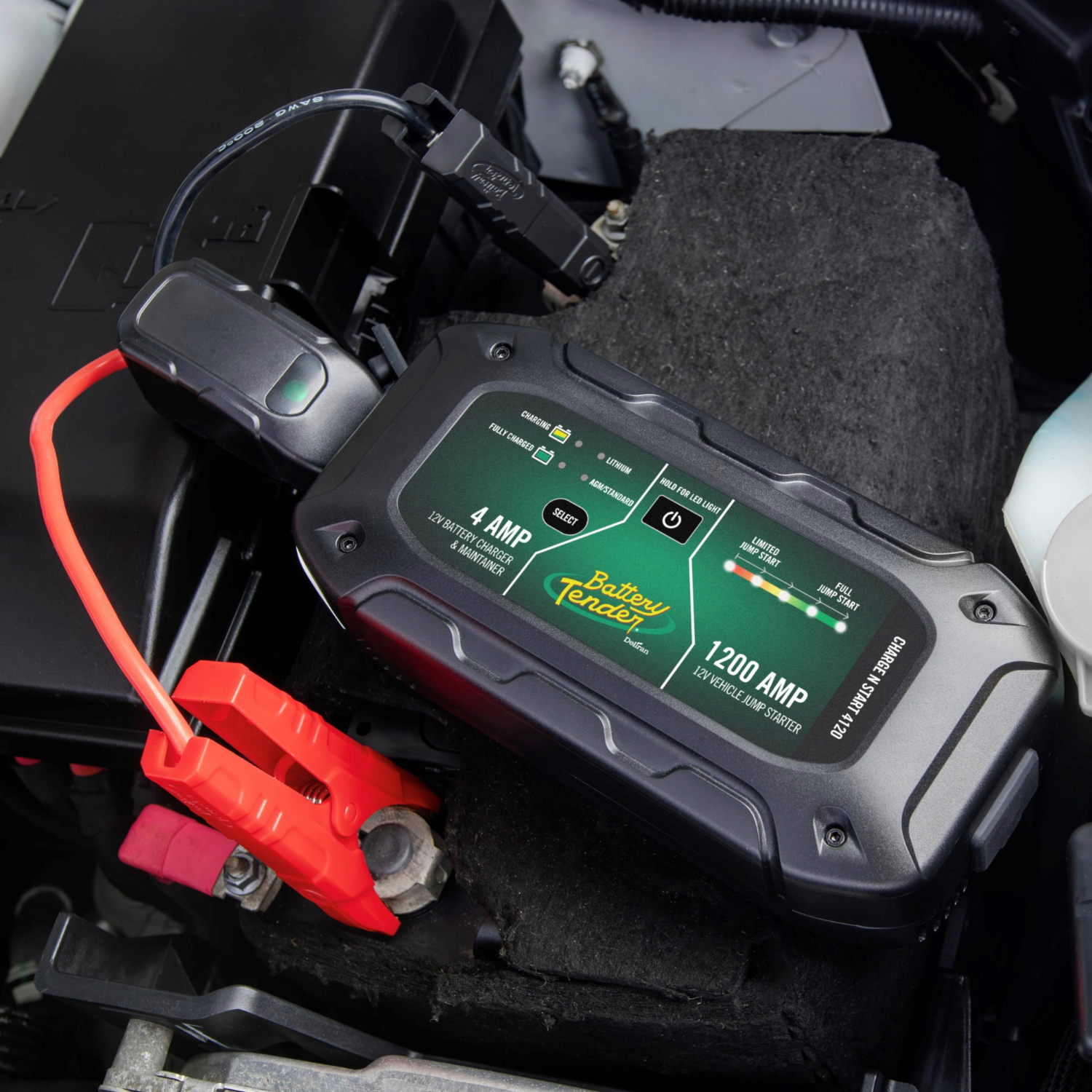
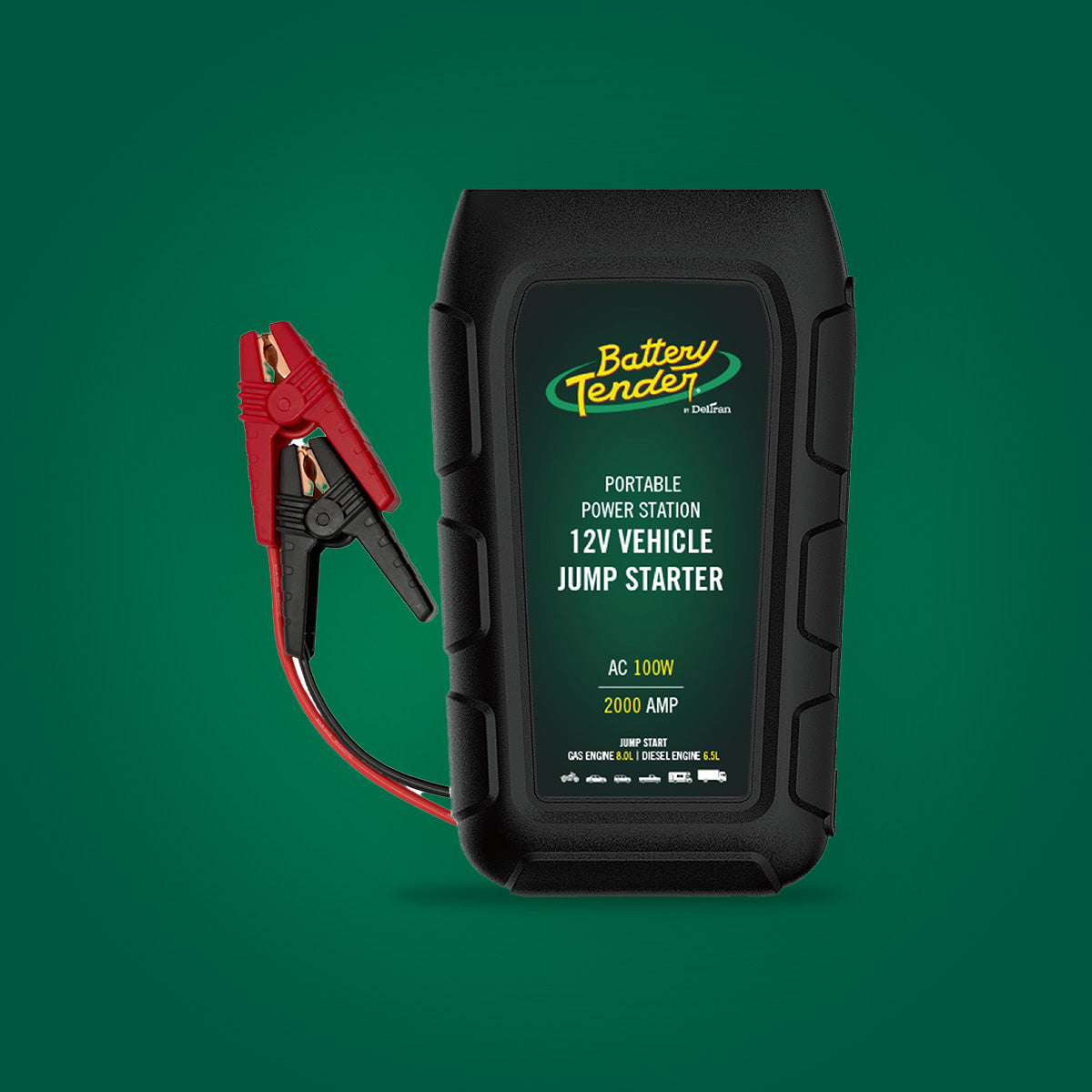
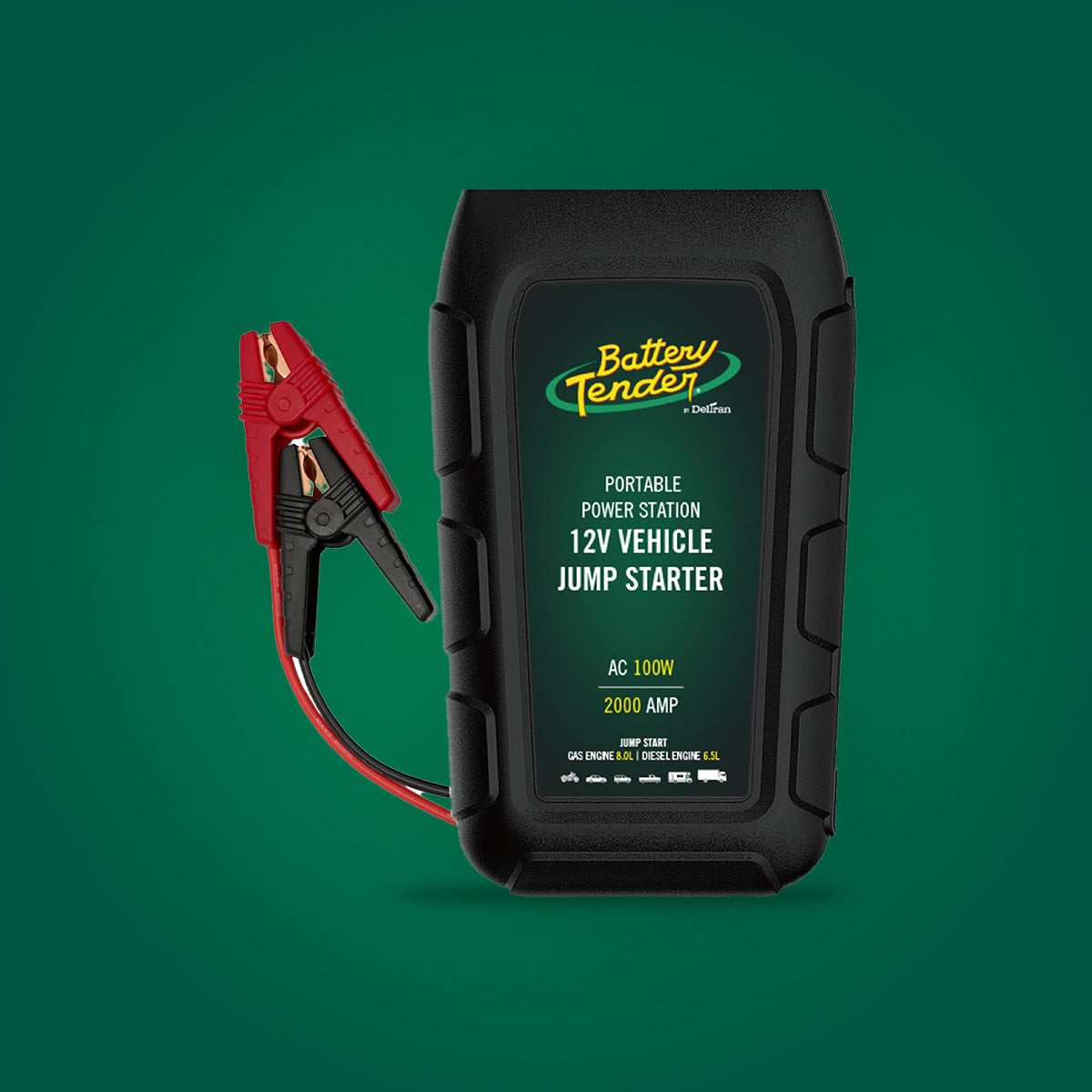
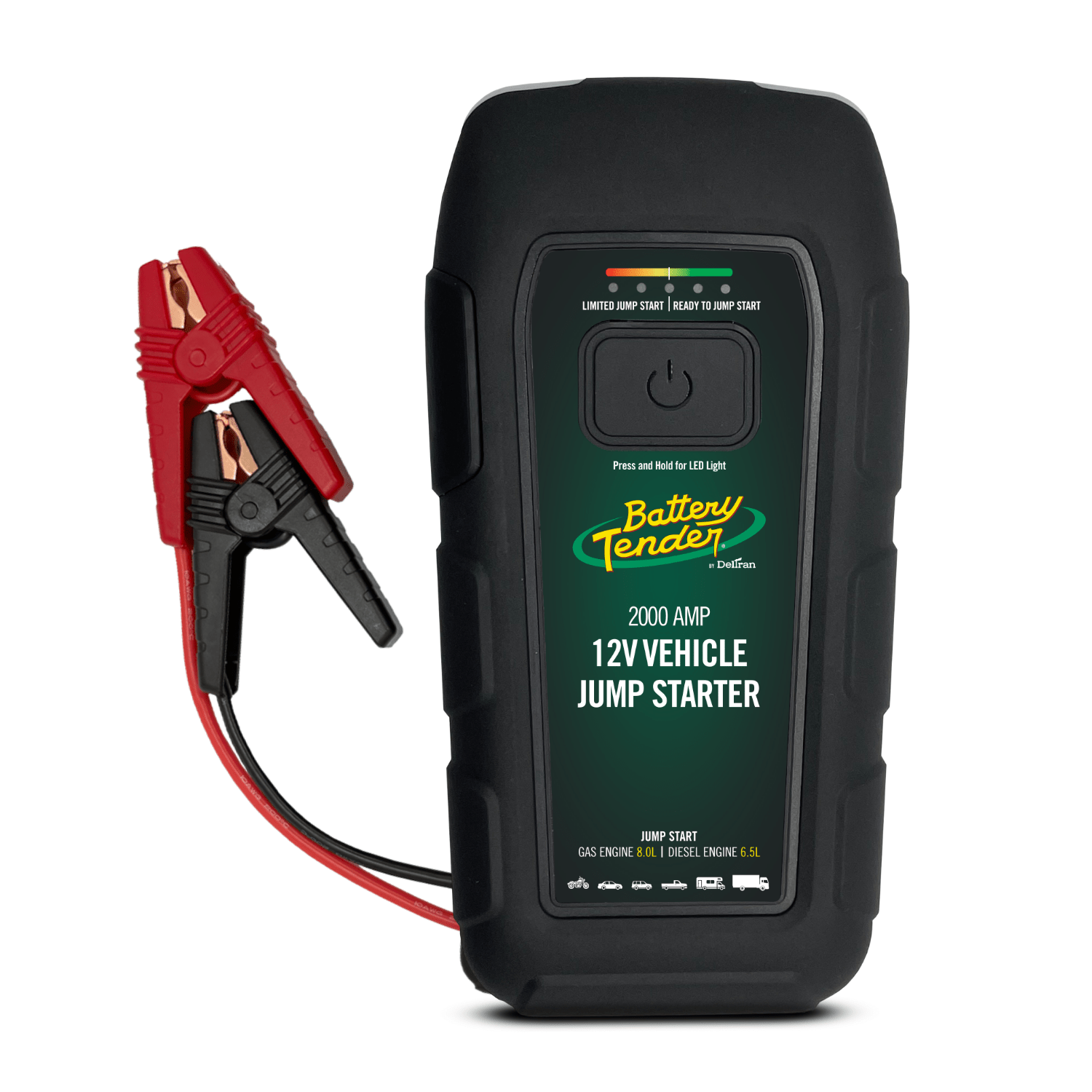
For reliable starting power across a wide range of vehicles, the Battery Tender® 1500 Amp Jump Starter delivers peak current capable of starting engines up to 7.0L gasoline and 5.5L diesel, with up to 40 jump starts per charge from its 12,000 mAh lithium battery. Its built-in safety protections prevent reverse polarity, overcharge, and short circuit events, making it appropriate for use on vehicles with sensitive electronics.
When a Jump Start Will Not Solve the Problem
A jump start addresses the symptom — a battery without enough charge to start the engine — but it does not diagnose or repair the underlying cause. There are several situations where a successful jump start will only provide temporary relief:
- Dead cell in the battery. A battery with one or more failed internal cells will accept a jump start and may even start the engine, but the vehicle's charging system cannot maintain a battery with a dead cell. The battery will typically die again within hours or even minutes of the jump start. If this pattern repeats, battery replacement is the only solution.
- Faulty alternator. If the alternator that charges the battery while the engine runs has failed, the battery will drain while driving and die again. After a jump start, watch for the battery warning light on the dashboard — if it illuminates with the engine running, the alternator should be tested immediately.
- Parasitic drain. An electrical component that remains active when the vehicle is off — a short circuit, a trunk light that does not turn off, an aftermarket accessory improperly wired — will drain even a fully charged battery over time. Resolving a parasitic drain requires diagnosis with a multimeter and may require professional service.
- Severely sulfated battery. As described earlier, a battery that has been completely dead for an extended period may not hold enough charge to be useful even after a successful jump start and a full charge cycle. If a battery tests below 50 percent capacity after a complete charge, replacement is the practical choice.
Post-Jump Battery Recovery: Why the Alternator Is Not Enough
Many drivers believe that driving the vehicle after a jump start is sufficient to fully recharge a dead battery. This is one of the most persistent and damaging misconceptions in automotive maintenance. A vehicle alternator is designed to maintain a battery that is already at or near full charge — it is not designed to recover a deeply discharged battery. Charging a completely dead battery through the alternator alone puts excessive strain on the alternator, can overheat it, and typically results in only a partial recharge that leaves the battery vulnerable to another complete discharge.
The correct approach after jump starting a completely dead battery is to connect the battery to a dedicated smart charger that uses an Intelligent System Management (ISM) charge algorithm. ISM charging varies voltage and current based on the battery's real-time state, applying a reconditioning phase that helps break down sulfation deposits and restore usable plate surface area. This is a fundamentally different process than what an alternator provides.
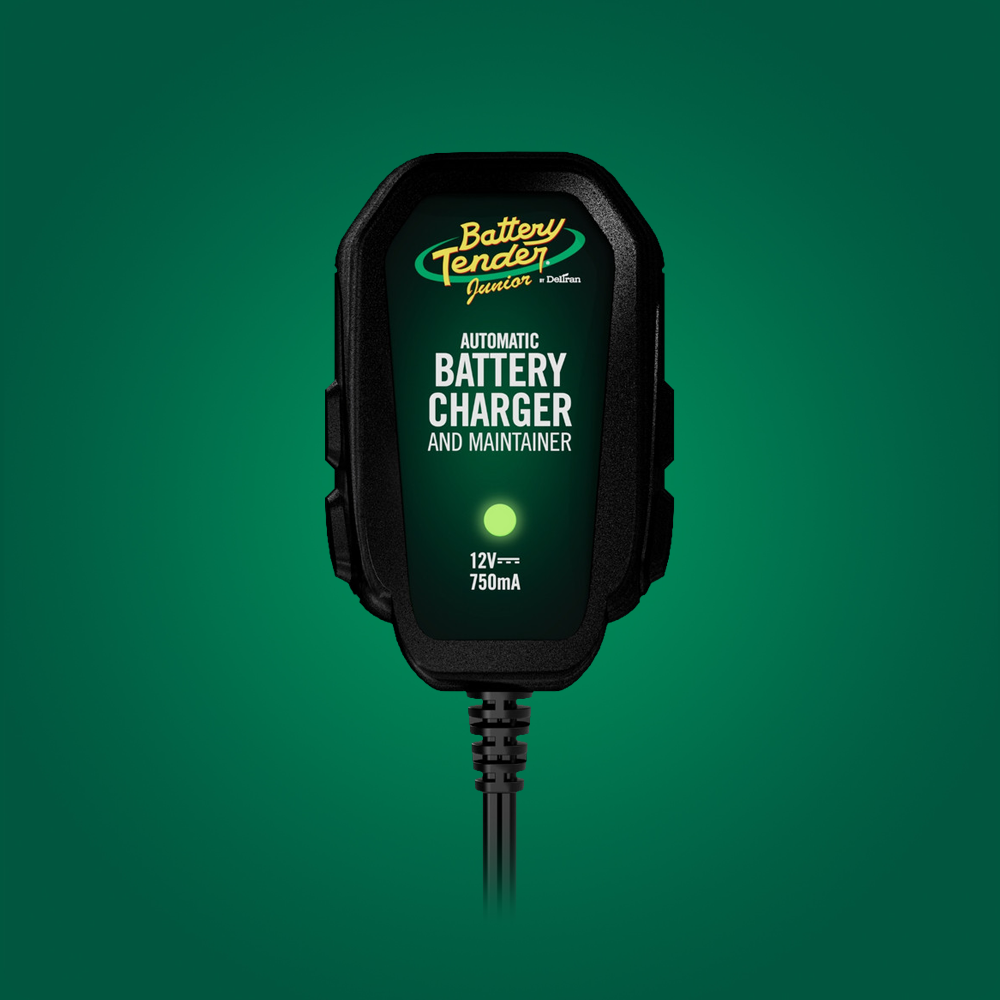
The Battery Tender® Junior 12V Charger and Maintainer is an accessible and effective option for post-jump recovery. Its automatic multi-stage charging profile safely recovers deeply discharged batteries and transitions to float maintenance once full charge is achieved, ensuring the battery is never overcharged.
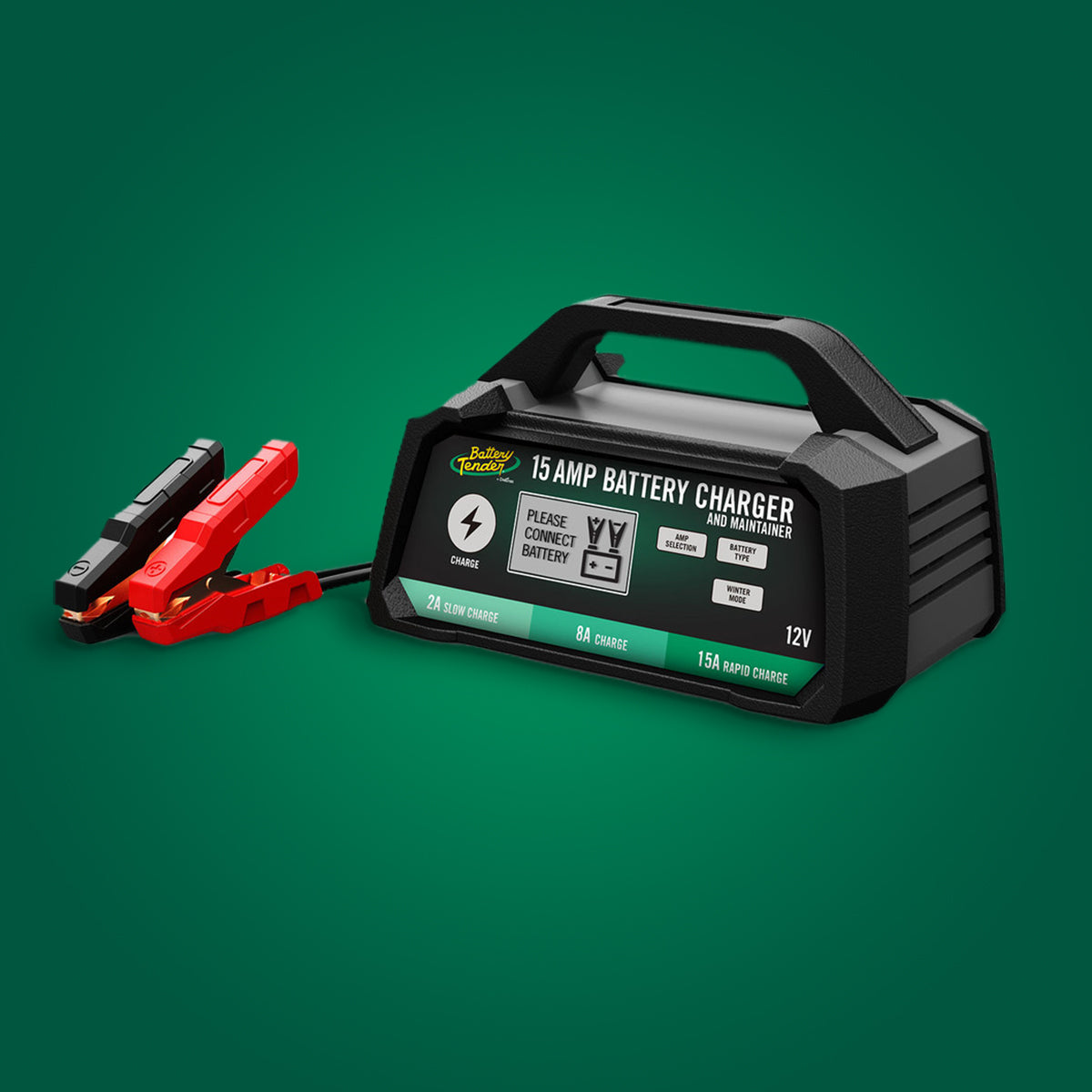
For heavier-duty applications or larger batteries, the Battery Tender® Plus 12V 1.25 Amp Charger provides a higher charge rate with the same ISM intelligence, making it well suited for trucks, SUVs, and performance vehicles with larger battery capacity requirements.
The Combined Solution: Prevention and Instant Recovery in One Unit
The most effective approach to managing a completely dead battery is to prevent it from happening in the first place. For drivers who experience repeated battery deaths — due to infrequent use, seasonal storage, or short-trip driving patterns that prevent full alternator charging — a device that combines ongoing maintenance charging with on-demand jump starting capability eliminates the need to choose between the two.
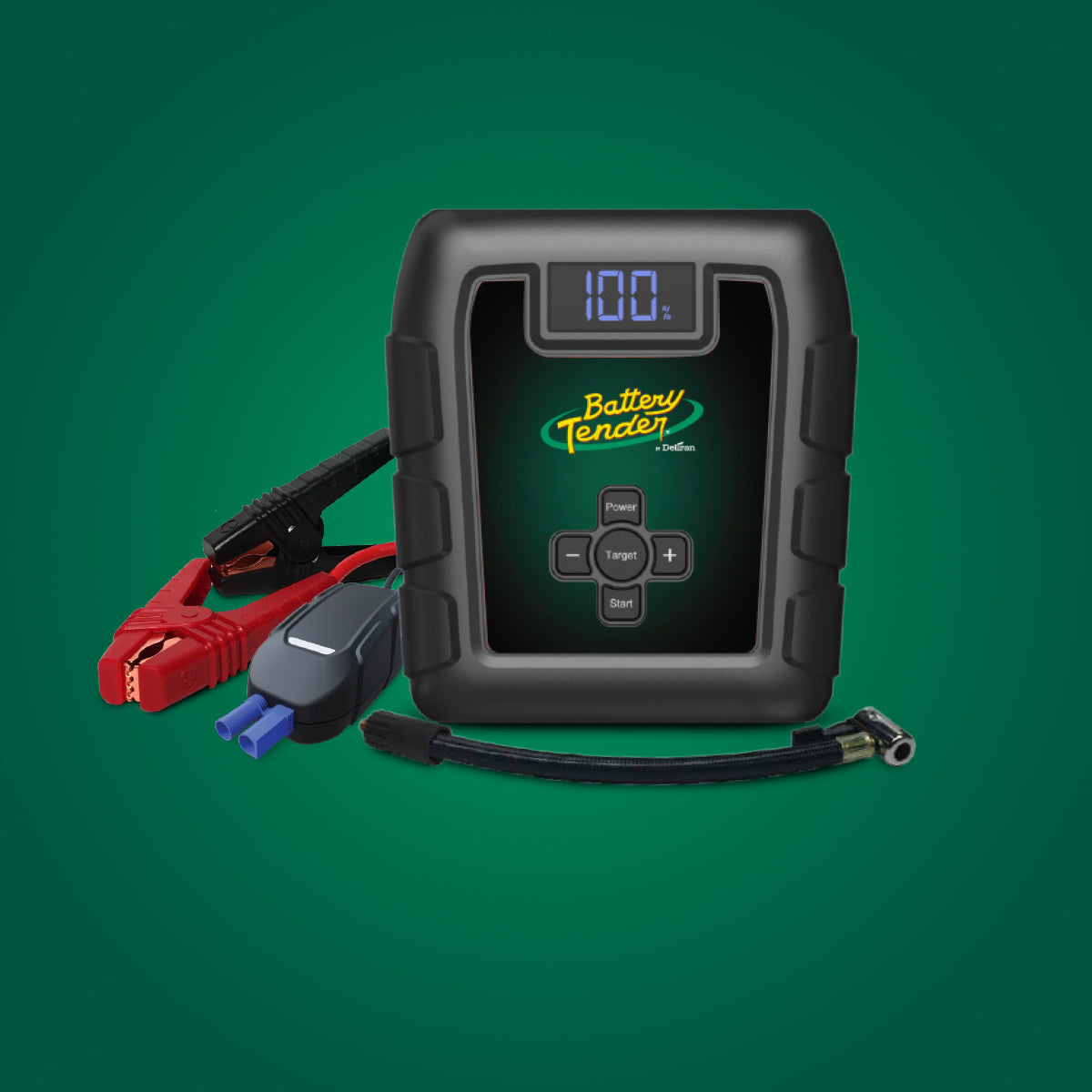
The Battery Tender® Charge N Start 1100 integrates a 1A ISM charger with a 1,000A jump-start pack in a single unit. When connected to a vehicle in storage or light use, it continuously monitors and maintains the battery, preventing the self-discharge cycle that leads to sulfation and complete discharge. If the battery does reach a dead state, the built-in jump-start pack provides immediate recovery, after which the ISM charger automatically resumes maintenance charging. This eliminates the gap between jump starting and recovery charging that allows re-sulfation to occur.
How to Test Your Battery After a Jump Start
Once the battery has been fully recharged following a jump start, testing it before returning the vehicle to normal service is strongly recommended. A battery that appears fully charged may still have significantly reduced capacity due to sulfation damage. The most accurate method is a load test performed with a battery tester, which measures the battery's ability to deliver rated current under load — the condition that matters when starting an engine.
Many auto parts retailers offer free battery testing. As a quick field check, a resting voltage of 12.6V or higher indicates a fully charged 12V battery, while a resting voltage below 12.4V after a full charge cycle suggests capacity loss. A voltage below 12.0V after a complete charge cycle is a reliable indicator that battery replacement is necessary.
Frequently Asked Questions About Jump Starting a Completely Dead Battery
Can you jump start a battery that shows zero voltage?
Yes, in most cases. A battery reading near zero voltage has likely experienced complete sulfation but may still have enough structural integrity to accept a jump start. Connect the jump starter using the procedure described above, allow 60 to 90 seconds for pre-charging, then attempt to start the engine. If the engine starts, immediately follow up with a full ISM charge cycle to assess whether the battery is recoverable.
How many times can you jump start a dead battery before it needs replacement?
There is no fixed number, but a pattern of repeated complete discharges accelerates sulfation damage and shortens battery life significantly. Each time a battery reaches a completely dead state and is recovered, its total capacity decreases. If a battery requires jump starting more than twice in a short period without an identifiable cause such as a faulty alternator or parasitic drain, it should be load-tested and likely replaced.
Is it safe to jump start a modern vehicle with sensitive electronics?
Yes, provided you use a quality portable jump starter with built-in surge protection and reverse polarity safeguards. Modern lithium jump starters are specifically designed to deliver controlled current that does not spike and damage vehicle electronics. Avoid older unregulated booster cables connected to a running vehicle, which can generate voltage spikes harmful to sensitive systems.
How long does it take to fully recharge a completely dead battery?
Using a dedicated smart charger, a completely dead standard automotive battery typically requires 12 to 24 hours for a full recovery charge, depending on battery capacity and charger output. Larger batteries and those with significant sulfation may require longer. Do not interrupt the charge cycle — allow the charger to complete all stages, including the reconditioning and float phases.
Can a jump starter charge a dead battery without starting the engine?
Portable jump starters are not designed to function as battery chargers. They deliver a high burst of current to start an engine, not a sustained low-current charge to recover a depleted battery. After a jump start, use a dedicated ISM charger for recovery, not the jump starter itself.
Will a completely dead battery damage my alternator?
Attempting to charge a completely dead battery through the alternator alone — rather than driving normally after a jump start — can cause the alternator to overheat due to sustained maximum output demand. This is another reason why connecting a dedicated charger after a jump start is the correct protocol, rather than relying on highway driving to do the recovery work.
Conclusion: Jump Starting Is the First Step, Not the Last
Knowing how to jump start a completely dead battery safely and correctly is an essential skill, but the jump start itself is only the beginning of the recovery process. A quality portable jump starter — such as the Battery Tender® 1500 Amp Jump Starter — gets the engine running when it matters most. A dedicated ISM charger — such as the Battery Tender® Junior or Battery Tender® Plus — completes the recovery by addressing the sulfation that caused the failure. And a combined solution such as the Battery Tender® Charge N Start 1100 prevents the situation from recurring by maintaining the battery continuously between uses.
Treat jump starting as emergency triage and ISM charging as the actual treatment. Together, they represent the complete, expert approach to managing a completely dead battery from the moment it fails to the point of full, reliable recovery.