

Best RV Battery (2026): Chemistry, Size and Charger Match
The best RV battery is the one that matches how the rig is used. Lithium iron phosphate (LiFePO4) suits frequent off-grid trips, AGM suits occasional camping and stored rigs, and flooded 6V pairs suit tight budgets. Whichever chemistry wins, the charger that maintains it decides how long it lasts.
Battery Tender® pioneered smart charging in 1989, and the question the company hears most from RV owners is not "which brand?" but "which chemistry, and how big?" This guide answers both with amp-hour math, voltage figures and charger pairings, so the choice is based on numbers instead of marketing.
Key Takeaways
- Lead-acid and AGM banks give about 50% usable capacity; LiFePO4 gives 80-100%, so a 200Ah lithium bank can replace a 360-400Ah lead-acid bank.
- Multiply daily amp-hour draw by days off-grid, then divide by usable depth of discharge to find the right bank size.
- Two 6V golf cart batteries in series (about 200-230Ah) are the lowest cost per usable amp-hour in lead-acid.
- A 3A-per-bank maintainer keeps chassis, house and generator batteries topped off in storage; it is not a fast-recharge tool for a deeply drained bank.
- A battery bought without a matching charger plan can lose much of its cycle life to sulfation or chronic undercharging within a few seasons.
Which Chemistry Makes the Best RV Battery?
LiFePO4 is the best RV battery for full-time and frequent boondocking use, while AGM is the best all-round choice for weekend and seasonal rigs. Flooded lead-acid wins only on upfront cost. Lithium batteries are now mainstream in RVs, marine and powersports, so treat them as a standard option rather than a niche one.
| Chemistry | Usable depth of discharge | Typical cycle life | Weight per 100Ah | Key trade-off |
|---|---|---|---|---|
| Flooded lead-acid | About 50% | 300-500 cycles | 60-65 lb | Needs watering; vents hydrogen |
| AGM | About 50% | 400-800 cycles | 60-70 lb | Sealed and maintenance-free; heavy |
| LiFePO4 lithium | 80-100% | 2,000-5,000 cycles | 25-30 lb | Highest cost; needs a lithium-compatible charger |
When Does Lithium Pay Off?
Lithium pays off when the bank cycles often. A bank cycled 100 times a year reaches the end of a 500-cycle flooded battery in about five years, while a 3,000-cycle lithium bank has enough cycle life for roughly 30 years at the same rate, so calendar age, not cycling, becomes the limit. Weight savings of 35-40 lb per 100Ah also help tongue weight on travel trailers.
When Is AGM the Better Buy?
AGM works better for rigs that sit most of the year. AGM tolerates cold storage, works with standard lead-acid charging profiles, and recovers well from the occasional deep discharge. LiFePO4 will not accept a charge below 32°F unless the battery has a self-heating feature, so freezing-climate storage favors AGM or a heated bay.
How Big Should the Best RV Battery Bank Be?
Size the bank by multiplying daily amp-hour consumption by the number of days between charges, then dividing by usable depth of discharge. A rig that uses 60Ah per day for three days needs 180 usable amp-hours: 360Ah of lead-acid or about 200Ah of lithium.
| Daily draw | Days off-grid | Usable Ah needed | Lead-acid / AGM bank | LiFePO4 bank |
|---|---|---|---|---|
| 40Ah (lights, water pump, phone charging) | 2 | 80Ah | 160Ah | 100Ah |
| 60Ah (adds fridge and furnace fan) | 3 | 180Ah | 360Ah | 200Ah |
| 100Ah (adds inverter loads, TV, laptop) | 3 | 300Ah | 600Ah | 300Ah |
To find the real daily draw, add up each appliance: amps multiplied by hours of use. A 12V compressor fridge at 4A running 40% of the day uses about 38Ah. Furnace fans, LED lights and a water pump add another 15-25Ah on a typical day.
Bank Size Versus Battery Box Space
Physical space often caps the answer. A standard Group 24 or 27 battery tray holds one 70-100Ah battery, and a travel trailer tongue box typically holds two group 27 batteries or one 100-200Ah lithium unit. Measure the tray before shopping, and leave about half an inch of clearance for terminals and cable bends.
Should the Best RV Battery Be 12V or a Pair of 6V Batteries?
Two 6V golf cart batteries wired in series make a 12V bank of 200-230Ah at the lowest cost per usable amp-hour in lead-acid, and their thicker plates tolerate deep cycling better than a single 12V deep-cycle battery. A single 12V battery is easier to fit and wire.
- Choose 6V pairs if the rig has a wide, long battery bay, the owner camps off-grid for several days, and a 60-70 lb battery per side is manageable.
- Choose a single 12V battery for small trailers, pop-ups and rigs with a Group 24 or 27 tray.
- Choose 12V lithium when weight and usable capacity matter more than upfront cost, and parallel two or four units for 200-400Ah.
Series pairs must be matched in age and brand, and replaced as a set. One weak 6V battery drags the pair down, because the series string charges and discharges at the same current. Mixing an old and a new battery shortens the life of the new one.
How Do You Charge the Best RV Battery for a Long Life?
Match the charger to the chemistry and to the time the rig spends plugged in. Between trips, a multi-bank maintainer on the chassis, house and generator batteries stops the slow self-discharge of 3-5% per month that kills stored lead-acid batteries.
Battery Tender chargers use Infinite Sequential Monitoring (ISM), a four-stage process: Initialization tests the battery and applies gentle current, Bulk delivers full rated current to about 80% state of charge, Absorption holds voltage and tapers current, and Float Maintenance monitors voltage and sends charge only when it drops. That makes a Battery Tender charger safe to leave connected through long-term storage. Conventional trickle chargers apply constant current regardless of battery state and can overcharge a stored battery.
Multi-Battery Maintenance in Storage
Motorized RVs often carry three or more batteries: chassis, house and a generator or slide-out battery. Each needs its own independently monitored charging circuit, because a shared output can overcharge the healthy battery while the weak one stays low. A four-bank maintainer solves that without four separate wall plugs.
The Battery Tender WaveCharge 4-Bank 12V 12 Amp Battery Charger and Maintainer suits a motorhome or fifth wheel with a chassis battery, a two-battery 6V house pair treated as one 12V bank, and a generator battery. It delivers 3A to each independently monitored bank, so every battery on board is maintained from a single wall outlet.
Battery Tender WaveCharge 4-Bank 12V 12 Amp Battery Charger and Maintainer
A trailer with a single house bank and one chassis or tow-vehicle battery needs fewer outputs. The Battery Tender WaveCharge 3-Bank 12V 9 Amp Battery Charger and Maintainer delivers 3A to each of three banks, covering a house bank, a chassis or generator battery and a spare, and mounts permanently in the battery compartment.
Battery Tender WaveCharge 3-Bank 12V 9 Amp Battery Charger and Maintainer
Charging Time Math
Use (battery Ah × depth of discharge) ÷ charger amps. A 200Ah AGM bank at 50% discharge holds 100Ah of deficit; at 3A per bank, that is about 33 hours before charging losses. That is fine for storage top-offs but too slow after a hard weekend, so rely on the converter, generator or a high-output charger for recovery and on the maintainer for upkeep. Confirm on the product page that the charger supports the bank's chemistry before connecting lithium.
Solar and Emergency Power for Dry Camping
A rig parked without shore power needs another source. A 17-watt panel produces roughly 1A at peak sun, enough to offset self-discharge and small parasitic loads in a 12V bank. It cannot recharge a 200Ah bank after a heavy day.
Battery Tender 17 Watt Mountable Solar 12V Battery Charger with Solar Controller
For larger solar arrays and off-grid designs, see the guide to RV solar power systems and battery charging for off-grid camping.
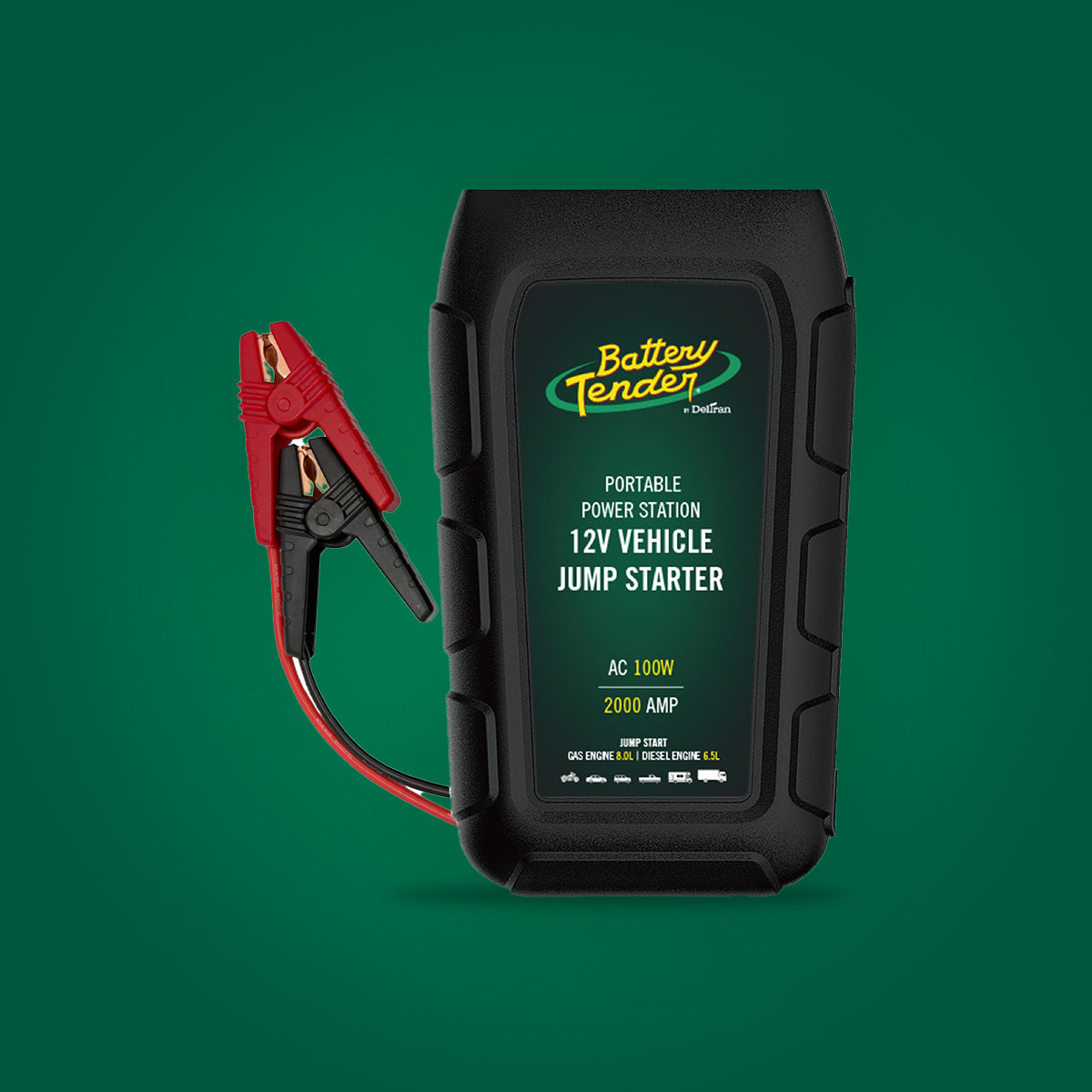
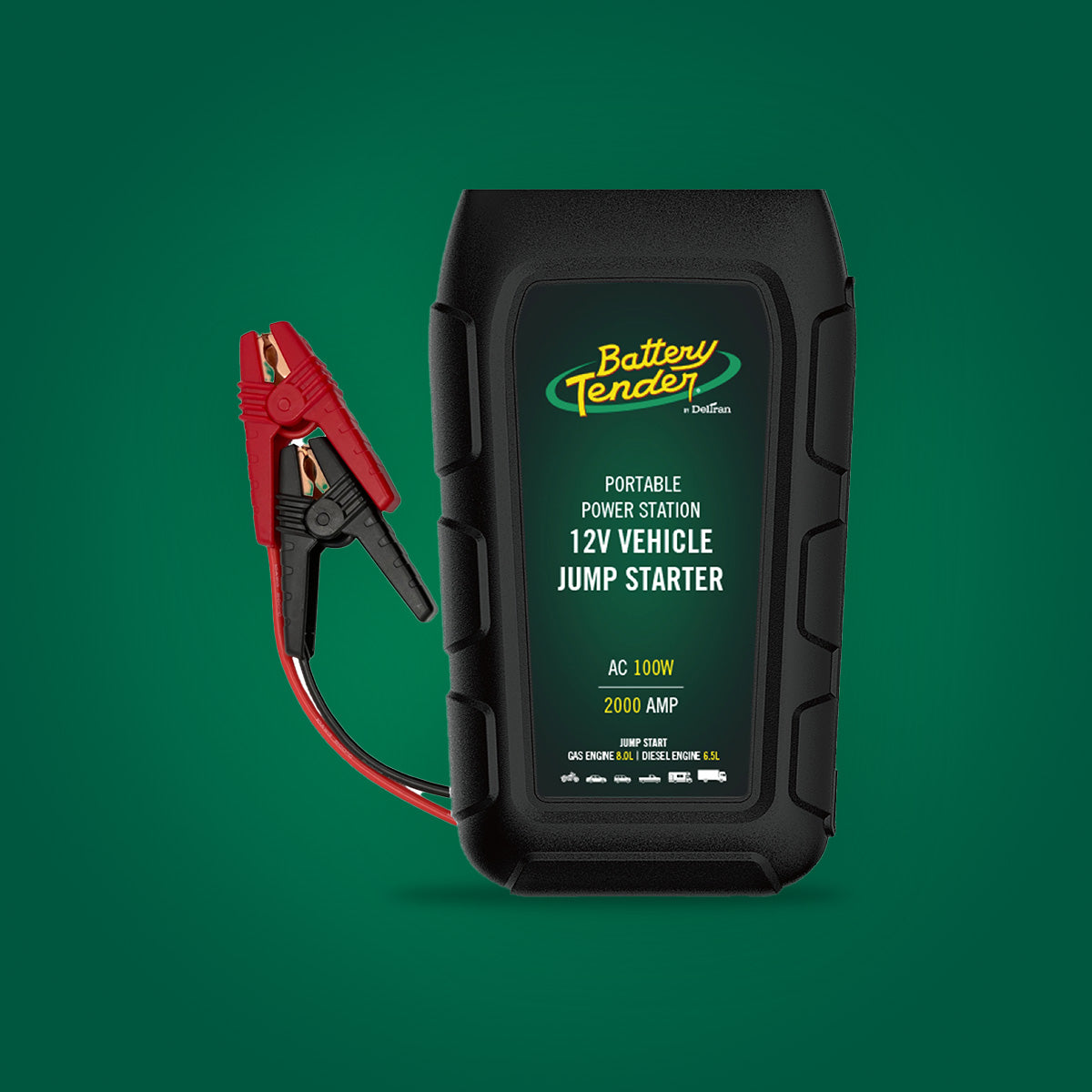
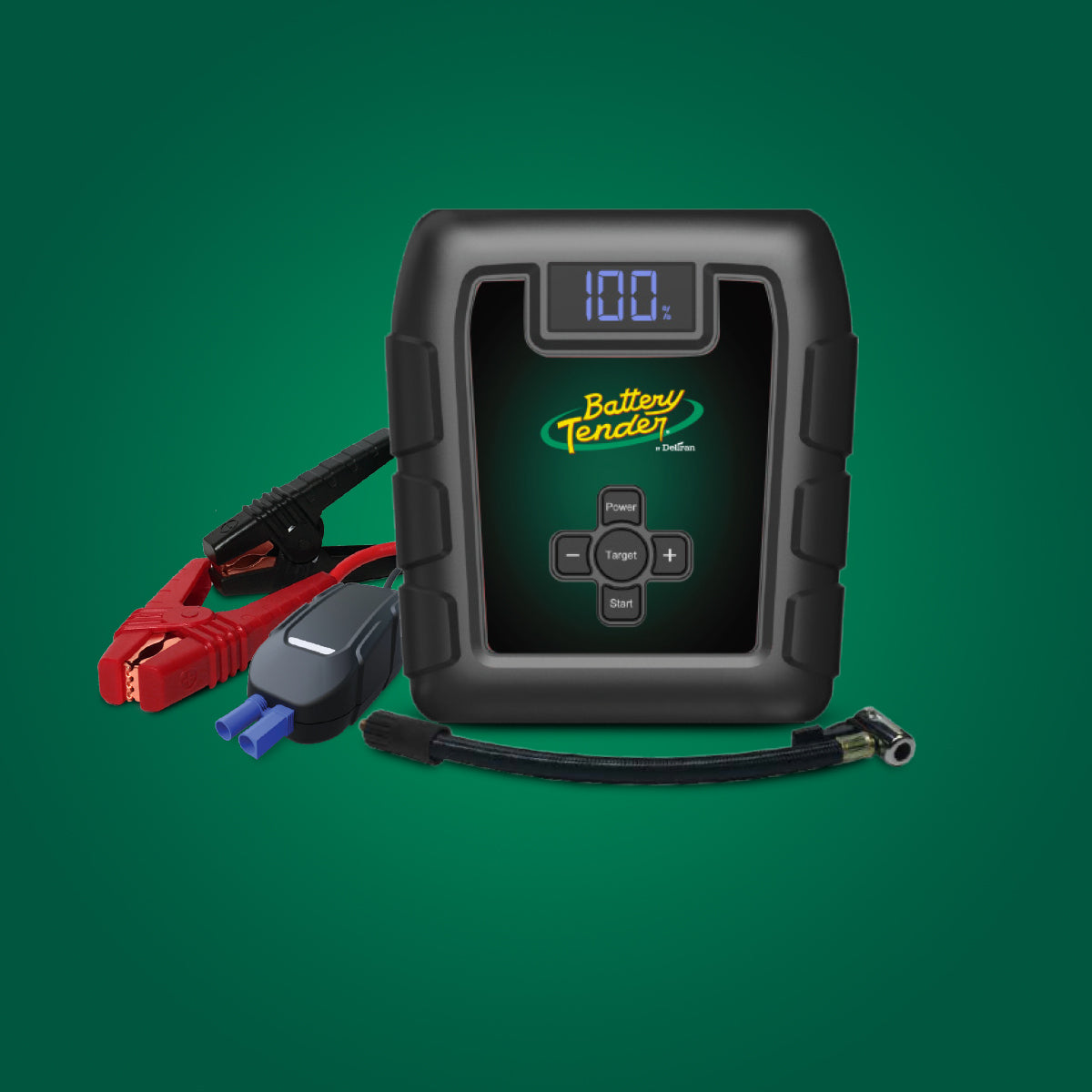
If the bank is flat and the engine will not start, a portable lithium-ion pack gets the rig moving. The Battery Tender Jump N Start 2000 Amp Power Station with 100W Inverter delivers 2,000 peak amps for large gas and diesel engines and adds a 100W AC inverter for small loads when the house bank is down.
Battery Tender Jump N Start 2000 Amp Power Station with 100W Inverter
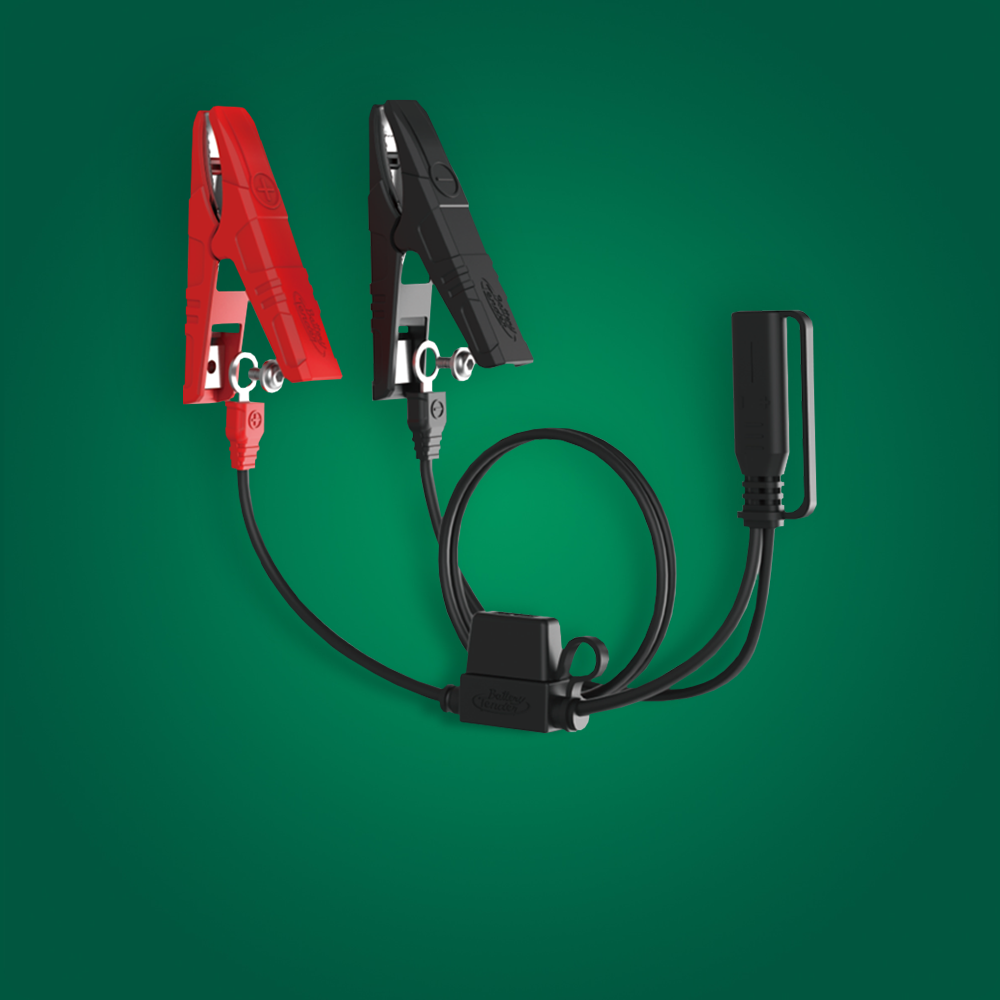
Where the charger sits some distance from the outlet or the battery bay, a weatherproof 14-gauge extension keeps the connection outside the wet zone. The Battery Tender PowerPlus 5ft Extension Cable is built for Battery Tender PowerPlus industrial chargers, so confirm compatibility with the charger model before ordering.
Battery Tender PowerPlus 5ft Extension Cable
What Should You Check Before Buying the Best RV Battery?
Check six things before paying: bank size, chemistry, tray fit, charge source, temperature range and warranty terms. Skipping any one of them is the most common reason a new battery fails early.
- Calculate daily amp-hours and multiply by days off-grid.
- Pick the chemistry using the table: lithium for frequent cycling, AGM for seasonal storage.
- Measure the battery tray and confirm terminal position and height.
- Verify the charge sources: the converter, alternator, solar controller and shore charger must all support the new chemistry.
- Check temperature limits: no lithium charging below 32°F without a heating feature; AGM storage below 0°F only when fully charged.
- Read the warranty: cycle-based or prorated terms, and whether it covers deep-discharge use.
After installation, test the bank. Resting voltage of 12.7-12.8V (AGM) or about 13.3V (LiFePO4) after 4 hours without charge or load indicates a full battery. The routine for testing and upkeep is covered in RV Battery Health Check: Test, Charge and Maintain (2026). For heavy-duty rigs, see the fifth wheel and expedition heavy-duty charging guide.
Frequently Asked Questions
What is the best RV battery for a travel trailer?
For a travel trailer used on weekends, a 100-200Ah AGM or LiFePO4 battery in a group 27 or larger tray works well. Frequent boondockers benefit from lithium because it delivers 80-100% usable capacity. Occasional campers save money with AGM and a maintainer on the battery between trips.
How many amp-hours does an RV battery bank need?
Multiply daily amp-hours used by the days between charges, then divide by usable depth of discharge. A typical rig using 60Ah per day for three days needs 180 usable amp-hours, which means a 360Ah lead-acid or AGM bank, or roughly 200Ah of lithium, since lithium delivers far more of its rated capacity.
Is lithium really the best RV battery?
Lithium is the best choice for frequent cycling, weight-sensitive rigs and full-time living, with 2,000-5,000 cycles against 300-800 for lead-acid. It is not best for everyone: the upfront cost is higher, charging below 32°F is restricted, and the converter and charger must support lithium.
Can I leave an RV battery on a maintainer all winter?
Yes, if the maintainer uses a monitored process such as Battery Tender Infinite Sequential Monitoring (ISM). The Float Maintenance stage only sends charge when voltage drops, so the battery stays full without overcharging. Conventional trickle chargers should not be left connected for months because they apply constant current.
Should I replace both 6V RV batteries at the same time?
Yes. In a series pair, the same current passes through both batteries, so a weak or aged battery drags the pair down and shortens the life of a new one. Replace both together, using matching brand, model and age, to keep the bank balanced and capacity predictable.
Conclusion
The best RV battery comes from a short sequence: calculate daily amp-hours, choose a chemistry that fits the trip pattern, size the bank with the table above, and match a maintainer to every battery on board. Lithium rewards heavy use, AGM rewards storage-heavy use, and 6V pairs reward a tight budget with a roomy battery bay.
Next step: list every battery in the rig, note its voltage and chemistry, and choose a multi-bank maintainer to match. Browse the full lineup at Battery Tender battery chargers.