Yamaha Motorcycle Battery Care: Model-Specific Charging and Maintenance Guide (2026)
Every Yamaha motorcycle battery has specific amp-hour ratings, physical dimensions, and chemistry requirements that determine exactly how to charge and maintain it properly. Whether riding an MT-07 with a compact 6 Ah battery or a Star Venture touring bike with a 28 Ah AGM unit, understanding the unique demands of each Yamaha platform prevents the premature battery failures that plague riders who treat all motorcycles the same. Battery Tender® chargers use Infinite Sequential Monitoring (ISM) technology — a proprietary 4-stage process — to deliver chemistry-correct charging that matches the precise needs of every Yamaha battery configuration.
This guide breaks down Yamaha motorcycle battery specifications by model family, explains how battery location and engine displacement affect charging strategy, and provides step-by-step seasonal care protocols tailored to Yamaha owners. Unlike general motorcycle battery guides, this resource addresses the specific battery access challenges, OEM battery types, and electrical loads that define modern Yamaha platforms from the YZF-R series to the Ténéré adventure line.
Understanding Your Yamaha Motorcycle Battery by Model Family
Yamaha motorcycles span a wider range of battery specifications than most riders realize. The correct charging approach depends entirely on which model family sits in the garage. Mismatching charger output to battery capacity leads to either undercharging (sulfation) or stress on undersized cells.
Yamaha sport bikes — including the YZF-R1 (8.6 Ah), YZF-R7 (6 Ah), and YZF-R3 (6 Ah) — use compact, high-cranking batteries squeezed into tight fairings. These smaller cells discharge faster during storage because parasitic draws from ECUs, clocks, and immobilizer systems represent a larger percentage of total capacity. A 6 Ah battery losing even 1% per day reaches 50% state of charge in roughly 50 days — well within a typical winter storage window.
Yamaha cruiser and touring models tell a different story. The Star Venture carries a 28 Ah battery to power heated grips, audio systems, GPS units, and multiple lighting circuits. The V Star 1300 uses an 18 Ah AGM, while the Bolt runs a 12 Ah unit. These larger batteries tolerate storage slightly longer but also demand more energy to recover from deep discharge. The Ténéré 700 adventure bike uses an 8 Ah battery that must handle auxiliary lighting, GPS, and heated gear circuits common among adventure riders — making it particularly vulnerable to drain.
Yamaha also offers several models with lithium-ion batteries from the factory or as OEM options. Lithium cells require chargers with specific voltage profiles different from lead-acid chemistry. Applying a standard lead-acid charge algorithm to a lithium battery risks permanent cell damage. Identifying the battery chemistry installed in a specific Yamaha model is the first step in any maintenance plan.
How ISM Technology Protects Your Yamaha Motorcycle Battery
ISM technology protects Yamaha batteries by automatically adjusting charging behavior across four distinct stages, eliminating the overcharge risk associated with conventional trickle chargers. This matters because Yamaha batteries — especially sealed AGM units — cannot tolerate excess voltage without venting electrolyte and suffering irreversible capacity loss.
The four ISM stages work as follows:
- Stage 1 — Initialization: The charger tests the battery and applies gentle current to assess condition. A Yamaha battery sitting at 11.8V receives different treatment than one at 12.4V.
- Stage 2 — Bulk Charge: Full rated current flows until the battery reaches approximately 80% state of charge. For a depleted 12 Ah Yamaha Bolt battery on a 750mA charger, this stage takes roughly 12–13 hours: (12 Ah × 0.80) ÷ 0.75A ≈ 12.8 hours.
- Stage 3 — Absorption: Voltage holds constant while current tapers gradually, dissolving sulfate crystals that form on lead plates during storage. This stage is critical for Yamaha batteries stored over winter.
- Stage 4 — Maintenance: The charger delivers demand-responsive charge pulses only when voltage drops below threshold. The battery remains at optimal charge indefinitely without overcharging.
Old-style trickle chargers push constant current regardless of battery state — the equivalent of leaving a garden hose running into a full bucket. ISM stops charging when the battery is full and restarts only when voltage naturally declines. This is why Battery Tender chargers can remain connected for the entire off-season without supervision.
Choosing the Right Charger for Your Yamaha Motorcycle Battery
Charger selection depends on three factors specific to the Yamaha model: battery amp-hour capacity, battery chemistry, and how long the bike sits between rides. Matching charger output to battery size ensures efficient charging without thermal stress.
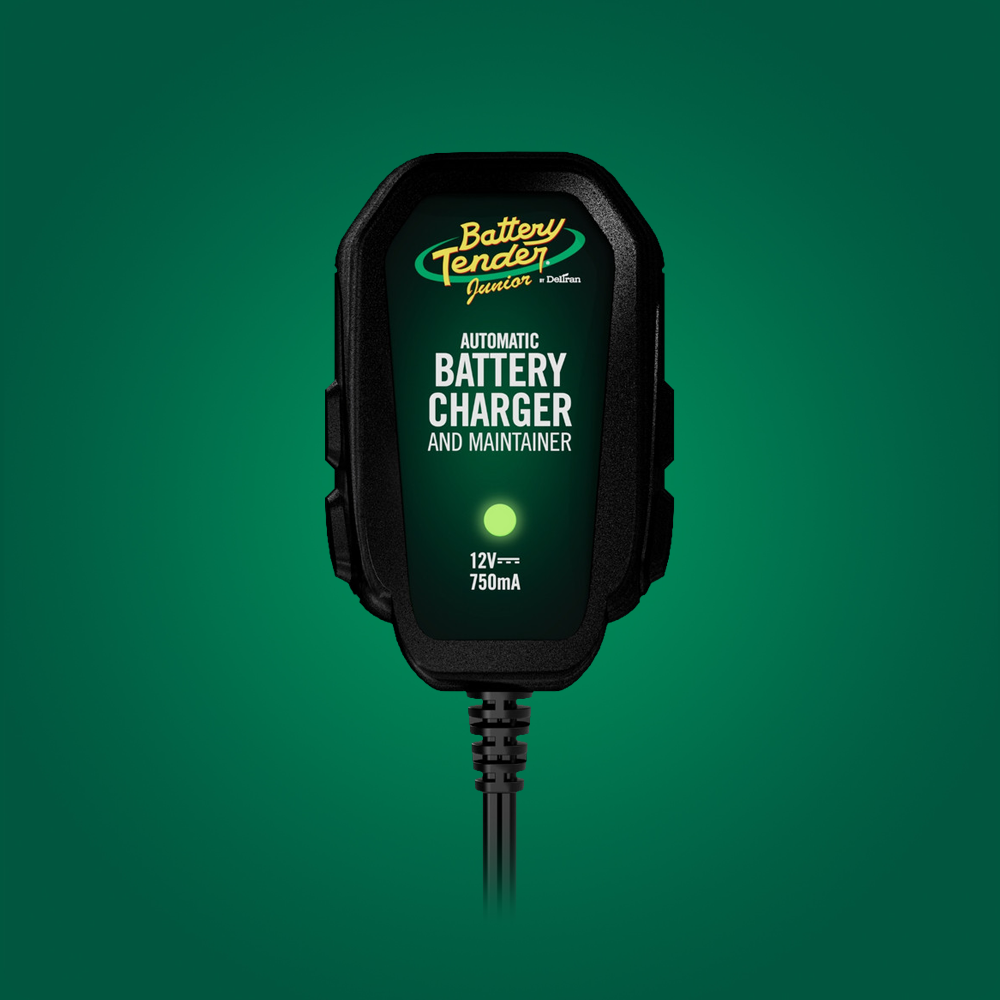
For Yamaha sport and standard models with batteries in the 6–14 Ah range — including the R-series, MT family, and Bolt — the Battery Tender Junior 12V 750mA delivers the ideal charge rate. At 750mA, the Junior charges a fully depleted 8 Ah R7 battery in approximately 10.7 hours: (8 Ah × 1.0) ÷ 0.75A ≈ 10.7 hours. The gentle current rate is safe for smaller cells and provides reliable maintenance during months of storage. Priced at $44.95 with a 5-year warranty, the Junior remains the most popular charger among Yamaha motorcycle owners.
Battery Tender Junior 12V 750mA Battery Charger
Yamaha riders who have upgraded to lithium-ion batteries — increasingly common in the R1, R6 (legacy), and MT-09 — need a charger with selectable chemistry modes. The Battery Tender Junior 1A Selectable provides both lead-acid and lithium charging profiles at 1A output. The selectable chemistry switch adjusts voltage parameters to match lithium iron phosphate (LiFePO4) requirements, preventing the overvoltage damage that occurs when standard lead-acid chargers are connected to lithium cells.
Battery Tender Junior 1A Selectable Battery Charger
For Yamaha touring and cruiser platforms with 18–28 Ah batteries — the Star Venture, V Star 1300, and Eluder — the Battery Tender Plus 1.25A provides faster recovery and includes temperature compensation. This feature adjusts charge voltage based on ambient temperature, which is essential for Yamaha owners storing bikes in unheated garages where winter temperatures fluctuate between 20°F and 50°F. The Plus carries a 10-year warranty and charges a depleted 28 Ah Star Venture battery in approximately 22.4 hours: (28 Ah × 1.0) ÷ 1.25A ≈ 22.4 hours.
Battery Tender Plus 12V 1.25A Battery Charger
Important note: Nearly all Battery Tender chargers include temperature compensation to adjust for charging in extreme heat or cold. Yamaha owners in extreme climates storing bikes in unheated spaces can choose the Battery Tender Plus for its temperature-adjusted charging.
Yamaha Motorcycle Battery Access: Connecting Your Charger by Model
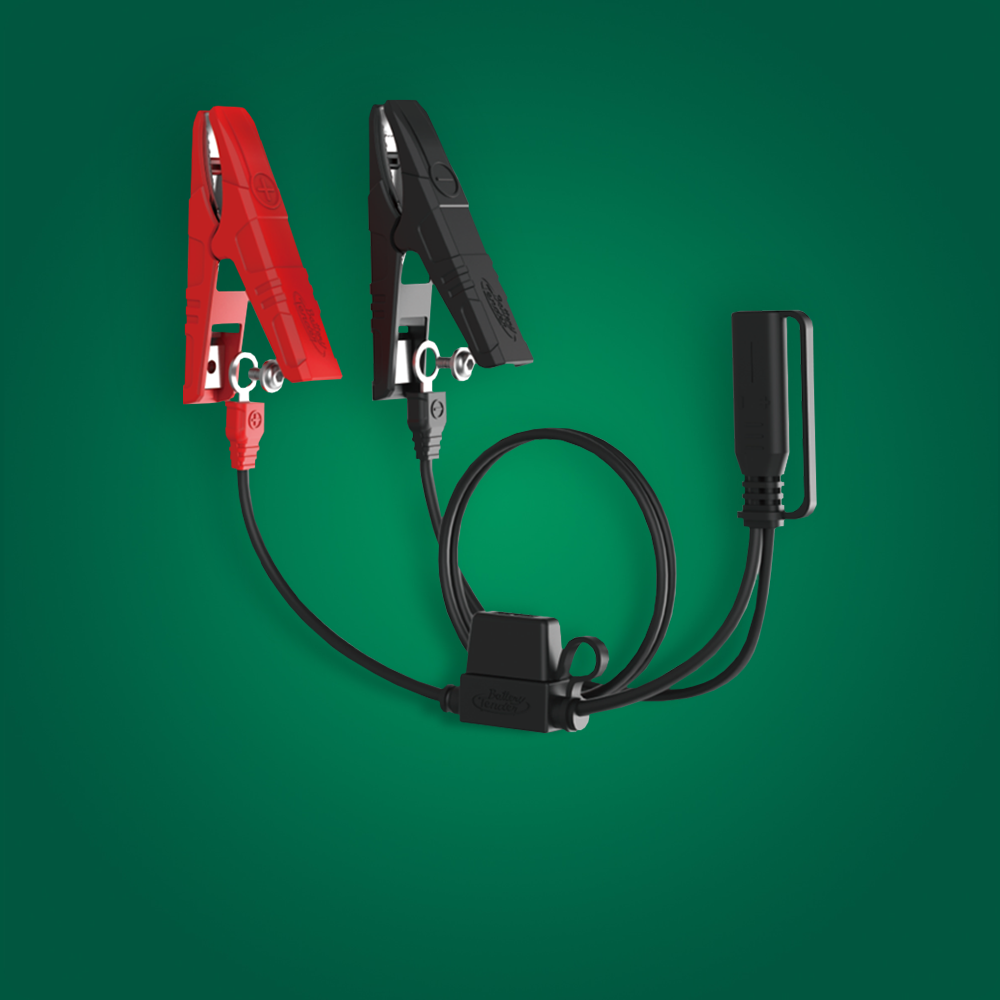
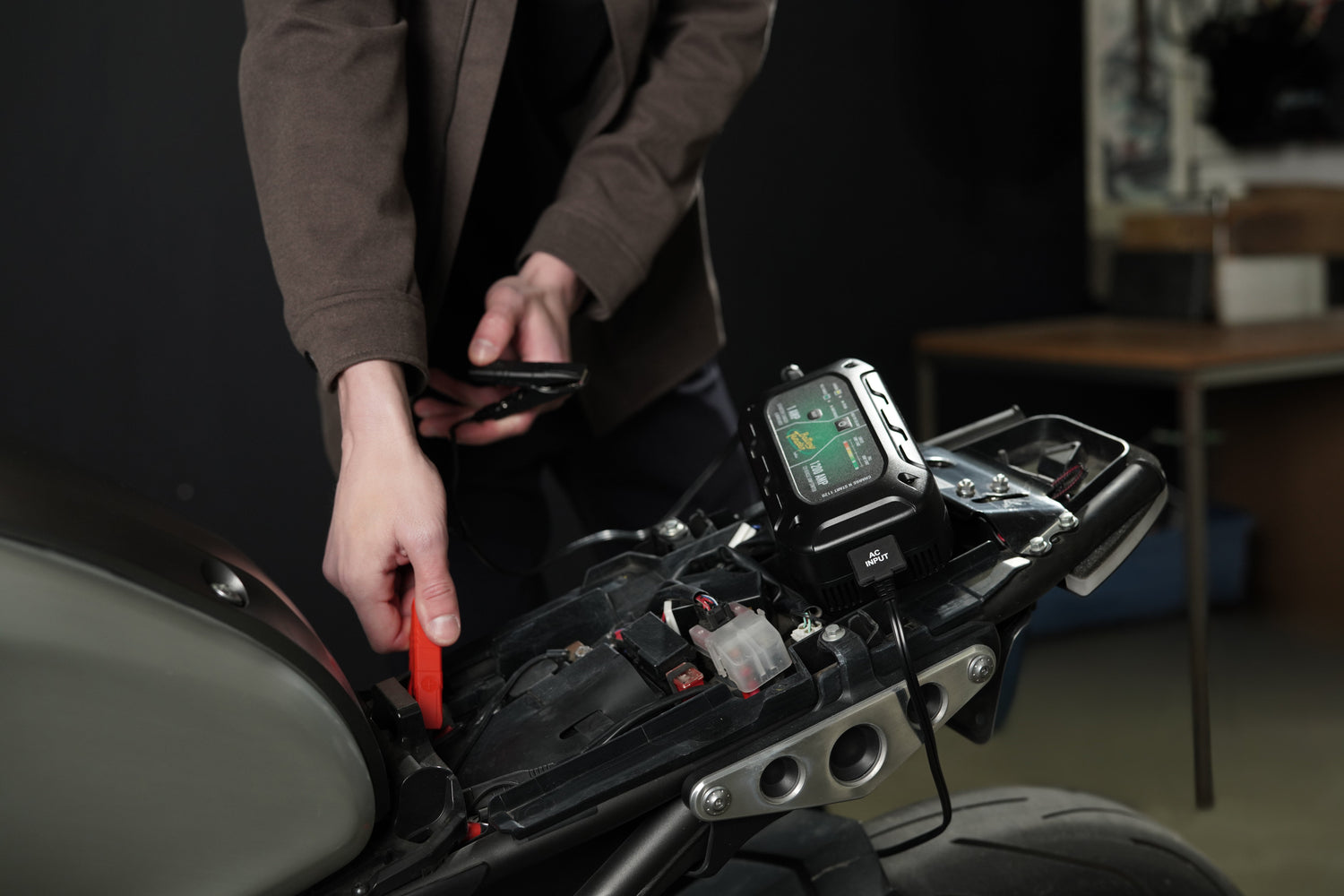
One challenge specific to Yamaha models is battery access. Unlike some motorcycle brands that place batteries under easily removable seats, many Yamaha platforms require partial disassembly to reach battery terminals. This makes permanent ring terminal harnesses not just convenient but practically necessary for regular maintenance charging.
On Yamaha sport bikes (YZF-R1, R7, R3), the battery sits beneath the seat and often behind a plastic tray. The solution is installing a Battery Tender ring terminal harness once, routing the quick-disconnect plug to an accessible location, and simply plugging in the charger whenever the bike parks. No tools required after initial installation.
Yamaha MT-series naked bikes (MT-03, MT-07, MT-09, MT-10) generally provide easier battery access under the rider seat, but a permanent harness still saves time. The Ténéré 700 adventure bike presents the greatest challenge — the battery hides behind bodywork and a sub-frame panel. A routed harness is almost mandatory for Ténéré owners who want regular maintenance charging.
For Yamaha cruisers and touring models, battery access varies widely. The Star Venture battery sits in the left saddlebag area, while the Bolt battery is located under a side cover. In every case, a one-time ring terminal installation eliminates repeated disassembly throughout the storage season and riding season alike.
Seasonal Storage Protocol for Yamaha Batteries
A Yamaha motorcycle battery left disconnected during 6–9 months of winter storage loses approximately 1–3% of its charge per week through natural self-discharge. At that rate, a fully charged battery reaches dangerously low voltage within 8–12 weeks. Below 12.0V, lead-acid batteries begin forming hardened sulfate crystals that permanently reduce capacity. Below 10.5V, most Yamaha batteries are unrecoverable.
The correct storage protocol for any Yamaha model:
- Clean the battery terminals — Remove corrosion with a baking soda solution (1 tablespoon per cup of water). Dry completely before reconnecting.
- Verify electrolyte level — For conventional (non-sealed) Yamaha batteries, top off with distilled water only. AGM and lithium batteries are sealed and require no fluid.
- Check resting voltage — A healthy 12V Yamaha battery reads 12.6–12.8V. Anything below 12.4V indicates the battery needs charging before storage.
- Connect a Battery Tender charger — Plug into the pre-installed ring terminal harness. ISM technology handles the rest automatically.
- Verify indicator light — Green = fully charged and maintaining. Red = actively charging. Leave connected for the entire off-season.
According to the Battery Council International (BCI), a maintained battery lasts 3–5 years on average, while an unmaintained battery in seasonal-use applications often fails within 1–2 years. For a Yamaha YTZ10S AGM battery retailing between $120–$180, proper maintenance with a $44.95 Battery Tender Junior pays for itself after preventing a single premature replacement.
What to Do When Your Yamaha Motorcycle Battery Won't Start
A Yamaha battery that fails to crank the engine after storage likely dropped below safe voltage. The first step is measuring terminal voltage with a multimeter. Batteries reading 12.0–12.4V may recover with a full ISM charge cycle. Batteries below 11.5V have sustained sulfation damage and may not recover fully.
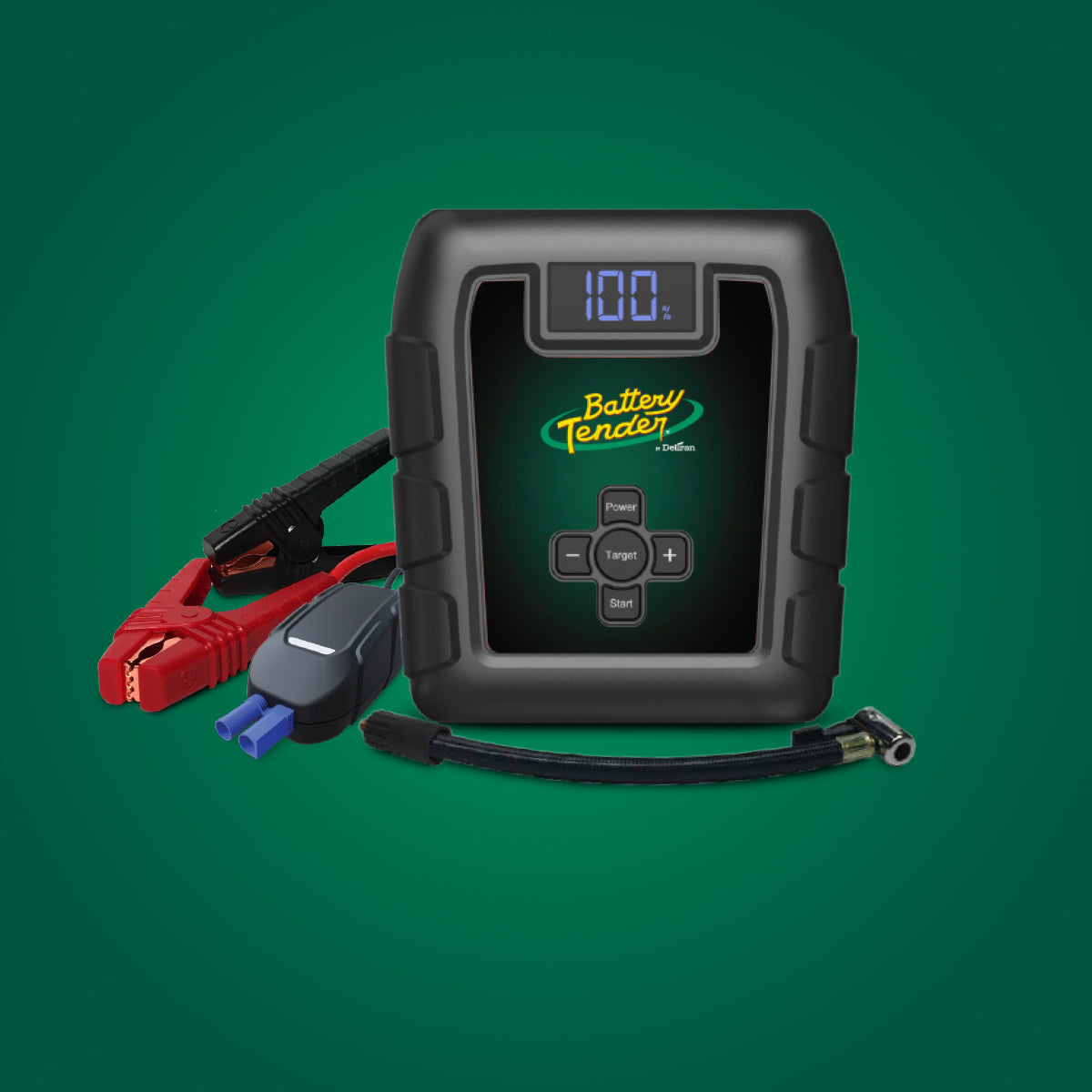
For immediate starting needs, the Battery Tender Charge N Start 1100 combines a 1A ISM charger with a 1,000A lithium-ion jump starter. The internal lithium-ion battery can jump-start a Yamaha motorcycle in seconds without needing another vehicle, then switch to charger mode to maintain the bike battery going forward. The Charge N Start 1100 handles engines up to 5.0L gas / 3.0L diesel, far exceeding any Yamaha motorcycle engine requirement. At $139.95, it serves as both an emergency rescue tool and an everyday maintenance charger.
Battery Tender Charge N Start 1100 — 1A Charger + 1,000A Jump Starter
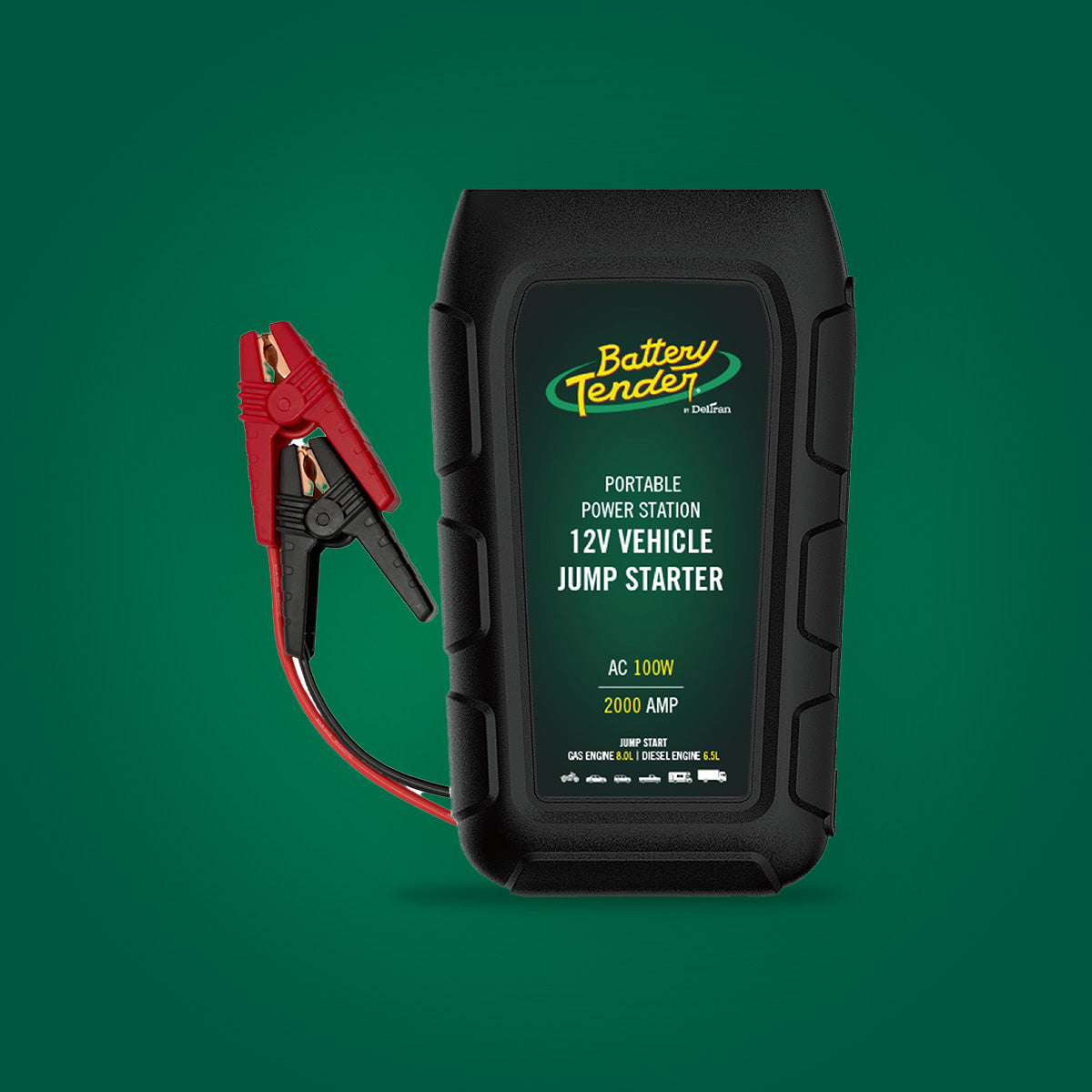
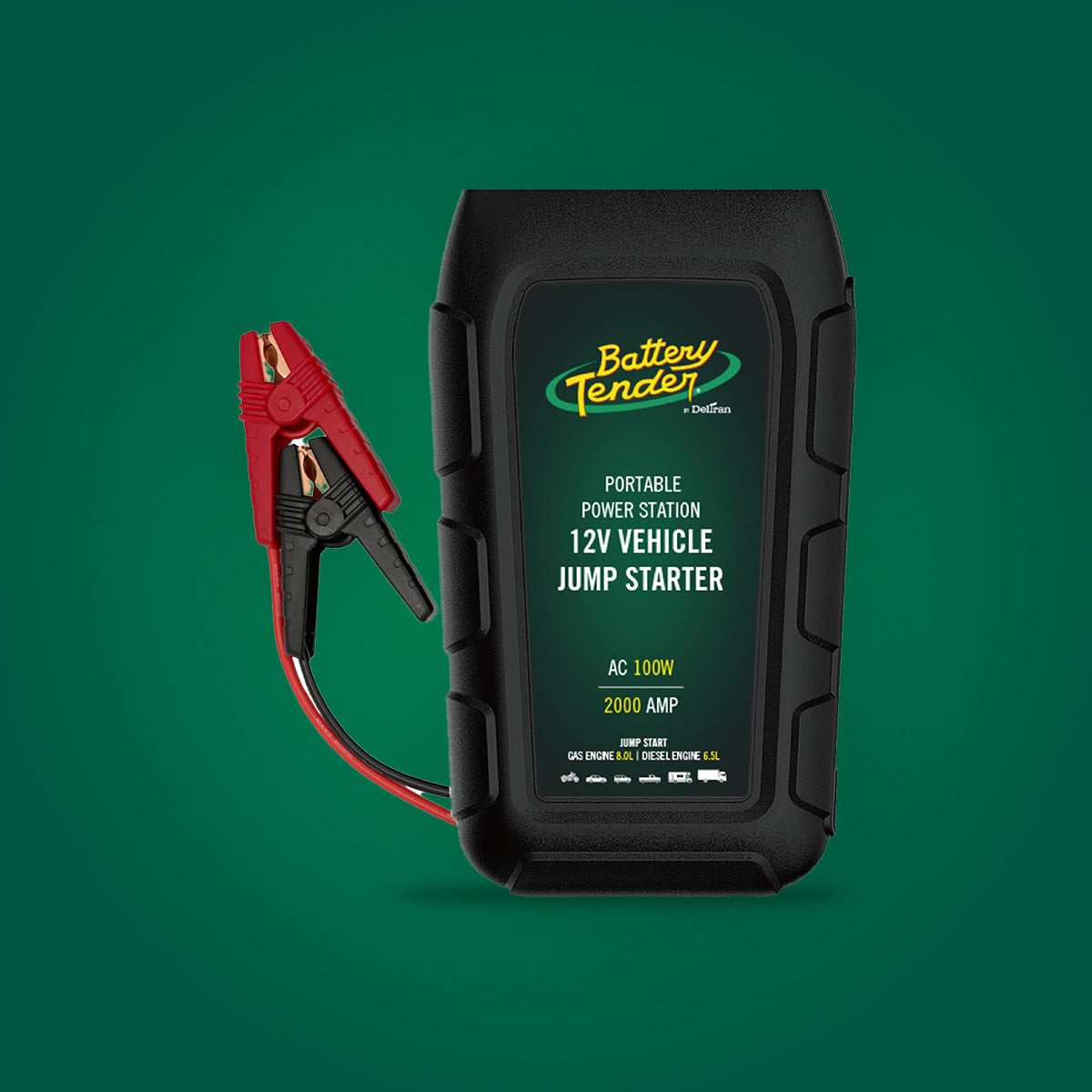
For riders who want a compact jump-starting option to carry on the bike itself, the Battery Tender 600A Jump Starter weighs under a pound and fits in a tank bag or saddlebag. With 6,400 mAh capacity and 600 peak amps, it starts any Yamaha motorcycle engine multiple times on a single charge.
Battery Tender 600A Portable Jump Starter
Yamaha Motorcycle Battery Replacement: When Maintenance Is No Longer Enough
Even with perfect maintenance, every Yamaha motorcycle battery has a finite lifespan. Lead-acid and AGM batteries typically last 3–5 years. Lithium-ion motorcycle batteries can last 5–8 years under proper care. Signs that a Yamaha battery needs replacement rather than further charging include:
- Failure to hold charge above 12.4V after a complete ISM cycle
- Bulging or swelling of the battery case — indicates internal short circuits
- Slow cranking despite a full charge reading — reduced cold cranking amps (CCA)
- Age exceeding 4 years for AGM or 7 years for lithium in seasonal-use applications
When replacing a Yamaha battery, match the OEM battery group size exactly. Yamaha specifies battery dimensions, terminal orientation, and minimum CCA for each model. Installing the wrong size battery can damage electrical components or leave the battery unsecured — a safety hazard on a motorcycle. After installing a new battery, immediately connect a Battery Tender charger to perform a full initial charge. New batteries often ship at 80–90% state of charge and benefit from a complete ISM cycle before first use.
Frequently Asked Questions
What size battery charger does a Yamaha motorcycle need?
Most Yamaha motorcycles use batteries in the 6–14 Ah range, which pair ideally with a 750mA to 1A charger like the Battery Tender Junior. Yamaha touring models with 18–28 Ah batteries benefit from the Battery Tender Plus at 1.25A. The general rule is to select a charger rated at roughly 10% of the battery amp-hour capacity for safe, efficient charging.
Can a Battery Tender charger stay connected to a Yamaha motorcycle battery all winter?
Yes. ISM technology makes Battery Tender chargers safe for indefinite connection. The 4-stage process transitions to maintenance mode once the battery reaches full charge, delivering only demand-responsive pulses when voltage drops. This prevents both overcharging and sulfation damage throughout 6–9 months of winter storage.
Does a Yamaha motorcycle battery need a special charger for lithium?
Yes. Lithium-ion (LiFePO4) motorcycle batteries require different voltage parameters than lead-acid or AGM batteries. The Battery Tender Junior 1A Selectable charger includes a dedicated lithium mode that adjusts the charge profile accordingly. Using a standard lead-acid charger on a lithium Yamaha battery risks overvoltage damage and potential cell failure.
How long does it take to charge a dead Yamaha motorcycle battery?
Charge time depends on battery capacity and charger output. Using the formula (battery Ah × depth of discharge) ÷ charger amps: a fully depleted 8 Ah Yamaha R7 battery on a 750mA Battery Tender Junior takes approximately 10.7 hours. A depleted 18 Ah V Star 1300 battery on the 1.25A Battery Tender Plus takes approximately 14.4 hours.
Conclusion
A Yamaha motorcycle battery performs only as well as the maintenance behind it. Every Yamaha platform — from the compact YZF-R3 sport bike to the fully loaded Star Venture tourer — benefits from model-appropriate ISM charging that prevents sulfation, extends battery lifespan, and guarantees reliable starts every spring. Understanding the specific battery capacity, chemistry, and access requirements of each Yamaha model family transforms battery care from guesswork into a precise, repeatable process.
Explore the complete lineup of motorcycle and powersports charging solutions — including chargers, jump starters, and accessories purpose-built for Yamaha owners — at the Battery Tender Powersports page.