

Yamaha Golf Cart Charger: PowerPlus IP68 Charging Guide (2026)
A Yamaha golf cart charger must handle one of the most punishing battery use cases in any vehicle category. Golf cart batteries routinely discharge 50–80% of their capacity during a single round or day of neighborhood driving, then must recover fully before the next use. Battery Tender® designed the PowerPlus line of IP68-rated chargers specifically for this deep-discharge, high-cycle environment. The PowerPlus 48V 15A model delivers Infinite Sequential Monitoring (ISM) 4-stage charging that restores Yamaha batteries safely and maintains them indefinitely — even when mounted permanently outdoors on the cart frame.
Whether a Yamaha cart runs a 48V system (Drive, Drive2, G29 with 48V configuration) or a 36V system (G14, G16, G19, G22, and some G29 models), choosing the correct charger voltage, amperage, and charging algorithm directly determines how many seasons those batteries will last. This guide covers Yamaha-specific voltage identification, charging math, installation considerations, and the Battery Tender products engineered to maximize battery lifespan on every Yamaha platform.
Key Takeaways:
- Most modern Yamaha golf carts (2007+) use 48V battery systems; older models often use 36V.
- Golf cart batteries deep-discharge daily — the most demanding use case for lead-acid or AGM batteries.
- Battery Tender PowerPlus chargers feature IP68 waterproof ratings and ISM 4-stage charging for permanent outdoor mounting.
- Matching charger voltage to cart voltage is non-negotiable — a mismatched charger damages batteries or refuses to charge.
- Proper charging after every use can extend golf cart battery pack life from 3 years to 6+ years.
How to Identify the Voltage of a Yamaha Golf Cart
Selecting the correct Yamaha golf cart charger starts with confirming the total system voltage. Every electric Yamaha cart uses a series-wired battery pack, and the total voltage equals the number of batteries multiplied by each battery's individual voltage.
Open the battery compartment and count the individual batteries, then read the voltage printed on each battery's label. Yamaha carts typically use one of these configurations:
- 48V system: Six 8V batteries (6 × 8V = 48V) — most common in Yamaha Drive, Drive2, and 48V G29 models manufactured after 2007
- 36V system: Six 6V batteries (6 × 6V = 36V) — standard in Yamaha G14, G16, G19, G22, and 36V G29 models
- 24V system: Rare in Yamaha golf carts but found in some older industrial utility models using four 6V batteries or two 12V batteries
If labels are unreadable, check the Yamaha serial number plate (typically located under the seat or on the frame near the front wheel well). The model designation and manufacture year confirm which voltage platform the cart shipped with. A multimeter across the main positive and negative terminals of the pack — with the cart off — provides a direct reading. A healthy 48V pack reads approximately 50–52V at rest; a healthy 36V pack reads approximately 37.5–39V.
Why Yamaha Golf Cart Batteries Need Smart Chargers
Golf cart batteries endure deeper discharges more frequently than nearly any other consumer battery application. A typical 18-hole round consumes 50–70% of the pack's capacity. Neighborhood electric vehicles (NEVs) used for daily errands can discharge 60–80% before returning to the garage. This cycle repeats daily, sometimes twice daily.
Conventional trickle chargers and basic float chargers lack the intelligence to handle this demand safely. A trickle charger delivers constant current regardless of battery state — fine for a topped-off car battery but dangerous for a deeply discharged golf cart pack where hours of unregulated current causes electrolyte boiling, plate warping, and accelerated water loss. According to the Battery Council International (BCI), improper charging is the leading cause of premature golf cart battery failure, ahead of even neglect or underwatering.
Battery Tender chargers use proprietary ISM 4-stage charging — a process that adapts output in real time across four distinct phases:
- Initialization — Tests the battery pack, applies gentle current to assess condition and state of charge
- Bulk Charge — Delivers full rated current (e.g., 15A for the PowerPlus 48V) until approximately 80% state of charge
- Absorption — Holds voltage constant while tapering current, dissolving sulfate crystals that form during deep discharge
- Maintenance — Applies demand-responsive charge pulses only when voltage drops below threshold, safe for indefinite connection
This means a Battery Tender PowerPlus charger can remain connected to a Yamaha cart permanently. During active seasons, it fully recovers the pack overnight. During off-season storage, it prevents sulfation without overcharging — the single most important factor in extending pack life past the typical 3–5 year window.
Best Yamaha Golf Cart Charger for 48V Systems
The majority of Yamaha electric golf carts manufactured since 2007 run on 48V platforms. These carts need a charger purpose-built for 48V output — a 12V automotive charger cannot charge a 48V pack, and attempting to use one risks severe damage to both the charger and the batteries.
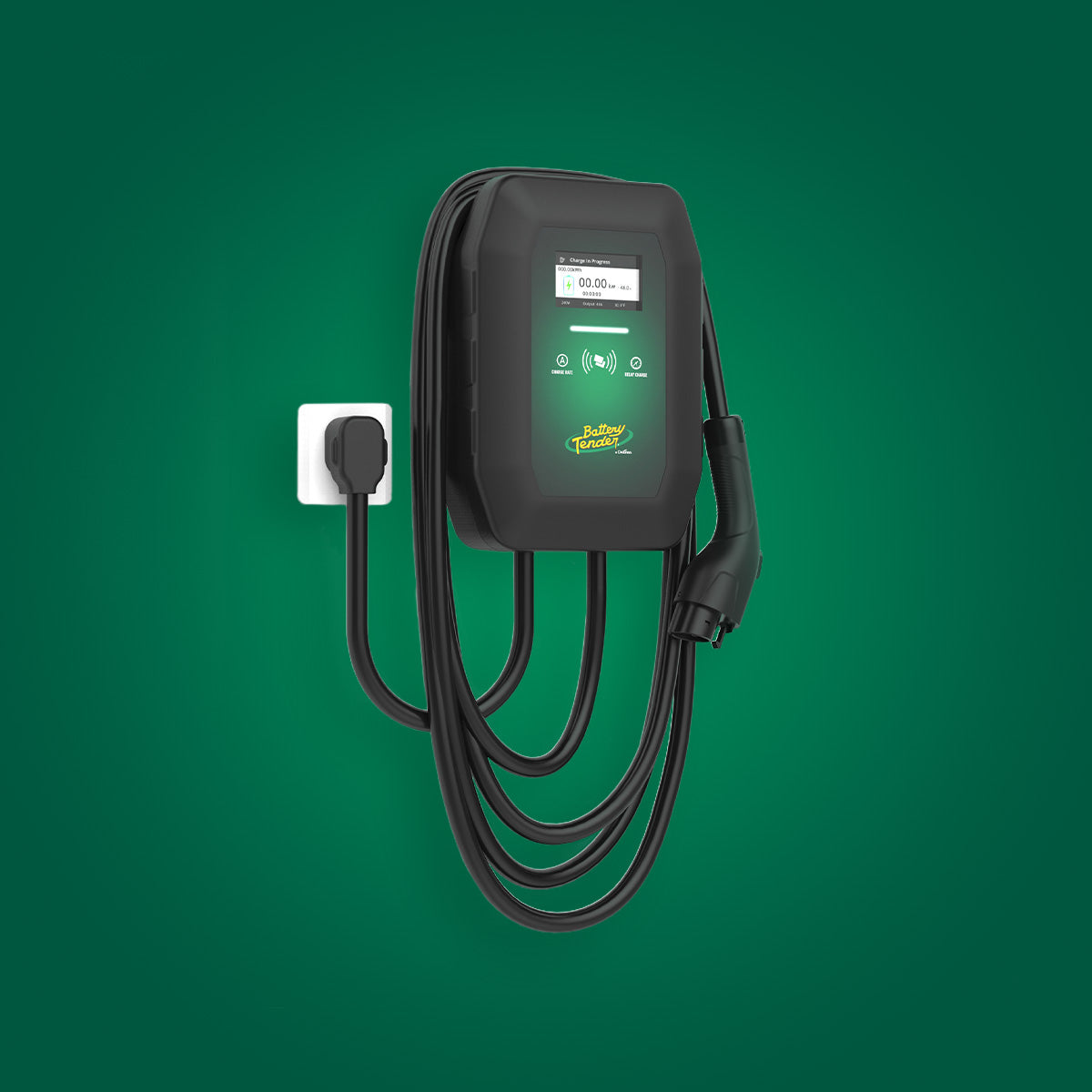
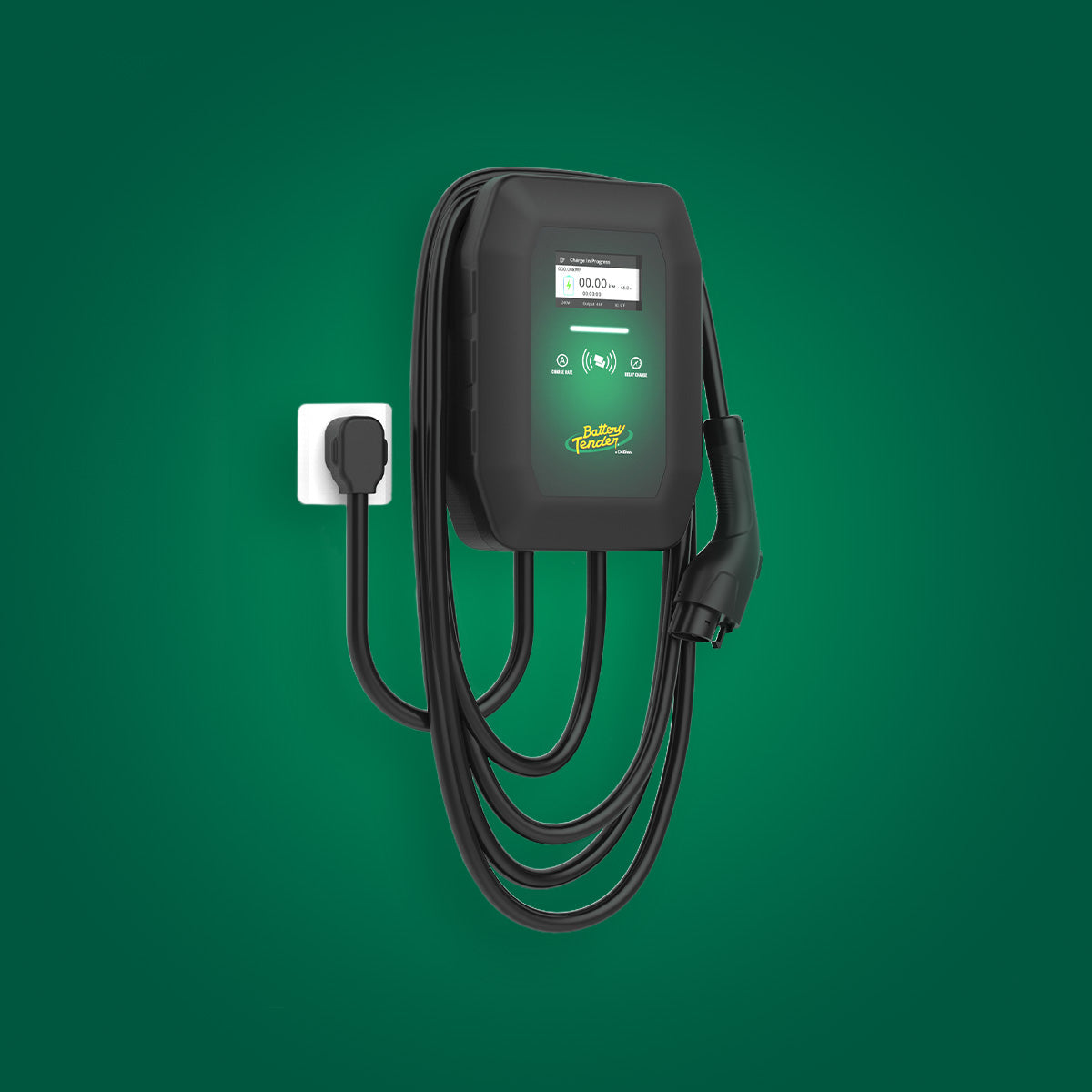
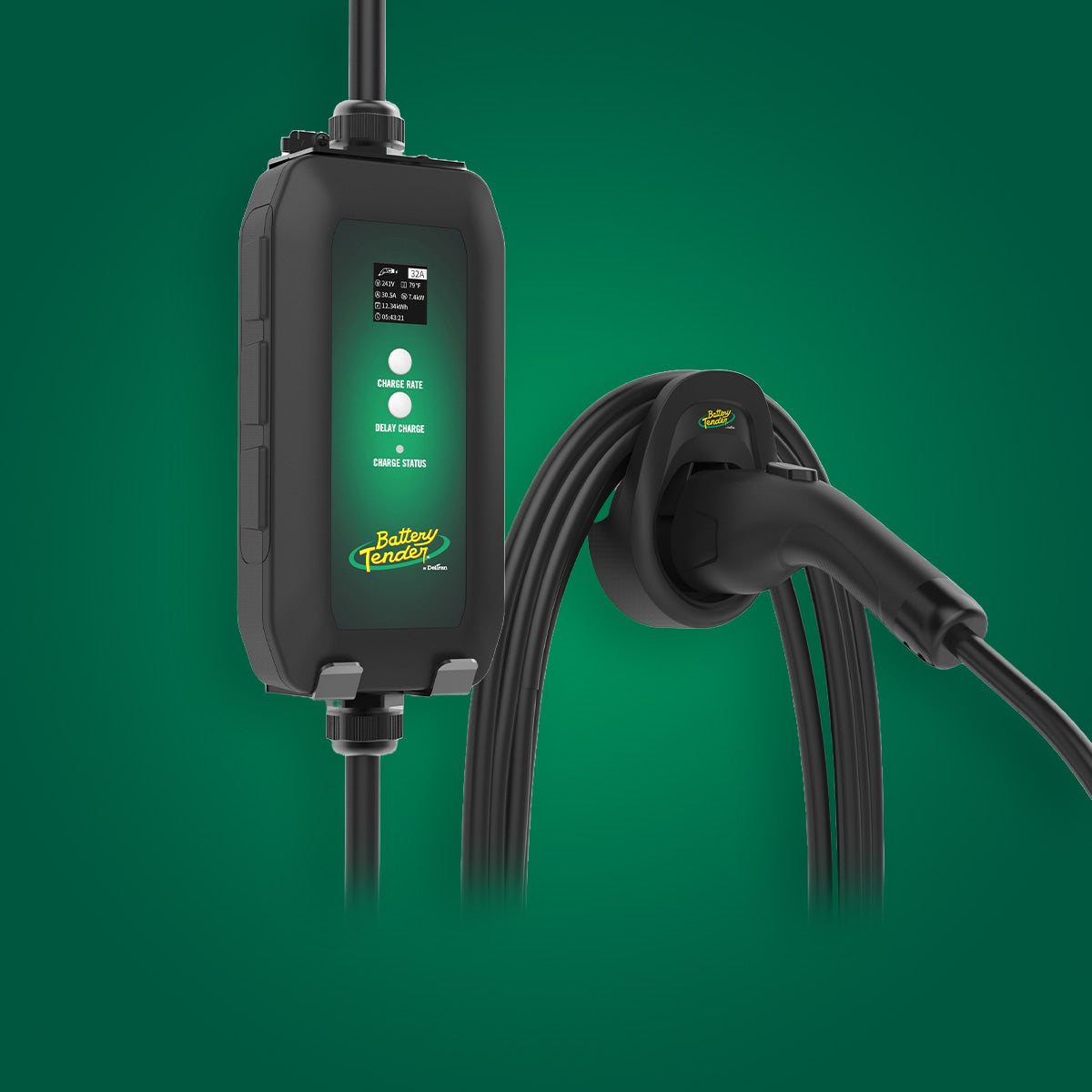
The Battery Tender PowerPlus 48V delivers 15 amps of continuous charging current through the same ISM algorithm used across the entire Battery Tender lineup. Its IP68 waterproof rating — the highest available — means permanent on-board mounting in any environment: open-air cart barns, coastal golf courses with salt air exposure, or unprotected driveways. The unit also carries UL marine ignition protection certification, confirming sealed construction that prevents sparking even in enclosed battery compartments where hydrogen gas may accumulate during charging.
For a Yamaha Drive2 with six 8V 210Ah batteries discharged to 30% remaining capacity (70% depth of discharge): (210Ah × 0.70) ÷ 15A = approximately 9.8 hours for a full recovery. Overnight charging from evening to morning covers this comfortably.
The Battery Tender PowerPlus 48V 15A IP68 charger is the recommended primary charger for all 48V Yamaha platforms.
Battery Tender PowerPlus 48V 15A IP68 Charger — $379.95
Best Yamaha Golf Cart Charger for 36V Systems
Yamaha G14, G16, G19, G22, and 36V-configured G29 models use six 6V deep-cycle batteries wired in series. These older platforms remain extremely popular on courses and in communities, and their battery packs benefit even more from smart charging because the 6V deep-cycle cells are more susceptible to sulfation damage when left partially charged.
The Battery Tender PowerPlus 36V provides 18 amps of ISM-controlled charging in the same IP68-sealed, permanently mountable chassis as the 48V model. The higher amperage relative to the 48V unit reflects the lower voltage and ensures competitive charge times. For a set of six 6V 225Ah batteries at 60% depth of discharge: (225Ah × 0.60) ÷ 18A = approximately 7.5 hours.
All PowerPlus chargers include temperature compensation, automatically adjusting charge voltage based on ambient conditions. This matters for Yamaha carts stored in unheated garages during winter or charged in direct sunlight during summer — both scenarios that cause conventional chargers to over- or under-charge.
Battery Tender PowerPlus 36V 18A IP68 Charger — $359.95
Yamaha Golf Cart DC Plug Accessories for Easy Connection
Many Yamaha golf carts include a built-in DC charge receptacle on the front cowl or under the seat. Rather than connecting alligator clips to battery terminals each time, a matching DC plug accessory cable from Battery Tender allows plug-and-charge convenience — insert the plug, walk away, and let ISM handle the rest.
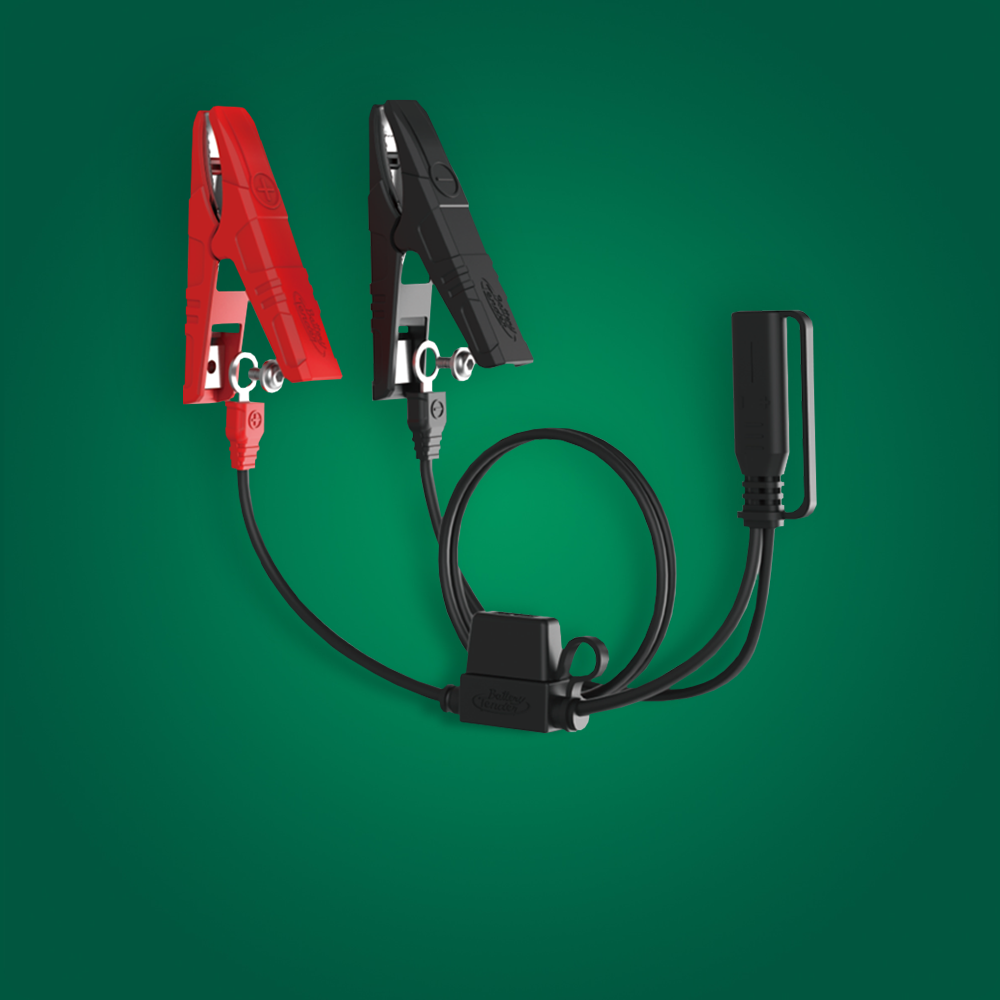
For 48V Yamaha carts, the Battery Tender 48V DC plug accessory cable connects directly from the PowerPlus charger output to the Yamaha charge port. For 36V Yamaha models, a compatible 36V plug cable is available. These cables convert the PowerPlus charger into a true plug-in replacement for worn-out OEM chargers — with significantly smarter charging logic.
Battery Tender 48V DC Plug Accessory Cable — $49.95
Battery Tender 48V DC Plug Accessory Cable for Yamaha G19/G22/G29 — $49.95
How to Extend Yamaha Golf Cart Battery Life with Proper Charging
Battery pack replacement on a Yamaha golf cart costs $800–$2,000+ depending on battery type and capacity. Proper charging habits represent the single most cost-effective maintenance action available. The following practices, combined with a Battery Tender PowerPlus charger, routinely extend pack life to 6–7 years versus the 3–4 year average seen with basic chargers:
- Charge after every use. Never leave a golf cart sitting overnight at partial charge. Even a short trip to the mailbox should end with the charger connected. Sulfation begins within hours on a discharged lead-acid battery.
- Never interrupt the charge cycle. Allow the charger to complete all four ISM stages. Unplugging during Absorption to use the cart means sulfate crystals are not fully dissolved.
- Check water levels monthly (flooded lead-acid only). Fill to 1/4" above the plates using distilled water — only after a full charge, never before. AGM and GEL batteries are sealed and maintenance-free.
- Keep terminals clean. Corrosion increases resistance and causes uneven charging across batteries in the series string.
- Store connected. During winter or extended downtime, leave the Battery Tender PowerPlus charger connected. The ISM Maintenance stage applies only the charge pulses needed to maintain full state of charge without overcharging.
According to the Electric Power Research Institute (EPRI), lead-acid deep-cycle batteries maintained at full charge between uses deliver up to 1,500 cycles at 50% depth of discharge, compared to fewer than 500 cycles when routinely stored in a partially discharged state.
Jump-Starting a Yamaha Golf Cart with a Dead Pack
A completely dead Yamaha golf cart battery pack presents a different challenge than a dead car battery. The cart's 36V or 48V total system voltage means a standard 12V jump starter cannot power the entire pack. However, a jump starter can rescue the situation by reviving individual batteries within the series string enough for the onboard or external charger to recognize the pack and begin the Initialization stage.
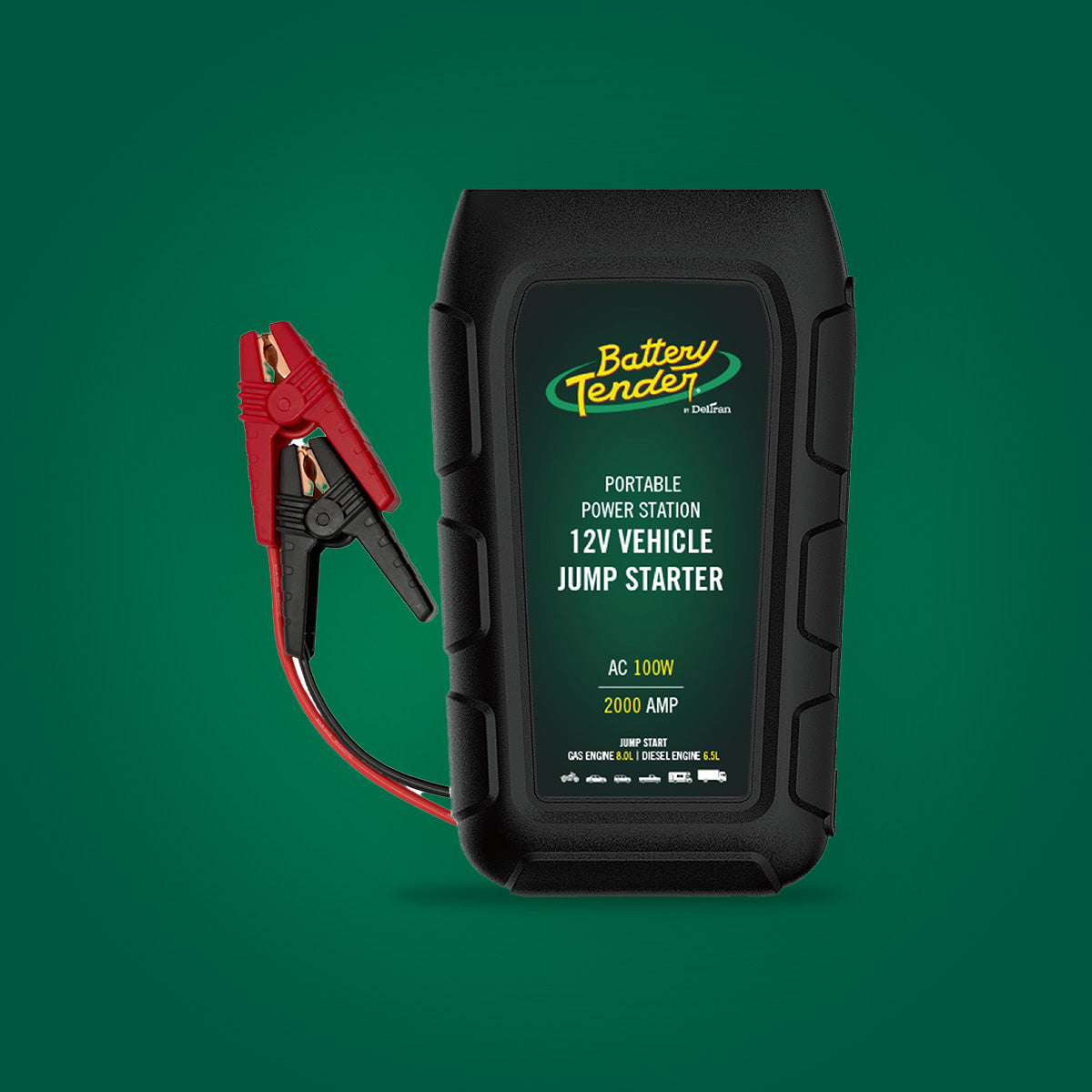
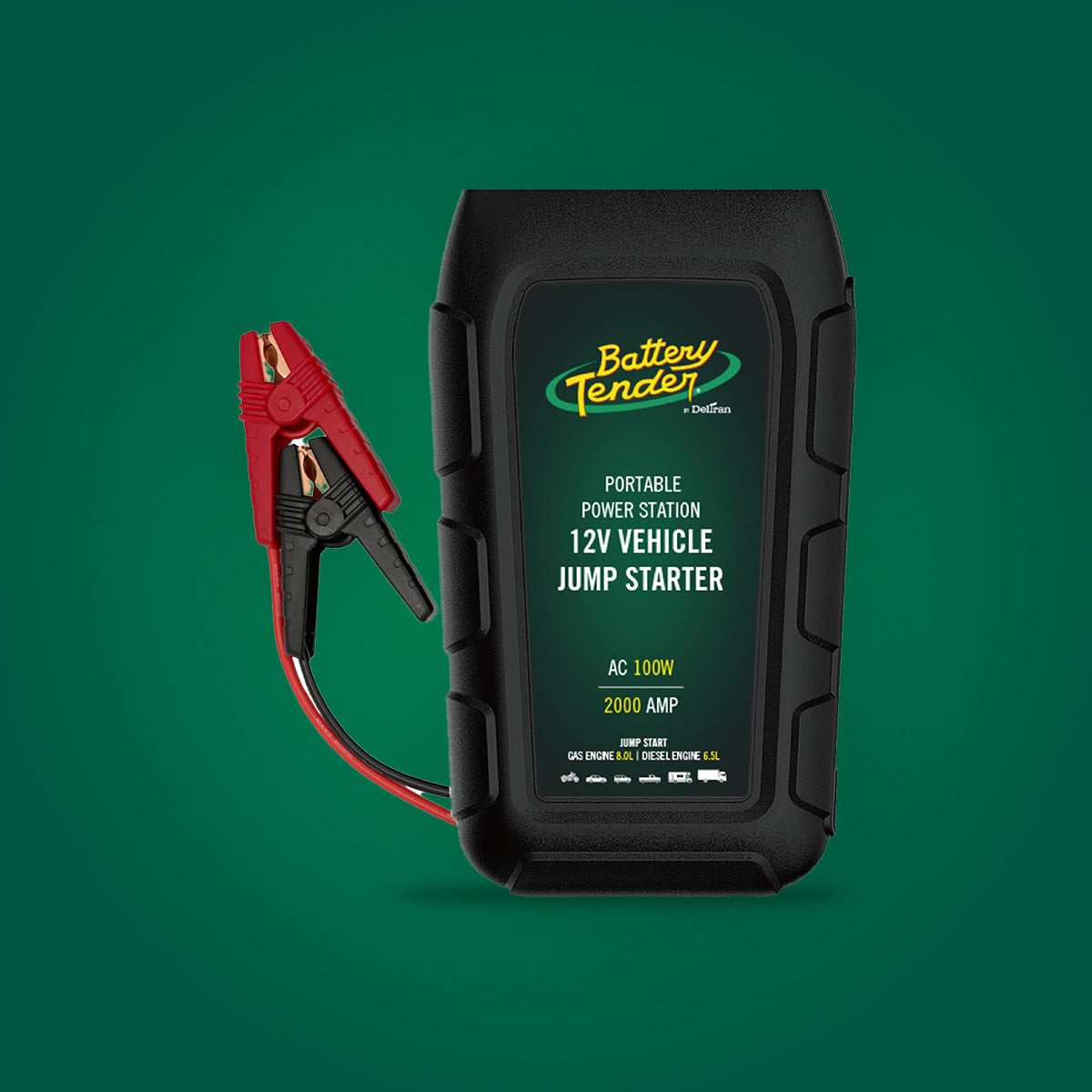
The Battery Tender 2000A Jump Starter provides 2,000 peak amps and 16,000 mAh of capacity — enough to individually boost each 6V or 8V battery in the pack above the minimum voltage threshold. Connect the jump starter to each battery individually for 30–60 seconds, then reconnect the PowerPlus charger to the full pack. The ISM Initialization stage detects the recovered voltage and begins bulk charging normally.
Battery Tender 2000A Jump Starter — $179.95
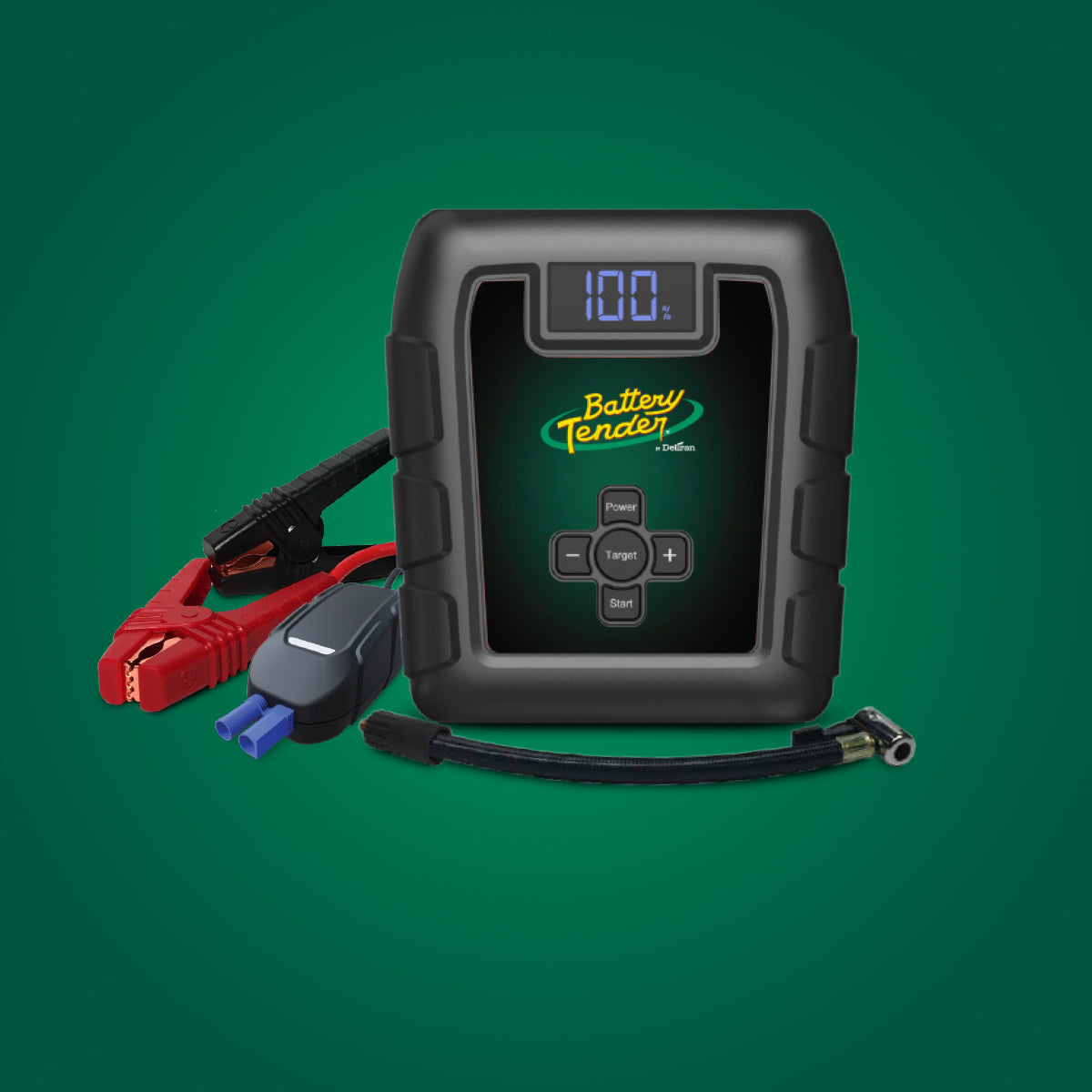
For lighter-duty recovery needs or carts stored in remote locations, the Battery Tender Charge N Start 4120 combines a 4A smart charger with a 1,200A jump starter in a single portable unit. The 4A charger section can maintain individual 12V batteries while the jump start function handles emergency recovery of deeply discharged cells.
Battery Tender Charge N Start 4120 — 4A Charger + 1,200A Jump Starter — $179.95
Frequently Asked Questions
What voltage charger does a Yamaha golf cart need?
Most modern Yamaha electric golf carts (Drive, Drive2, 48V G29) require a 48V charger. Older Yamaha models including the G14, G16, G19, G22, and 36V G29 require a 36V charger. Count the batteries and multiply by individual battery voltage to confirm. Using the wrong voltage charger will not charge the pack and may cause damage.
Can a Battery Tender PowerPlus charger stay connected permanently to a Yamaha golf cart?
Yes. Every Battery Tender PowerPlus charger uses ISM 4-stage charging with a demand-responsive Maintenance stage. Once the pack reaches full charge, the charger delivers only brief charge pulses when voltage drops below threshold — preventing overcharge, electrolyte boiling, and plate damage. The IP68 waterproof rating allows permanent outdoor installation.
How long does it take to charge a Yamaha golf cart with a PowerPlus charger?
Charge time depends on battery capacity and depth of discharge. For a typical 48V Yamaha with 210Ah batteries at 70% discharge: (210Ah × 0.70) ÷ 15A = approximately 9.8 hours. A 36V Yamaha with 225Ah batteries at 60% discharge: (225Ah × 0.60) ÷ 18A = approximately 7.5 hours. Overnight charging covers most scenarios.
Is the Battery Tender PowerPlus waterproof enough for outdoor golf cart charging?
The Battery Tender PowerPlus carries an IP68 waterproof rating — the highest available. IP68 means the unit is completely sealed against dust ingress and can withstand continuous immersion in water. It also holds UL marine ignition protection certification, confirming safe operation in enclosed battery compartments where hydrogen gas may accumulate. Rain, humidity, and direct hose wash-down pose no risk.
Conclusion
Choosing the right Yamaha golf cart charger means matching the correct voltage to the cart's battery configuration and selecting a charger intelligent enough to handle the extreme deep-discharge cycles golf carts endure daily. The Battery Tender PowerPlus line — available in 36V, 48V, and 24V configurations — provides ISM 4-stage charging, IP68 waterproof construction, and temperature compensation in a permanently mountable form factor designed specifically for this application. Combined with consistent charging habits and periodic maintenance, a Battery Tender PowerPlus charger can nearly double the service life of a Yamaha golf cart battery pack.
Explore the full lineup of Battery Tender golf cart chargers, DC plug accessories, and jump starters at the Battery Tender Golf Cart collection page.
Last updated: 2026


