

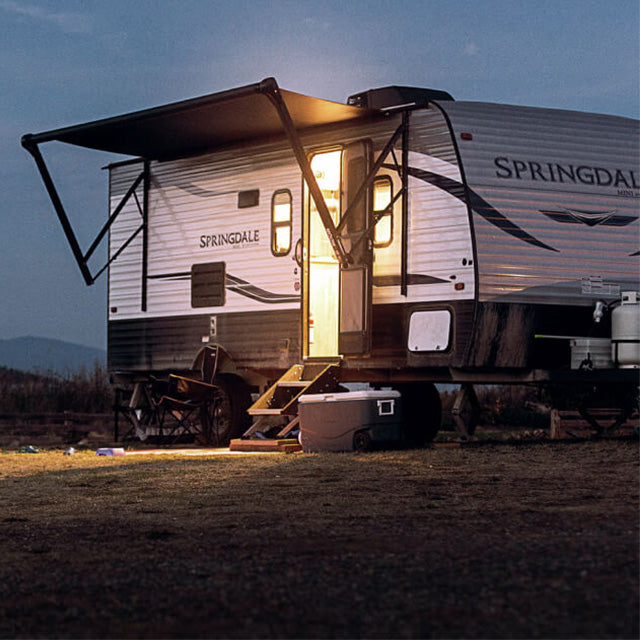

RVs present unique battery challenges. Dual battery systems—chassis starting and house bank—require different maintenance approaches. The house bank, often $1,200-2,000 in batteries (or $3,000-6,000 for lithium), powers critical systems and demands careful winter protection. Improper storage destroys these expensive investments through sulfation, freezing, or discharge damage.
Battery Tender® pioneered consumer smart chargers in 1989 and has spent 60 years refining charging technology. This comprehensive guide covers proper winterization for both chassis batteries and house banks, across both traditional lead-acid and increasingly popular lithium technologies.
Understanding RV Battery Systems
Dual Battery Architecture
Chassis Battery (Starting)
- Powers engine starting
- 12V lead-acid (typically AGM)
- 500-800 CCA typical
- Similar to automotive battery
- Cost: $150-250
- 4-7 year lifespan with maintenance
House Bank (Deep-Cycle)
- Powers living area systems
- Multiple batteries paralleled
- 200-600 Ah capacity typical
- Lead-acid or lithium options
- Cost: $800-6,000 depending on chemistry and capacity
Separation System
- Battery isolator or separator
- Prevents house bank from draining chassis
- Allows alternator to charge both banks
- Critical for system protection
House Bank Technology Evolution
Modern RVers face a significant choice: traditional lead-acid or lithium technology.
Lead-Acid House Banks (Traditional)
Flooded Deep-Cycle
- Most economical ($200-300 per battery)
- Requires regular water additions
- Vents hydrogen during charging
- Can spill if RV not level
- 300-500 cycles typical
- 3-5 year lifespan
AGM Deep-Cycle
- Sealed, maintenance-free ($300-500 per battery)
- No water additions needed
- Can mount in any position
- Faster charging than flooded
- 500-800 cycles typical
- 5-8 year lifespan with Battery Tender
Typical House Bank
- 2-6 batteries in parallel
- 400-800 Ah total capacity
- 200-400 Ah usable (50% depth of discharge limit)
- Total cost: $800-2,000
Lithium House Banks (Modern Choice)
The RV Lithium Revolution: Lithium technology is transforming RV electrical systems. The advantages for RVers are compelling:
Usable Capacity Advantage
- Lead-acid: Only 50% usable (400Ah bank = 200Ah usable)
- Lithium: 80% usable (400Ah bank = 320Ah usable)
- Result: Half the battery weight for same usable power
Weight Savings
- 400Ah lead-acid: ~500 lbs
- 400Ah lithium: ~160 lbs
- 340 lb weight reduction
- Critical for payload-limited RVs
Cycle Life
- Lead-acid: 300-1,000 cycles
- Lithium: 3,000-5,000+ cycles
- 10x longer cycle life typical
Charging Speed
- Lead-acid: 8-12 hours to full charge
- Lithium: 2-4 hours to full charge
- 3-4x faster charging
- Critical for boondocking with solar
Voltage Consistency
- Lead-acid: Voltage sags significantly under load
- Lithium: Maintains voltage throughout discharge
- Better appliance performance with lithium
Cost Reality
- 400Ah lead-acid house bank: $1,200-2,000
- 400Ah lithium house bank: $3,000-6,000
- Break-even: 5-7 years typically
- Lithium advantages justify premium for serious RVers
Why RVers Choose Lithium
- Boondocking (usable capacity + solar charging speed)
- Weight-sensitive RVs (half-ton tow vehicles)
- Full-time RVers (cycle life justifies cost)
- Technology enthusiasts (best performance)
Lithium Limitations
- CANNOT charge below 32°F
- Higher initial cost (3-5x lead-acid)
- Requires lithium-compatible charging
- Inverter/charger may need upgrade
Battery Tender Lithium Development
We previously manufactured lithium batteries and are launching a complete new lithium battery line in summer 2026, specifically engineered for RV and marine house bank applications with optimized BMS systems.
Pre-Winter Assessment
Chassis Battery Inspection
Visual Check
- Cracks, bulges, case damage
- Terminal corrosion
- Cable condition
- Hold-down security
Voltage Testing
- 12.6-12.8V: Fully charged
- 12.4-12.6V: Charge before storage
- Below 12.4V: Charge immediately
Load Testing
- Professional test reveals capacity
- Critical for batteries 4+ years old
- Replace if failing test
House Bank Assessment
Lead-Acid Bank
- Test each battery individually (disconnect parallel connections)
- Check electrolyte level (flooded only)
- Look for sulfation signs
- Verify all batteries similar voltage
Lithium Bank
- Check BMS status indicators
- Verify all cells balanced
- Confirm no error codes
- Check for physical damage
System Verification
- Test battery separator/isolator function
- Verify converter/charger operation
- Check for parasitic draws
- Test solar charge controller (if equipped)
RV Storage Location Decisions
Full-Service RV Storage
With Shore Power Available
- Ideal for both battery systems
- Leave batteries installed
- Connect Battery Tender charger or converter
- Perfect charge maintenance
- Works for lithium if climate-controlled
Without Shore Power
- Lead-acid: Remove batteries or plan monthly service
- Lithium: MUST remove if not climate-controlled
- Schedule monthly charging visits
- Or bring batteries home for proper storage
Home Storage (Driveway/Yard)
With Power Outlet
- Extension cord to RV
- Connect shore power
- Run converter or Battery Tender charger
- Monitor monthly
Without Power
- Remove batteries
- Store in garage/basement
- Connect Battery Tender charger
- Reinstall in spring
Climate-Controlled Storage Facility
Temperature-Controlled Environment
- Perfect for lithium house banks
- Batteries can remain installed
- Shore power typically available
- Premium cost justified for lithium protection
Standard Storage Unit
- Lead-acid: Remove and store at home
- Lithium: MUST remove (temperature control critical)
- Check facility rules on battery storage
Winterization Procedures by System
Chassis Battery Winterization
Option 1: Leave Installed
- Disconnect negative cable (prevent parasitic draw)
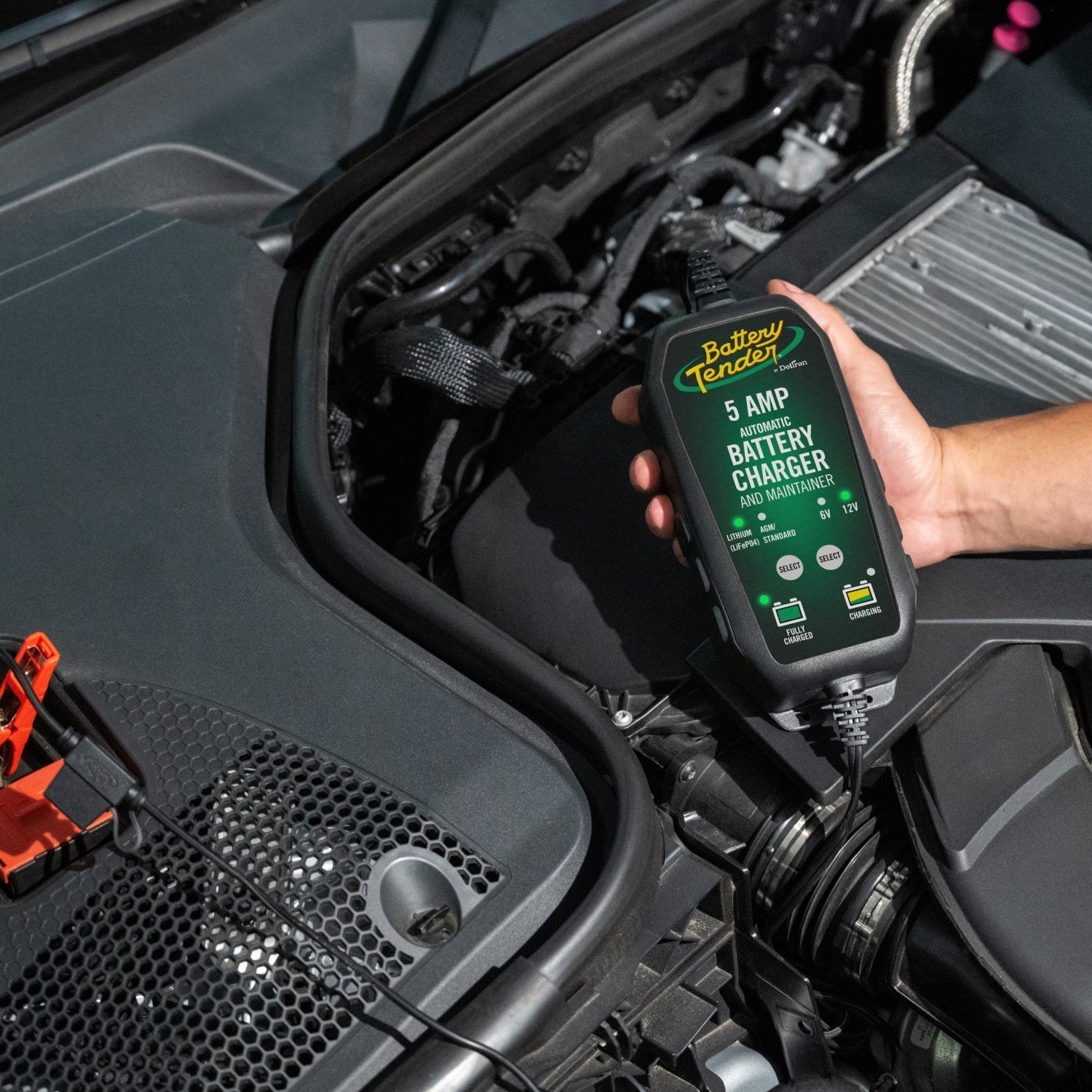
- Connect RV-compatible Battery Tender charger
- Route charger to accessible location
- Check monthly (green light = maintained)
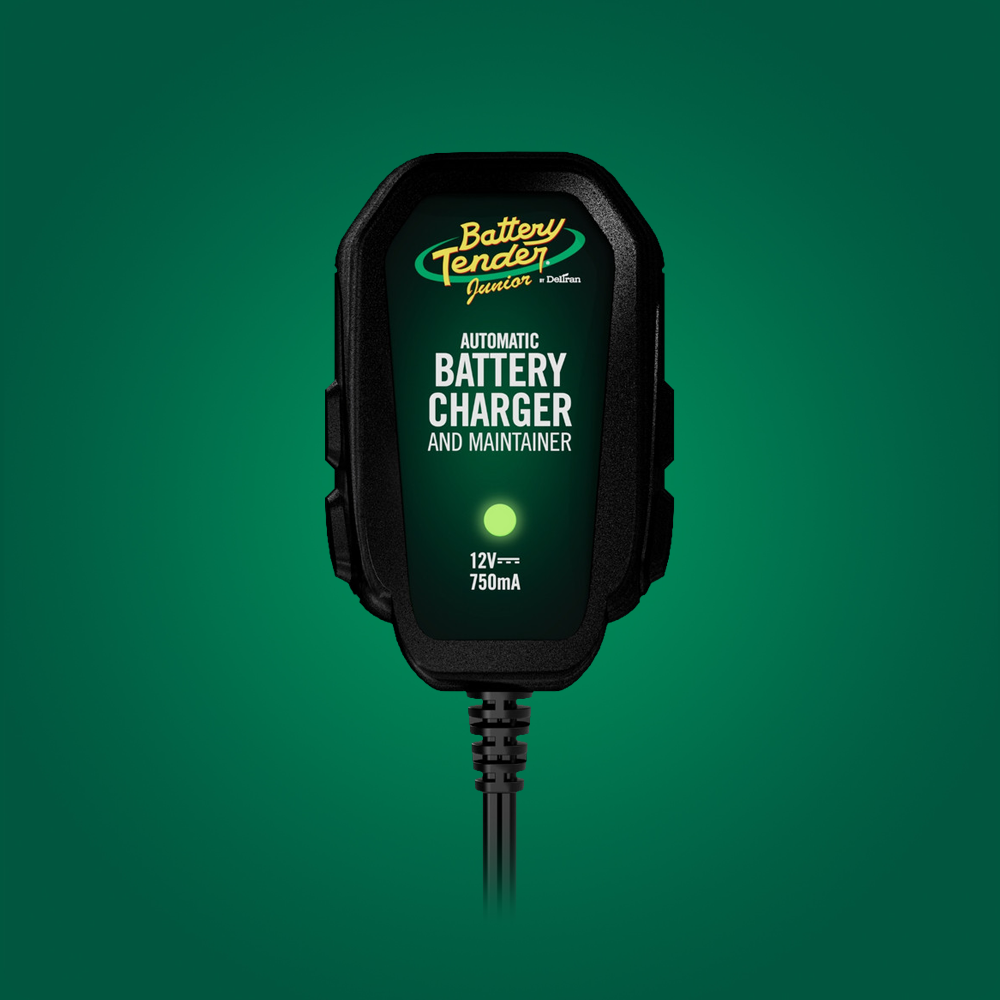
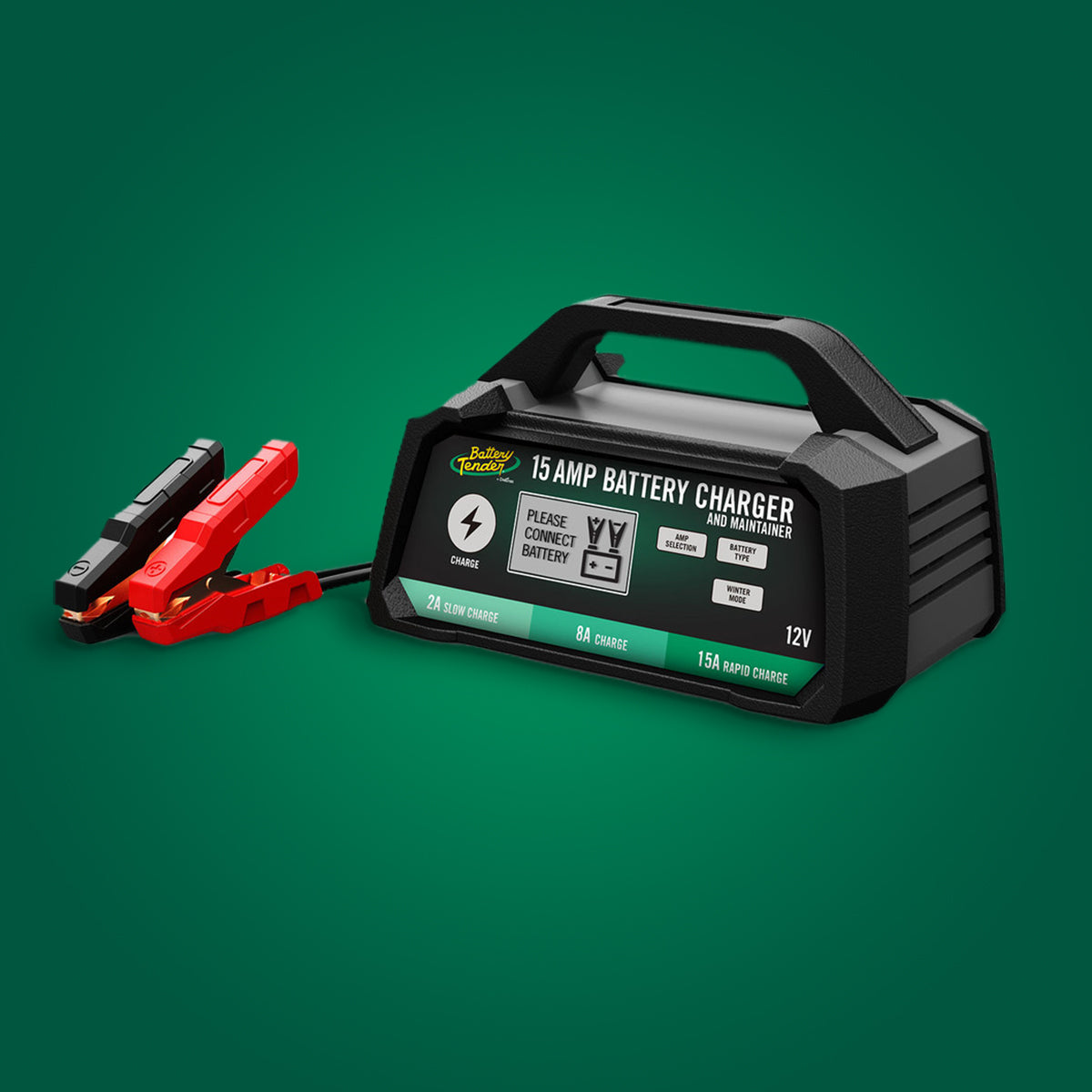
See RV-specific Battery Tender charger options here: RV & Outdoors Battery Chargers.
Option 2: Remove for Storage
- Disconnect negative first
- Disconnect positive second
- Remove hold-down
- Store in heated location (40-70°F)
- Connect Battery Tender charger
- Charge to 100% before storage
Lead-Acid House Bank Winterization
Preparation
- Disconnect parallel connections
- Test each battery individually
- Charge all to 100% (12.6-12.8V each)
- Verify equal voltages across bank
Option 1: Leave Installed with Converter
- Leave shore power connected
- RV converter maintains charge
- Check voltages monthly
- Only if converter has proper float mode
Option 2: Leave Installed with Battery Tender charger
- Better than converter (dedicated float mode)
- Battery Tender® WaveCharge Pro 4-Bank 12V, 40 AMP Battery Charger ideal for multiple batteries (product details)
- Individual charging per battery
- Perfect maintenance all winter
Option 3: Remove Batteries
- Best for outdoor/unheated storage
- Store in heated location
- Connect Battery Tender® to each battery
- Or use multi-bank charger
- Charge to 100% before storage
Monthly Maintenance (If Not Using a Battery Tender charger)
- Test each battery voltage
- Recharge if any below 12.4V
- Inspect for damage/corrosion
- Record voltages in maintenance log
Lithium House Bank Winterization
Critical Lithium Requirements
Temperature Control
- CANNOT charge below 32°F
- BMS prevents cold charging
- Must maintain storage above 40°F for charging capability
- This dictates storage strategy
Option 1: Climate-Controlled Storage (Best)
- Leave batteries installed
- Shore power connected
- Inverter/charger with lithium profile maintains charge
- Temperature stays above 40°F minimum
- Perfect solution for lithium
Option 2: Remove and Store Indoors (Most Common)
- Disconnect batteries from RV system
- Transport to heated garage/basement
- Store at 60-80% charge (NOT 100%)
- Connect lithium-compatible charger
- Check voltage monthly
- Recharge if below 13.0V
- Maintain temperature above 40°F
For lithium-compatible RV chargers, see: Lithium Chargers for RVs.
Lithium Storage Best Practices
- Store at 60-80% charge (optimal for longevity)
- Very low self-discharge (2-3% per month)
- Check voltage monthly
- Temperature monitoring critical
- Less maintenance than lead-acid (but temperature is non-negotiable)
Why Lithium Works for RVers
RV interiors are climate-controlled or batteries can be easily removed to heated storage, solving the cold-charging limitation that makes lithium impractical for snowmobiles.
Solar Panel Considerations
Solar During Winter Storage
Disconnect Solar for Storage
- Solar panels can overcharge batteries
- Charge controller may malfunction
- Snow can create intermittent charging
- Better to use a Battery Tender charger for consistent maintenance
If Keeping Solar Connected
- Verify charge controller functioning properly
- Monitor battery voltages monthly
- Ensure controller has proper temperature compensation
- Lithium: Verify controller has lithium profile and temperature sensor
Solar Panel Protection
- Cover panels or tilt vertical (snow management)
- Disconnect if snow load concerns
- Inspect wiring and connections
- Clean panels before spring
Multi-Battery Bank Charging
Charging Multiple Batteries Simultaneously
RV House Bank Challenges
- 2-6 batteries typical
- Each needs individual charging
- Parallel charging can damage batteries
- Unequal batteries discharge bank
Battery Tender Solutions
Multibank Chargers for RV usage:
- Charge multiple batteries simultaneously
- Independent charging per battery
- Individual chemistry selection
- Can mix lead-acid and lithium (separate banks)
- Single outlet convenience
Browse RV multibank chargers: Multibanks (RV).
Installation for Storage
- Disconnect battery parallel connections
- Connect charger to each battery individually
- Select appropriate chemistry per battery
- Leave connected all winter
- Verify green indicators monthly
Why Individual Charging Matters
- Batteries age at different rates
- Weaker battery drags down stronger batteries
- Individual charging balances entire bank
- Extends overall system lifespan
Winterizing RV Living Systems
Water System Protection
Prevents Freeze Damage (Battery-Related):
- Water pump draws battery power if frozen
- Damaged pump creates parasitic draw
- Proper winterization protects batteries too
Winterization Steps
- Drain all water tanks
- Drain water heater
- Add RV antifreeze to lines
- Bypass water heater
- Run antifreeze through all faucets
Propane and Appliances
System Shutdown
- Close propane at tank
- Turn off water heater
- Disable refrigerator
- Disconnect batteries from parasitic draws
Why This Matters
- Prevents battery drain from "phantom" loads
- Protects systems from freeze damage
- Reduces fire risk during storage
- Allows batteries to maintain charge
Spring Recommissioning
Pre-Season Testing
Chassis Battery
- Voltage should be 12.6-12.8V if maintained
- Load test if any concerns
- Clean terminals
- Verify hold-down secure
Lead-Acid House Bank
- Test each battery individually (should be 12.6-12.8V)
- Load test entire bank
- Check electrolyte level (flooded only)
- Verify batteries balanced (equal voltages)
Lithium House Bank
- Check voltage (13.0-13.6V depending on storage charge)
- Verify BMS indicators normal
- Confirm no error codes
- Warm batteries to 50°F+ if stored cold
Reinstallation Procedures
Chassis Battery
- Clean battery tray
- Position battery correctly
- Connect positive first
- Connect negative second
- Secure hold-down
- Test starting system
House Bank
- Reinstall each battery
- Reconnect parallel connections
- Verify correct wiring (positive to positive, etc.)
- Connect to RV system
- Test converter/charger function
- Verify battery isolator working
System Verification
- Connect shore power
- Check converter charging voltage
- Test all 12V systems (lights, water pump, etc.)
- Verify refrigerator operation
- Check solar charge controller (if equipped)
- Lithium: Confirm inverter/charger using lithium profile
Break-In Period
First Few Days
- Monitor battery voltages closely
- Check charging system performance
- Verify no unusual draws
- Test all systems under load
Lead-Acid Charging
- Alternator/converter: 13.8-14.4V typical
- Should accept charge readily
- No excessive heat during charging
Lithium Charging
- Inverter/charger: 14.2-14.6V typical
- Verify lithium-compatible charging profile
- BMS should show normal charging
- Monitor carefully first few charge cycles
Cost-Benefit Analysis
Lead-Acid House Bank (400Ah)
Equipment Investment
- Batteries: $1,200-2,000
- Multi-bank charger: $300-400
- Total: $1,500-2,400
With Battery Tender
- Lifespan: 6-8 years (vs 3-4 without)
- Savings: $1,200-2,000 (avoided replacement)
- ROI: Charger pays for itself in extended battery life
Related reading: A Charger Is Cheaper Than a Battery.
Lithium House Bank (400Ah)
Equipment Investment
- Batteries: $3,000-6,000
- Lithium-compatible charger: $140-400
- Possible inverter/charger upgrade: $0-1,500
- Total: $3,140-7,900
Long-Term Value
- Lifespan: 10-15 years (vs 3-5 for lead-acid)
- Cycles: 3,000-5,000 (vs 500-1,000 lead-acid)
- Weight savings: 340 lbs typical
- Usable capacity: 2x lead-acid equivalent
- Break-even: 5-7 years
For Serious RVers
- Boondocking: Lithium charging speed + usable capacity critical
- Full-timers: Cycle life justifies investment
- Weight-limited RVs: 340 lb savings significant
- Proper winter storage protects $3,000-6,000 investment
Lead-Acid vs Lithium RV Comparison
| Category | Lead-Acid | Lithium (LiFePO4) |
|---|---|---|
| 400Ah Bank Cost | $1,200-2,000 | $3,000-6,000 |
| Weight | ~500 lbs | ~160 lbs |
| Usable Capacity | 200Ah (50%) | 320Ah (80%) |
| Charge Time | 8-12 hours | 2-4 hours |
| Cycle Life | 500-1,000 | 3,000-5,000+ |
| Lifespan | 3-5 years | 10-15 years |
| Storage Temp | 32-80°F | 40-70°F |
| Charging Temp | Down to 0°F | Cannot charge below 32°F |
| Maintenance | Regular or Battery Tender charging | Minimal (temperature control required) |
| Self-Discharge | 3-5% per month | 1-2% per month |
| Voltage Sag | Significant | Minimal |
| Solar Charging | Slower | Much faster |
| Best For | Weekend RVers, budget-focused | Boondockers, full-timers, weight-sensitive |
FAQ
Q: Can I leave my RV plugged in all winter?
A: Lead-acid: Yes, if converter has proper float mode. Lithium: Only if climate-controlled storage. Better solution: Battery Tender charger with dedicated float mode (designed for long-term storage since 1989).
Q: Should I upgrade my house bank to lithium?
A: Consider if: (1) Serious boondocking (solar charging speed matters), (2) Weight-limited RV, (3) Full-time or heavy use (cycle life matters), (4) Climate-controlled storage available. Lithium is becoming the standard for serious RVers.
Q: Will my RV converter charge lithium batteries?
A: Many older converters won't. Verify yours has lithium-compatible charging profile (14.2-14.6V bulk, no float mode). May need upgrade to lithium-capable converter/charger ($500-1,500).
Q: Can I mix lithium and lead-acid in my RV?
A: Yes, but they must be separate systems (chassis lead-acid, house bank lithium). Never parallel different chemistries. Each system needs appropriate charger.
Q: Do I need a Battery Tender charger if my RV has a converter?
A: Battery Tender charger is superior for storage. RV converters often don't have proper float mode for long-term storage. Battery Tender technology has been specifically designed for winter maintenance since 1989.
Q: How do I know if my lithium batteries are too cold to charge?
A: The BMS will prevent charging below 32°F automatically. If batteries are cold, warm them to 50°F+ before attempting charge. Never force charge cold lithium batteries.
Conclusion
RV battery systems demand careful winter attention. Dual battery banks—chassis and house—require individual maintenance strategies. Whether maintaining traditional lead-acid with proven float technology from Battery Tender (pioneered in 1989) or upgrading to lithium with climate-controlled storage, proper winterization protects expensive battery investments.
Lithium technology is transforming RV electrical systems for serious boondockers and full-timers. The weight savings and usable capacity advantages justify the premium cost, provided proper temperature-controlled storage is available. The upcoming summer 2026 lithium line from Battery Tender will bring our 60+ years of charging expertise to this emerging RV technology.
Don't let winter storage destroy your RV batteries. Implement proper charging maintenance and enjoy reliable power when camping season returns.
Browse our battery chargers and accessories.