




Walk into any marine supply store and you will find battery labels referencing Group 24, Group 27, Group 31, and larger designations like 4D and 8D. These group numbers are standardized dimensions and capacity ratings established by the Battery Council International (BCI) — but understanding what they mean in practical terms, and which one belongs in your boat, requires more than reading a label. Wrong group size means a battery that either does not fit physically or does not provide enough capacity for the job.
Battery Tender® has been supporting marine charging across all battery sizes for decades. This guide demystifies marine battery group sizes so you can make an informed decision whether you are replacing a single starting battery or sizing a complete deep-cycle house bank.
What Battery Group Size Actually Means
BCI group numbers define a battery's physical dimensions — length, width, and height — and, by extension, its approximate capacity range. They do not define chemistry (flooded, AGM, gel, or lithium all come in the same group sizes) or purpose (starting, deep-cycle, and dual-purpose all come in the same group sizes). Group size is purely about physical fit and approximate capacity bracket. Two batteries with the same group designation from different manufacturers may have noticeably different CCA ratings and amp-hour capacities, which is why comparing specifications matters beyond just matching the group number.
Common Marine Battery Group Sizes
Group 24
| Specification | Group 24 Range |
|---|---|
| Dimensions (L×W×H) | 10.3" × 6.8" × 8.9" |
| Typical CCA range | 550–750 CCA |
| Typical Ah capacity | 70–85 Ah |
| Weight | 42–54 lbs (flooded); 46–54 lbs (AGM) |
| Best application | Starting battery for smaller outboards; electronics battery |
Group 24 is the entry point for serious marine batteries — more capable than automotive-sized batteries but smaller than the heavy-duty Group 27 and 31. It is the right choice for smaller bass boats, center consoles with modest electronics, and starting applications on outboards up to approximately 150 HP. Group 24 deep-cycle batteries also serve well as dedicated electronics batteries in tournament setups.
Group 27
| Specification | Group 27 Range |
|---|---|
| Dimensions (L×W×H) | 12.4" × 6.8" × 8.9" |
| Typical CCA range | 600–900 CCA |
| Typical Ah capacity | 85–110 Ah |
| Weight | 54–68 lbs (flooded); 55–65 lbs (AGM) |
| Best application | Starting or deep-cycle in mid-size boats; trolling motor banks |
Group 27 is the most popular marine battery size — large enough for substantial capacity in both starting and deep-cycle applications, yet small enough to fit most marine battery boxes and trays. It is the standard choice for starting batteries on mid-size outboards (75–250 HP), house banks in mid-size boats, and trolling motor service on 24V or 36V systems. The additional length compared to Group 24 provides 15–30% more capacity with minimal weight penalty.
Group 31
| Specification | Group 31 Range |
|---|---|
| Dimensions (L×W×H) | 13.0" × 6.8" × 9.4" |
| Typical CCA range | 800–1150 CCA |
| Typical Ah capacity | 95–130 Ah |
| Weight | 60–75 lbs (flooded); 62–72 lbs (AGM) |
| Best application | High-demand starting; heavy deep-cycle; trolling motor in large boats |
Group 31 is the workhorse of serious marine applications. Its higher capacity makes it the choice for large outboard starting (250+ HP), house banks in larger center consoles and cruisers, dedicated trolling motor batteries for large pontoons and bass boats with full-day fishing demands, and any application where maximum capacity in a standard-footprint battery is needed.
Group 4D and 8D
| Specification | Group 4D | Group 8D |
|---|---|---|
| Dimensions | 20.75" × 8.75" × 9.9" | 20.75" × 11.0" × 9.9" |
| Typical Ah capacity | 150–180 Ah | 225–255 Ah |
| Weight | 110–130 lbs | 130–165 lbs |
| Best application | Sailboat house banks; large yacht systems | Large cruiser/yacht house banks; commercial marine |
Group 4D and 8D batteries are the heavy artillery of the marine battery world — massive capacity in a large, heavy format. They are used primarily in sailboats and larger powerboats with significant house bank requirements, commercial vessels, and liveaboard situations where days of power without shore power access are needed. Their size and weight make them impractical in most recreational powerboats, but they are the standard choice for serious cruising and offshore applications.
Choosing the Right Group Size for Your Application
| Application | Recommended Group | Notes |
|---|---|---|
| Outboard starting, under 150 HP | Group 24 or 27 | Match to manufacturer's CCA spec |
| Outboard starting, 150–250 HP | Group 27 | Higher CCA models preferred |
| Outboard starting, 250+ HP | Group 31 | Maximum CCA for reliable cold starts |
| Trolling motor, 24V system | Group 27 × 2 | 100 Ah or higher preferred |
| Trolling motor, 36V system | Group 27 or 31 × 3 | Full-day fishing demands Group 31 |
| Electronics battery | Group 24 | Dedicated, stable voltage for graphs |
| House bank, small boat | Group 27 | Deep-cycle version |
| House bank, cruiser/sailboat | Group 31 or 4D | Higher capacity for extended offshore |
| Yacht/liveaboard house bank | Group 4D or 8D | Multiple batteries in bank typical |
CCA vs. Amp-Hours: The Starting vs. Deep-Cycle Distinction
Within any given group size, batteries are spec'd for either starting performance (measured in CCA — cold cranking amps) or deep-cycle capacity (measured in amp-hours). A Group 31 starting battery optimized for CCA may have a lower amp-hour rating than a Group 31 deep-cycle battery, even though they share identical physical dimensions. Match the spec to the application — starting batteries to cranking, deep-cycle batteries to sustained loads.
Charging Any Group Size: The Same ISM Technology
The Battery Tender WaveCharge and WaveCharge Pro marine chargers handle any marine battery group size from Group 24 through 8D — the ISM 4-stage charging algorithm adjusts automatically to battery capacity. Larger batteries simply require longer charge times, not different equipment. Each independent bank in the WaveCharge system monitors and charges its connected battery individually, making it equally effective whether charging three Group 31 batteries in a tournament bass boat or a single 8D in a cruiser's house bank.
View the full marine battery charging lineup for WaveCharge configurations suited to your system.
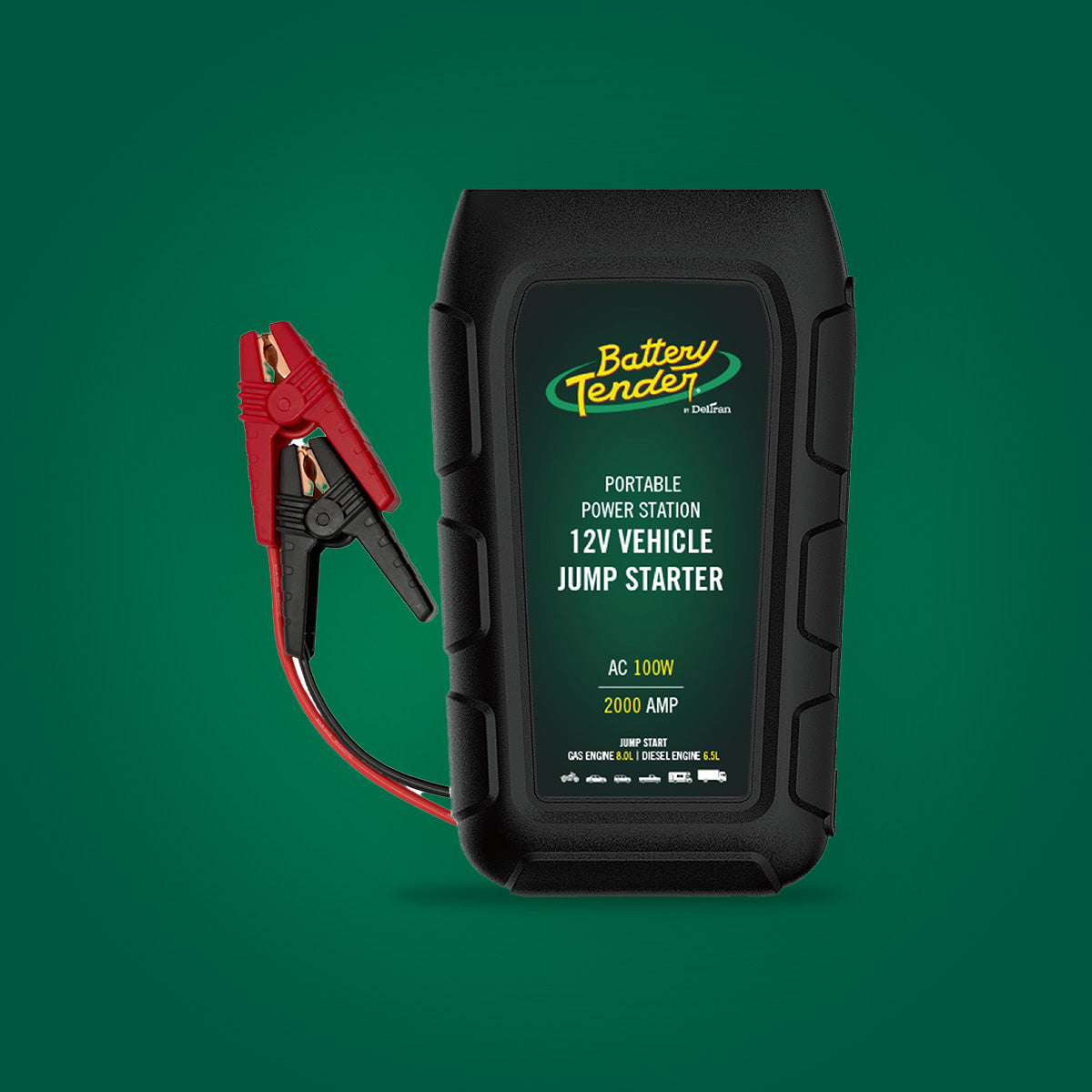
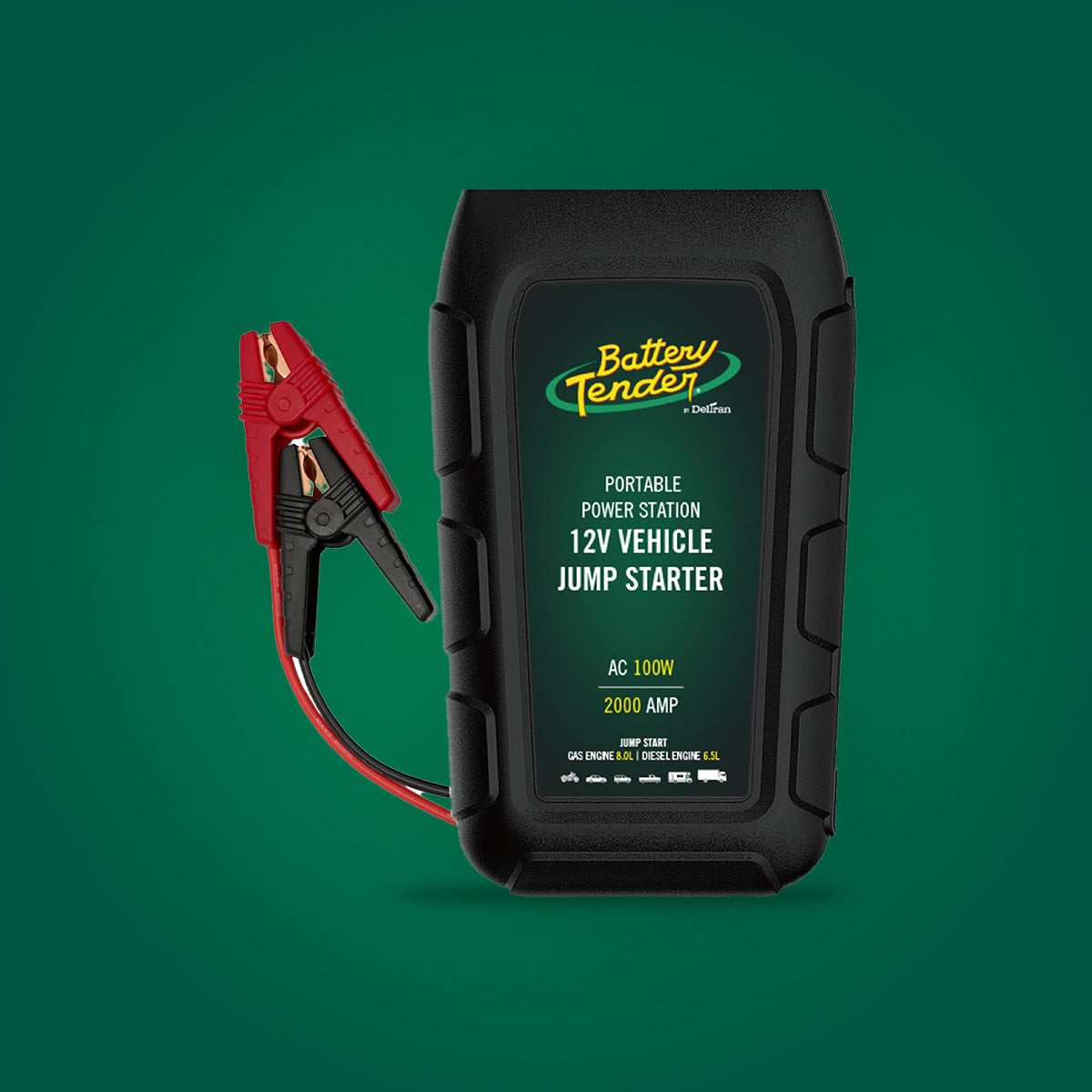
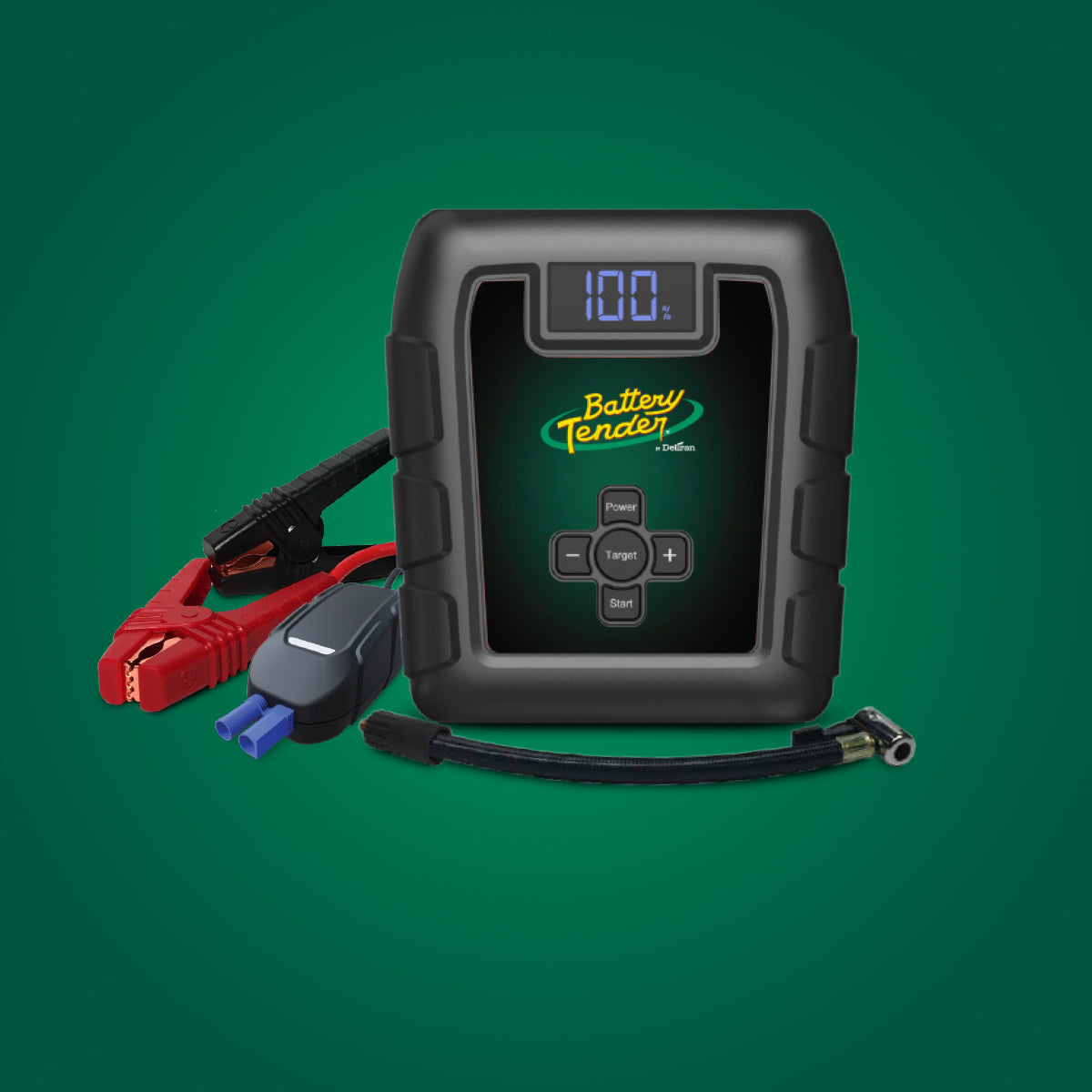
For marine emergency situations regardless of battery size, the Charge N Start 1120 provides 1200 amps of jump-starting capability — powerful enough to start any recreational marine engine.
Shop the Charge N Start 1120 (SKU: 030-7012-WH) — marine emergency starting and dock-side battery maintenance in one unit.
Frequently Asked Questions
Does group size affect how long my battery lasts?
Group size correlates with capacity, which affects how many amp-hours are available and how deeply a battery is cycled during each use. A battery that is discharged to only 30% of its capacity on a typical day lasts significantly longer than one discharged to 80%. Larger group sizes provide more headroom and generally result in longer service life in heavy-use applications.
Can I use a higher group size than my boat originally came with?
If the battery physically fits the tray and the hold-down hardware accommodates the size, yes — a higher group size provides more capacity and is generally a performance upgrade. Confirm physical dimensions before purchasing and ensure adequate securing hardware for the heavier battery.
What is the difference between CCA and MCA ratings?
CCA (Cold Cranking Amps) measures available starting current at 0°F. MCA (Marine Cranking Amps) measures at 32°F and is the more commonly cited spec for marine batteries. MCA ratings are typically 20–25% higher than CCA ratings for the same battery — be aware of which spec you are comparing when evaluating batteries.
Conclusion
Battery group size is the starting point for any marine battery selection — it establishes the physical format and general capacity bracket. The next level of selection involves matching CCA and amp-hour specs to your specific engine requirements and usage patterns. Understanding group sizes removes one layer of confusion from a purchasing decision that can significantly affect on-water reliability.
Browse the full marine charging lineup for products sized for every marine battery application.


