

How Long Does It Take to Charge a Car Battery? Time Guide (2026)
How long does it take to charge a car battery? A typical 60Ah car battery that is 50% discharged needs about 3.75 hours at 8 amps, 7.5 hours at 4 amps, or 15 hours at 2 amps. Add roughly 20% for charging losses.
The formula below gives a number you can plan around, and the sections after it explain why real-world times drift. Battery Tender® chargers use Infinite Sequential Monitoring (ISM), a four-stage process that sets the pace and ends the charge on its own. Updated for 2026.
Key Takeaways
- Formula: (battery Ah × depth of discharge) ÷ charger amps = hours. Add about 20% for losses.
- Example: a 60Ah battery at 50% discharge takes about 2 hours at 15A, 3.75 hours at 8A, and 15 hours at 2A before losses.
- The last 20% is slowest because the Absorption stage tapers current as the battery fills.
- Cold, age, and sulfation add hours. Never charge a frozen battery.
- Match amps to capacity: a charge rate of 10% to 25% of battery Ah is the practical sweet spot.
How Long Does It Take to Charge a Car Battery? Start With the Formula
Charging time equals the amp-hours you must replace divided by the charger output in amps. The working formula is (battery Ah × depth of discharge) ÷ charger amps = hours, plus about 20% for the Absorption taper and charging losses.
Most sedan batteries (Group 24 through Group 65) hold 45 to 75Ah. Take a 60Ah battery that is 50% discharged: 60 × 0.50 = 30Ah to replace. An 8-amp charger needs 30 ÷ 8 = 3.75 hours. Add 20% and plan on about 4.5 hours.
Estimate Depth of Discharge From Resting Voltage
Measure with a multimeter after the battery has rested at least four hours with no load. Approximate resting voltages for a 12V lead-acid battery:
- 12.6V or higher: about 100% charged
- 12.4V: about 75%
- 12.2V: about 50%
- 12.0V: about 25%
- 11.9V or lower: deeply discharged, often with sulfation
Charging Time Table for a 60Ah Car Battery
The table applies the formula to a 60Ah battery at two discharge levels. Times are before the 20% allowance.
| Charger Output | 50% Discharged (30Ah) | 80% Discharged (48Ah) |
|---|---|---|
| 15A | 2.0 hours | 3.2 hours |
| 8A | 3.75 hours | 6.0 hours |
| 4A | 7.5 hours | 12 hours |
| 2A | 15 hours | 24 hours |
| 1.25A | 24 hours | 38.4 hours |
Scale the numbers for your battery. A 45Ah battery takes 25% less time than the 60Ah figures, and a 75Ah battery takes 25% more.
What Changes the Answer: Temperature, Age, and Chemistry
Cold weather, battery age, and chemistry can each add hours to the formula result. Treat the formula as a baseline, then adjust for these three variables.
- Temperature: below 32°F, lead-acid batteries accept current more slowly, so expect longer times. Many Battery Tender chargers include temperature compensation, which adjusts charge voltage to the battery temperature. Battery Tender Junior models do not, so use them in a moderate-temperature garage. A deeply discharged battery can freeze in winter. Let a frozen case thaw to room temperature before charging.
- Age and sulfation: a battery that sat below 12.4V for weeks, or one that is 4 to 5 years old, accepts current slowly because sulfate crystals coat the plates. Recovery on a low-amp setting can take 24 to 48 hours, and some batteries never fully recover.
- Chemistry: AGM batteries accept current efficiently, while flooded batteries follow the standard timing. Lithium (LiFePO4) batteries charge quickly but need a charger with a lithium-compatible mode.
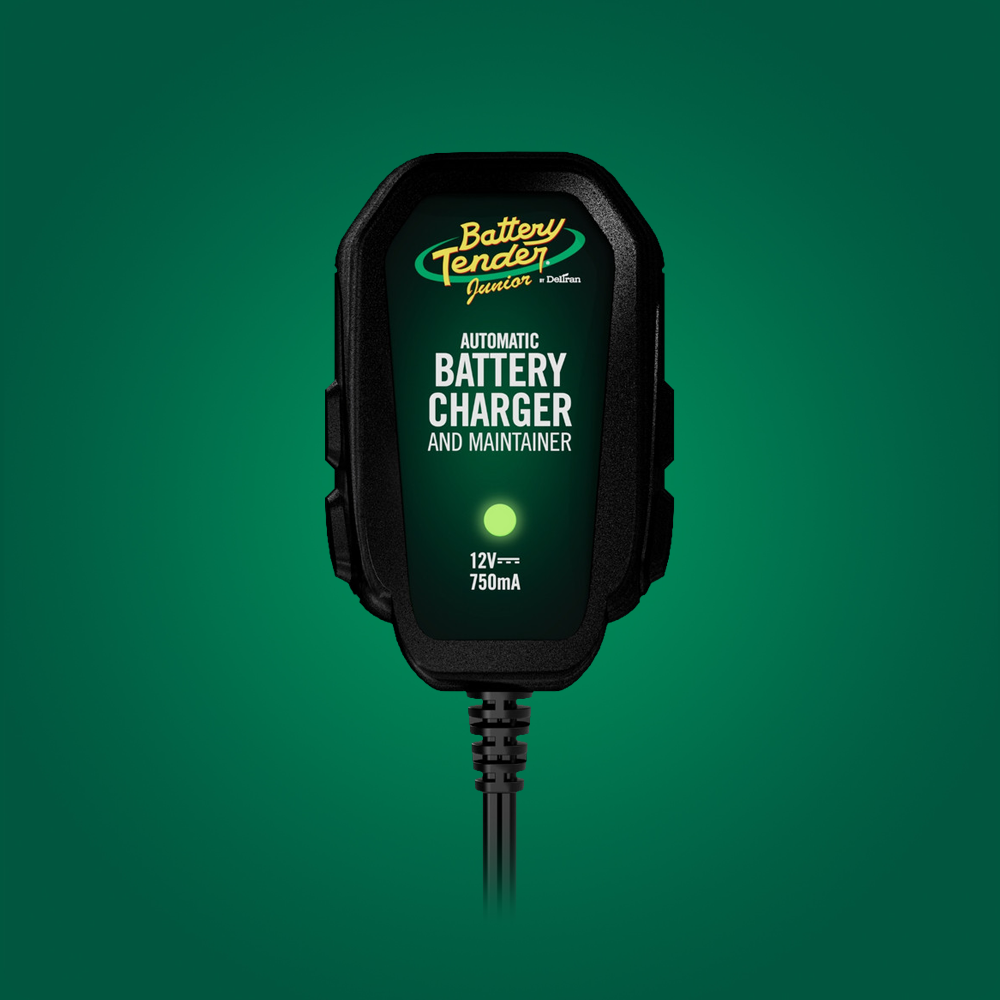
Deep-cycle packs behave differently from starting batteries. For multi-battery setups, see How Long to Charge Golf Cart Batteries with a Battery Tender PowerPlus Charger (2026) and How Long to Charge a Boat Battery with Battery Tender WaveCharge Marine Chargers (2026).
How Long Does It Take to Charge a Car Battery to 100%? The ISM Stages
A full charge takes longer than the bulk math suggests because the final 20% of capacity goes in slowly. Battery Tender ISM technology works through four stages:
- Initialization: tests the battery and applies gentle current to determine its condition.
- Bulk Charge: delivers full rated current until the battery reaches about 80% state of charge.
- Absorption: holds voltage constant while current tapers, filling the last 20% of capacity without overcharging.
- Float Maintenance: sends demand-responsive pulses only when voltage drops, so the charger can stay connected indefinitely.
Here is the timeline for the 60Ah battery at 50% discharge on a 4-amp charger. Bulk Charge covers 18Ah (30% of capacity) in about 4.5 hours. Absorption then takes roughly 3 to 5 hours to add the remaining 12Ah as current tapers. The total is 8 to 10 hours, which matches the formula plus the 20% allowance.
Conventional trickle chargers deliver constant current regardless of battery state, so they risk overcharging and cannot be left connected safely. Float-only chargers hold constant voltage with no Absorption stage, which makes them slower to fill a depleted battery. ISM adapts to the battery through all four stages instead.
Step-by-Step: Charge a Car Battery and Confirm It Is Full
Follow these steps to charge safely and verify the result.
- Ventilate: park in an open, ventilated space and switch off the ignition and accessories.
- Measure: record the resting voltage and estimate depth of discharge from the voltage list above.
- Calculate: apply the formula, add 20%, and choose a charge rate between 10% and 25% of battery Ah.
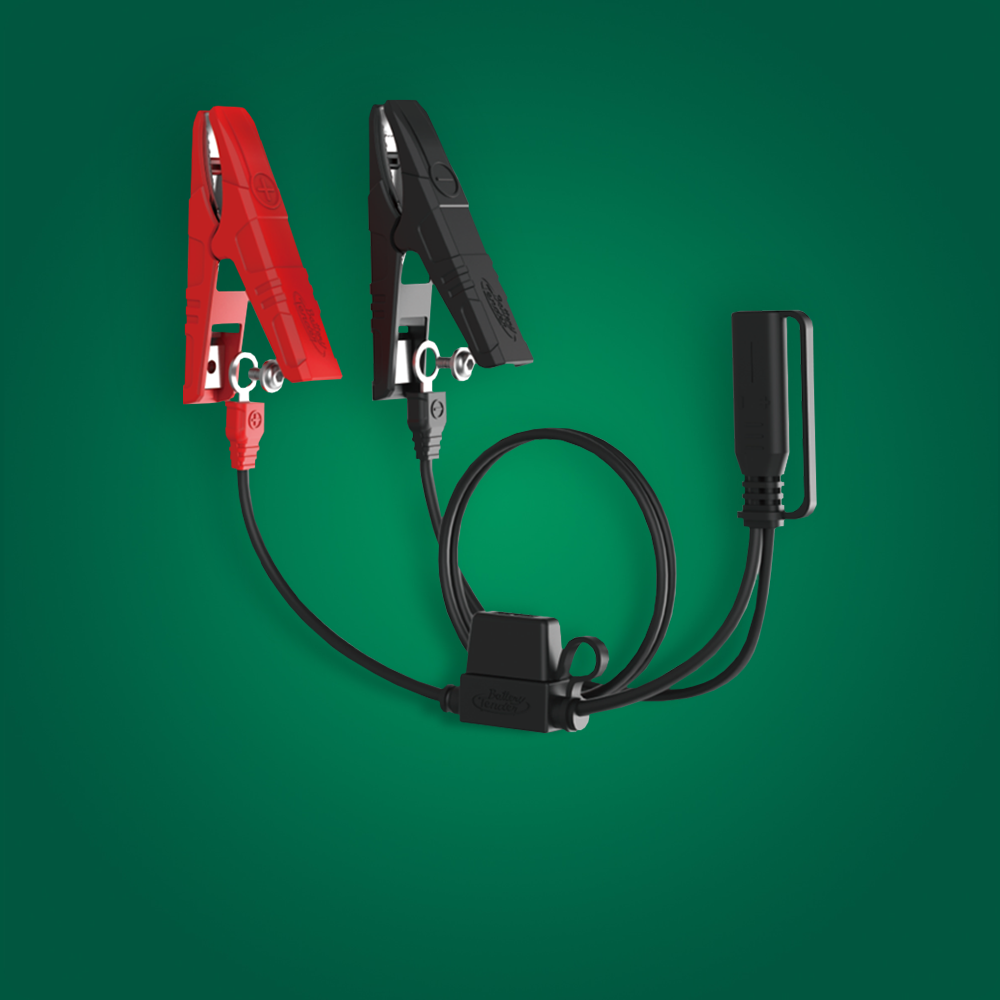
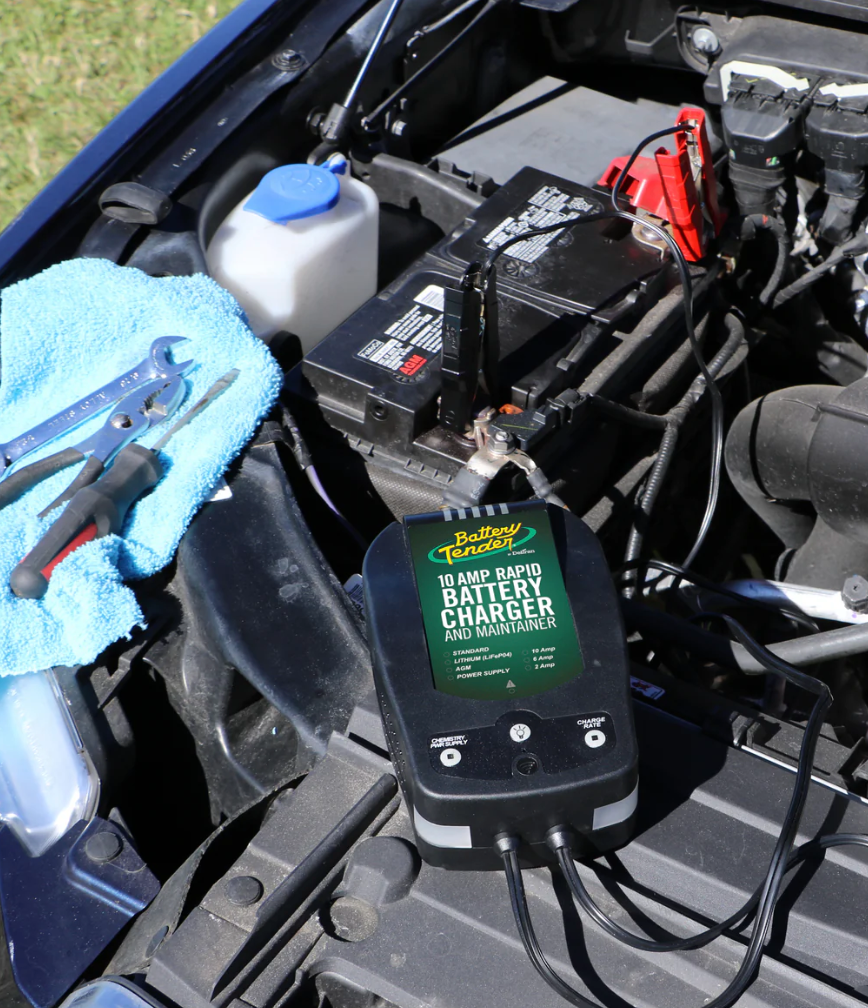
- Connect unplugged: attach the red clamp to the positive terminal first. Attach the black clamp to bare chassis metal away from the battery, or to the negative post if the battery is out of the vehicle.
- Power on: plug in the charger and confirm the indicator shows the charging stage.
- Check at the estimated time: look for the fully charged or maintenance indicator.
- Disconnect in order: unplug from AC first, then remove the black clamp, then the red.
- Verify: let the battery rest one to two hours and confirm 12.6V or higher.
A battery that charges fully but drops below 12.4V within a day or two has a capacity problem, not a charging problem. The Battery Tender 12V / 6V Battery Tester separates a battery that needs a charge from one that needs replacing. That saves you from sinking hours into a failing battery.
Battery Tender 12V / 6V Battery Tester
Choosing a Charger for Your Time Window
Match the charger to how fast you need the battery back and how large the battery is. The table summarizes the fit for a 60Ah battery at 50% discharge.
| Charger | Output | Best Fit | Time (60Ah at 50%) |
|---|---|---|---|
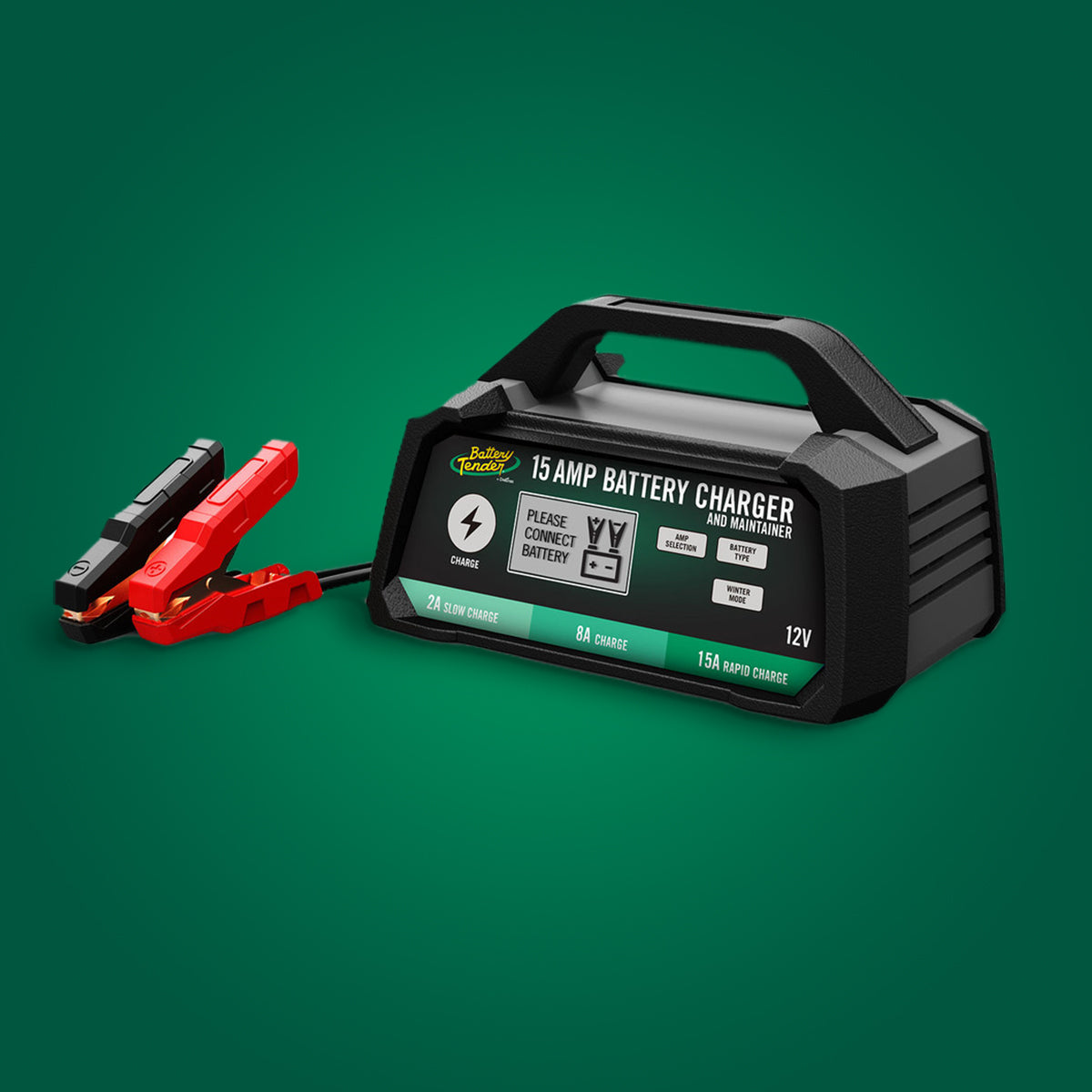
| Battery Tender Power Tender 15/8/2 | 15A / 8A / 2A selectable | Trucks, SUVs, large batteries, fast turnaround | About 2 hours at 15A |
| Battery Tender Plus 6V/12V 2 Amp | 2A | Compact cars, classic 6V systems, overnight top-offs | About 15 hours |
| Battery Tender 4-Bank 1.25 Amp | 1.25A per bank | Several vehicles in storage | About 24 hours per bank |
| Battery Tender Charge N Start 1100 | 1A charger + 1000A jump | Maintenance plus emergency starts | About 30 hours |
When a vehicle must be ready by tomorrow morning, selectable output is the deciding feature. The Battery Tender Power Tender 15/8/2 Amp runs 15A for a depleted truck or SUV battery, drops to 8A for a standard car battery, and uses the 2A setting for small batteries and long-term maintenance. It includes temperature compensation for cold garages.
Battery Tender Power Tender 15/8/2 Amp 12V Battery Charger and Maintainer
For a compact car with a 35Ah to 50Ah battery, 2 amps is an overnight rate. A 45Ah battery at 30% discharge needs 13.5Ah, which is 6.75 hours, or about 8 hours with losses. The Battery Tender Plus 6V/12V 2 Amp also switches to 6V for classic cars.
Battery Tender Plus 6V/12V 2 Amp Battery Charger and Maintainer
Households with several seasonal vehicles gain more from parallel maintenance than from speed. The Battery Tender 4-Bank 12V 1.25 Amp charger gives each of four batteries its own output, each monitored separately. The trade-off is time: 1.25A per bank suits maintenance, not rapid recovery of a dead battery.
Battery Tender 4-Bank 12V 1.25 Amp Battery Charger and Maintainer
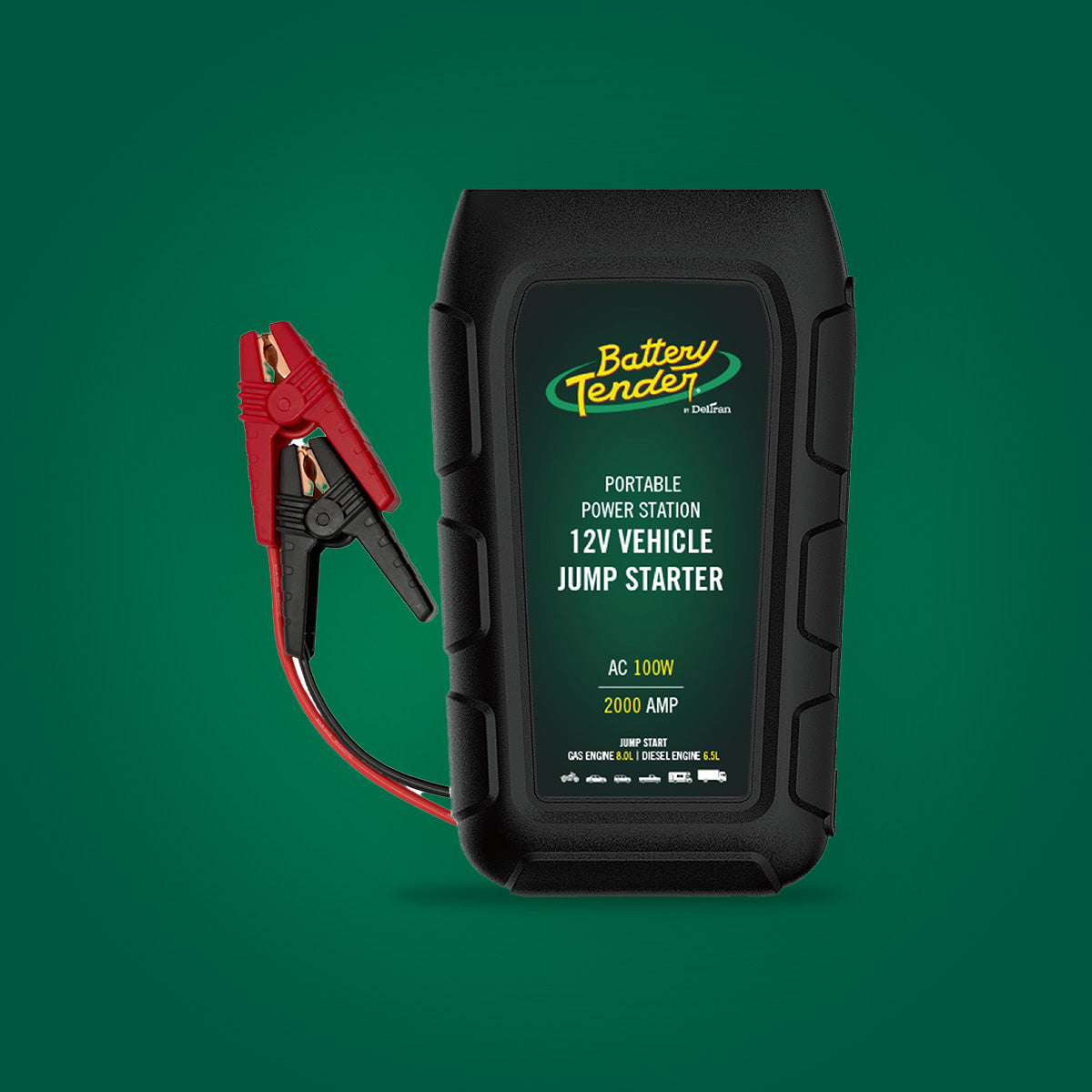
Drivers who want one device for both problems should consider the Battery Tender Charge N Start 1100. Its charger section handles standard, AGM, GEL, and lithium 12V batteries, while its internal lithium-ion pack delivers a 1000A jump start when a battery is too weak to wait on a 1A charger. Because 1A is slow for a drained car battery, treat it as a maintainer and emergency starter.
Battery Tender Charge N Start 1100 — 1 Amp Battery Charger & 1000 Amp Jump Starter
Frequently Asked Questions
How long does it take to charge a dead car battery with a 2-amp charger?
A 60Ah battery that is 80% discharged needs about 48Ah, so a 2-amp charger takes roughly 24 hours, or about 29 hours with losses. A smaller 45Ah battery at the same discharge level needs about 18 to 22 hours. Use a higher setting when time matters.
Can I leave the charger connected after the battery is full?
Yes, with a smart charger. After Absorption, the ISM Float Maintenance stage sends pulses only when voltage drops, so the battery stays full without overcharging. Conventional trickle chargers deliver constant current and should not be left connected indefinitely.
How long does it take to charge a car battery by driving?
Highway driving for 30 to 60 minutes typically replaces the energy used to start the engine, but an alternator is built to maintain a charged battery, not recover a depleted one. A battery below 12.2V usually needs several hours on a plug-in charger.
Does a faster charger damage the battery?
Not when the rate stays within 10% to 25% of battery capacity and the charger regulates voltage. A 15A setting suits a 60Ah to 80Ah battery, while a 30Ah battery should use 2A to 4A. ISM tapers current automatically in the Absorption stage.
How do I know when a car battery is fully charged?
The charger indicator should show Float Maintenance or fully charged. After the battery rests one to two hours, a multimeter should read 12.6V or higher. A reading that falls below 12.4V within a day or two points to a failing battery.
Conclusion
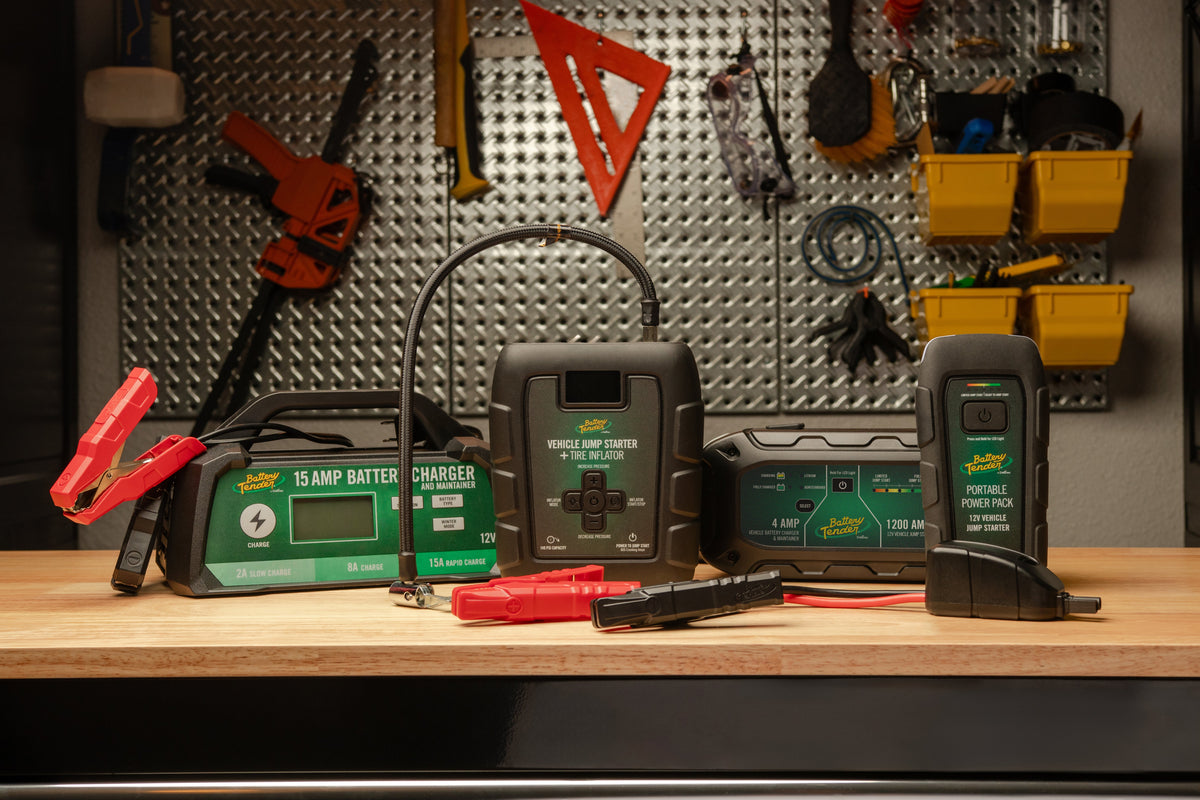
The answer to how long it takes to charge a car battery comes from arithmetic: Ah × depth of discharge ÷ charger amps, plus about 20%. A 60Ah battery at 50% discharge takes roughly 2 hours at 15A or 15 hours at 2A. To get started, check your resting voltage today, run the formula, and choose a charger that fits your time window. Browse the full lineup in the Battery Tender battery charger collection.