


Golf Cart Battery Not Charging? Expert Fixes for 36V & 48V Lead-Acid and Lithium Packs
When a golf cart battery is not charging, the cause is usually one of four things: a loose or corroded connection, a tow/run switch left in Tow, a pack voltage too low for the charger to detect, or one failed battery dragging down the series string. Newer carts with a single 36V or 48V lithium pack add a fifth cause: a battery management system (BMS) that has shut the pack off. Diagnose in order. Start at the outlet, work toward the batteries, measure voltage, and test the charger last. The Battery Tender® brand invented the smart float maintainer category in 1989, and the Battery Tender PowerPlus® line applies that charging expertise to golf carts and electric utility vehicles.
Golf Cart Battery Not Charging? Start With the 6-Point Quick Check
Work from the wall outlet toward the batteries. These six checks cost nothing and usually find the fault in under 30 minutes.
- Prove the outlet. Plug in a work light and reset any tripped GFCI. If you need an extension cord, use 12-gauge and keep it under 25 feet. A light-duty cord starves the charger.
- Set the tow/run switch to Run. Many carts will not accept a charge in Tow, including Club Car models with an onboard computer.
- Inspect the DC plug and cart receptacle. Melted, scorched, or loose pins create resistance that makes chargers fault out or never start. Replace a burnt receptacle. Cleaning it only buys time.
- Clean and tighten the terminals. Neutralize corrosion with baking soda and water, then rinse, dry, and torque the lugs to the battery maker's spec. One loose lug can stall an entire series string.
- Check electrolyte in flooded batteries. If plates are exposed, add just enough distilled water to cover them. Charge first, then top off to the fill line.
- Measure pack voltage across the main positive and negative terminals. Compare the reading to the targets in the sections below.
If all six checks pass and the problem remains, identify your pack type before going further.
Know Your Pack: 36V and 48V Lead-Acid Strings vs. Single Lithium Packs
Before you diagnose a golf cart battery not charging, confirm exactly what you are charging. Every electric golf cart runs a 36V or 48V system. Lead-acid carts build that voltage from smaller batteries wired in series:
- 36V: six 6V batteries
- 48V: eight 6V, six 8V, or four 12V batteries
The charger sees one pack, not individual batteries. It must be a 36V or 48V charger matched to the full string. Clipping a 12V charger to one battery does not charge the cart.
The industry is moving quickly toward a single 36V or 48V lithium iron phosphate (LiFePO4) pack. A 48V lithium pack is typically 16 cells at 51.2V nominal. A 36V pack is typically 12 cells at 38.4V nominal.
Lithium eliminates watering, hydrometer checks, and individual battery testing. It also adds a BMS that will cut off charging to protect the cells, and it requires a charger with a lithium charge profile. Leftover lead-acid chargers with equalization stages can push voltage past BMS limits. Some factory lithium systems also communicate with the charger and refuse power from a non-approved unit. The troubleshooting steps split at this point, so identify your chemistry first.
Testing a Lead-Acid Golf Cart Pack With a Multimeter
Let the pack rest at least four hours with no charging or driving before testing. Surface charge inflates readings. Set a digital multimeter to DC volts and compare against these full-charge resting targets:
- 6V battery: 6.37V full. About 6.0V is effectively empty.
- 8V battery: 8.49V full.
- 12V battery: 12.73V full. About 11.9V is empty.
- 36V pack (six 6V): about 38.2V full.
- 48V pack (eight 6V, six 8V, or four 12V): about 50.9 to 51.0V full.
Next, measure every battery individually. Healthy batteries in a balanced string sit within about 0.2V of each other. A weak battery is the most common cause of a golf cart battery not charging on carts more than a few years old. That one battery never fills, its neighbors get overcharged, and many chargers end the cycle early or flag a fault.
For flooded batteries, confirm the result with a hydrometer. Fully charged cells read roughly 1.265 to 1.280 specific gravity, depending on the manufacturer. A spread of 0.050 or more between cells in one battery means a failing or hard-sulfated cell, and no charger will bring it back. If the pack is more than four to five years old, replace the full set rather than a single battery.
Lithium Golf Cart Battery Not Charging: BMS Lockouts, Cold, and Charger Mismatch
Typical lithium voltages:
- 48V LiFePO4: rests around 53 to 54V when full and charges to roughly 58.4V.
- 36V LiFePO4: rests near 40V and charges to about 43.8V.
Lithium voltage stays flat across most of the discharge range, so a resting reading tells you less than it does on lead-acid. If the pack has a display or Bluetooth app, check it before you pick up a wrench. It will show state of charge, cell voltages, temperature, and fault codes. The usual causes are:
- Low-voltage sleep: During months of storage, GPS units, radios, and controllers can drain the pack below its BMS cutoff. The BMS then opens, the terminals read zero or near zero, and the charger sees no battery. Follow the battery maker's wake procedure.
- Cold-charge lockout: Most LiFePO4 packs refuse charge below about 32°F (0°C) unless they have internal heaters.
- Over-temperature: A pack heated by a long climb or summer sun may block charging until it cools.
- Cell imbalance: One cell group reaches its high-voltage limit early, so the BMS ends the charge short of full and range drops. This requires balancing service.
- Charger mismatch: A lead-acid charger left over from a lithium conversion, or a charger that cannot communicate with a factory BMS, will be refused.
Golf Cart Battery Not Charging Even With a Good Pack? Test the Charger
If the pack checks out but the charger stays dark, clicks off, or shows a fault, test its output directly:
- Record the resting pack voltage at the main terminals.
- Connect the charger to AC power and to the cart.
- Watch the reading. Within a few minutes, a working charger raises pack voltage above its resting value. No change means no current is flowing.
Next, check the DC fuse, any inline breaker, and the AC cord for cuts or crushed sections. On older Club Car 48V carts, the onboard computer (OBC) controls charging and can lock out the charger after a fault. Resetting it typically means disconnecting the pack according to the factory procedure.
Also remember that most automatic chargers must detect a minimum pack voltage before they start. This safety feature keeps them from charging into a short or a reversed connection. It also means a deeply discharged pack can leave a perfectly good charger sitting idle.
Safety: Charging lead-acid batteries releases hydrogen gas. Charge in a ventilated area, keep sparks and flames away, and remove rings and watches before working on terminals. Unplug AC power before disconnecting the DC plug. Never open a sealed lithium pack.
Reviving a Lead-Acid Pack Below the Charger's Start Voltage
If a lead-acid pack has sat so long that it reads below the charger's start threshold, bring each battery up individually. Then return the pack to the 36V or 48V charger.
- Disconnect the main pack cables so no battery is charged while still wired into the series string.
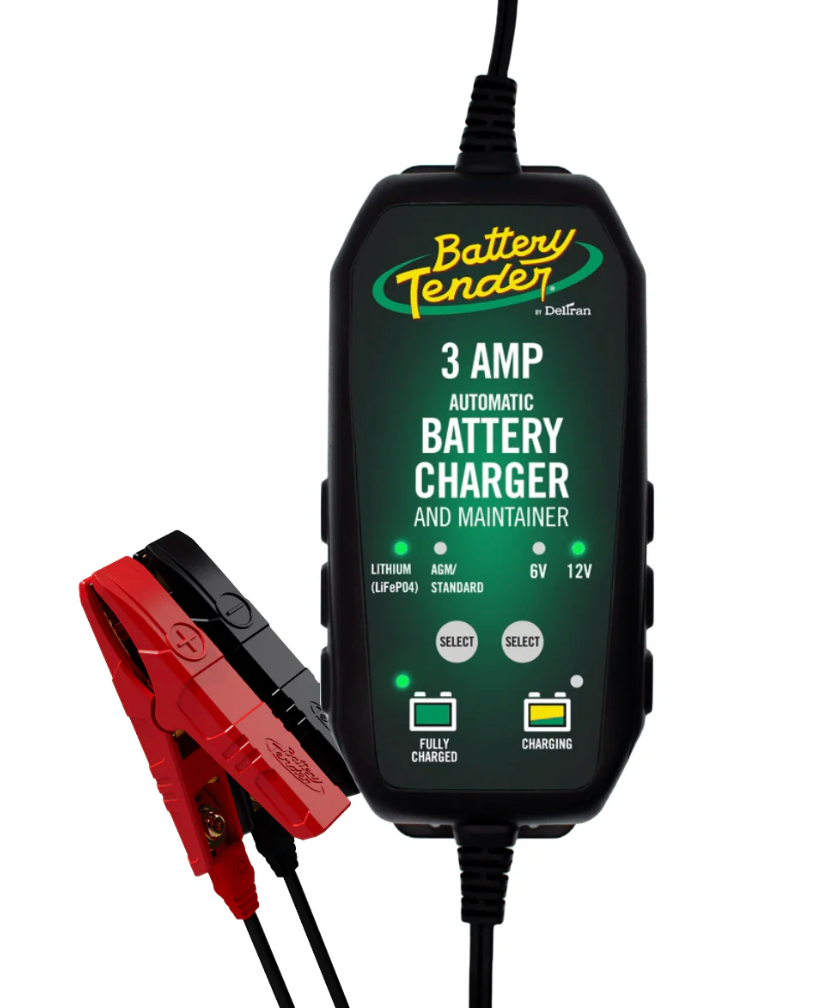
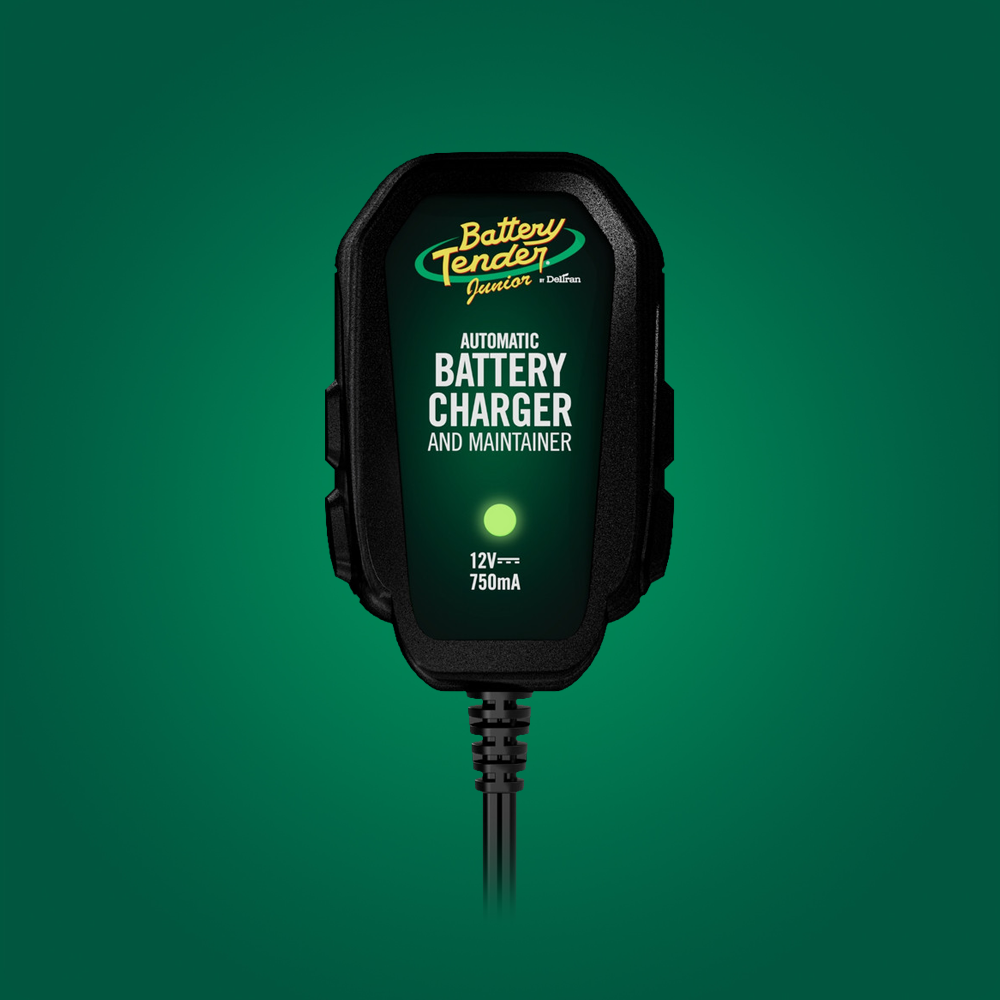
- Charge each 6V or 12V battery with a charger set to that battery's voltage. The Battery Tender PowerTender® 5 Amp 12V/6V Battery Charger and Maintainer handles both voltages. For flooded, AGM, or gel batteries that need a selectable profile, the 10 AMP Selectable Battery Charger and Maintainer covers 12V, 6V, and 2V outputs.
- Reconnect the string, verify polarity, and run a full cycle on the pack charger so every battery finishes together.
Keep these cautions in mind:
- 8V batteries: Never charge an 8V battery in 12V mode, because it will overcharge and gas heavily. A 6V setting leaves it undercharged. Take 8V batteries to a battery shop or follow the cart charger maker's recovery guidance.
- Lithium packs: Never attempt this method. Lithium cells are managed internally by the BMS.
- Recovery only: Individual charging gets a dead pack back to the start threshold. Daily charging still requires a charger matched to the full pack voltage.
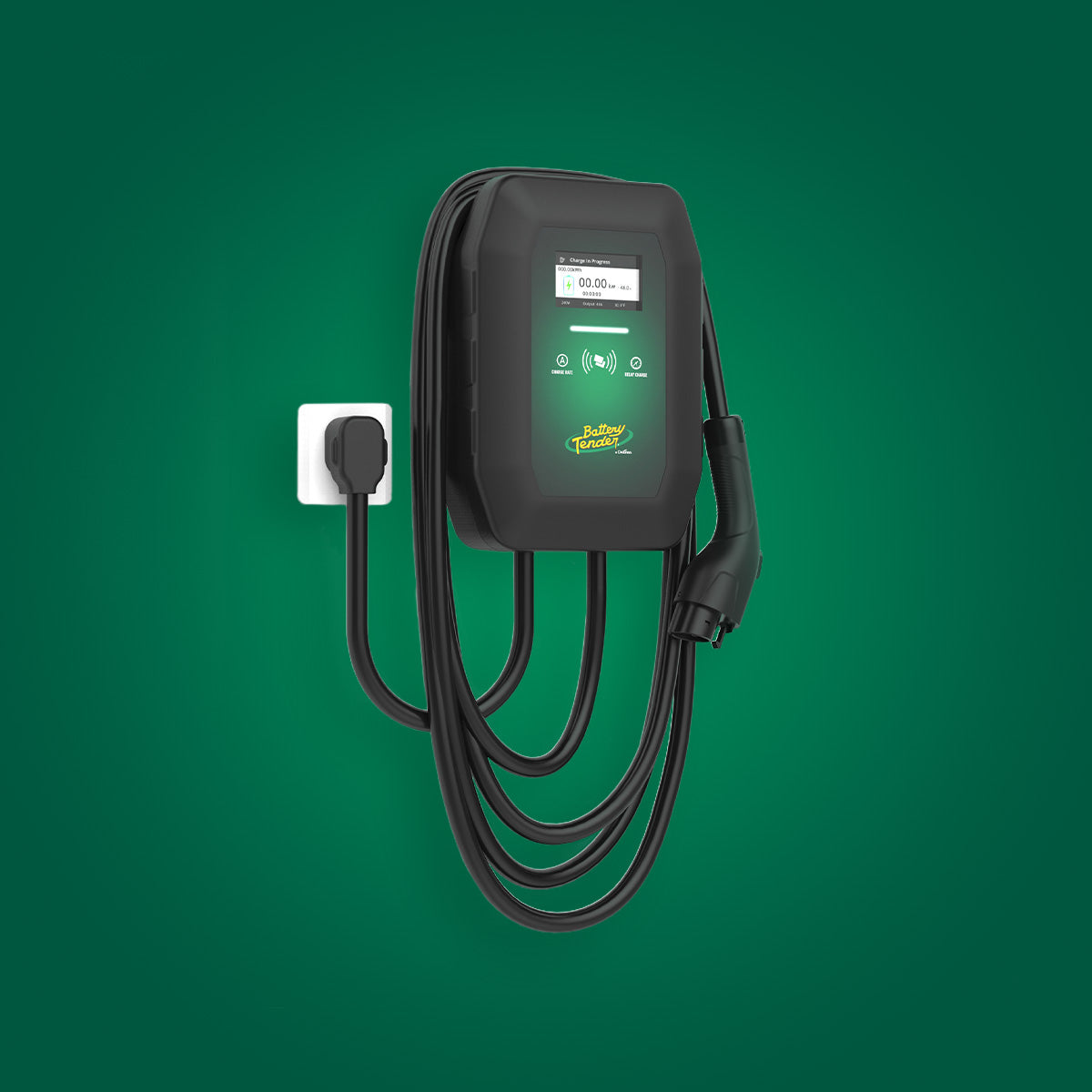
Choosing the Right 36V or 48V Golf Cart Charger
The right golf cart charger matches pack voltage and chemistry and has enough amperage to finish overnight. To estimate charge time, divide the amp-hours used by the charger's amp rating. For lead-acid, add about 20% for charging losses and the absorption taper.
| Pack | Configuration | Ah Used | Charger Amps | Approx. Time |
|---|---|---|---|---|
| 36V | Six 6V lead-acid, 225 Ah | 112.5 (50%) | 18A | ≈ 7.5 hours |
| 48V | Eight 6V lead-acid, 225 Ah | 112.5 (50%) | 15A | ≈ 9 hours |
| 48V | Six 8V lead-acid, 170 Ah | 85 (50%) | 15A | ≈ 6.8 hours |
| 48V | Single LiFePO4, 105 Ah | 84 (80%) | 15A* | ≈ 5.6 hours |
*Lithium requires a lithium-compatible charge profile. Lithium charges at roughly 95% efficiency or better, so little overhead time is added.
Recommended chargers:
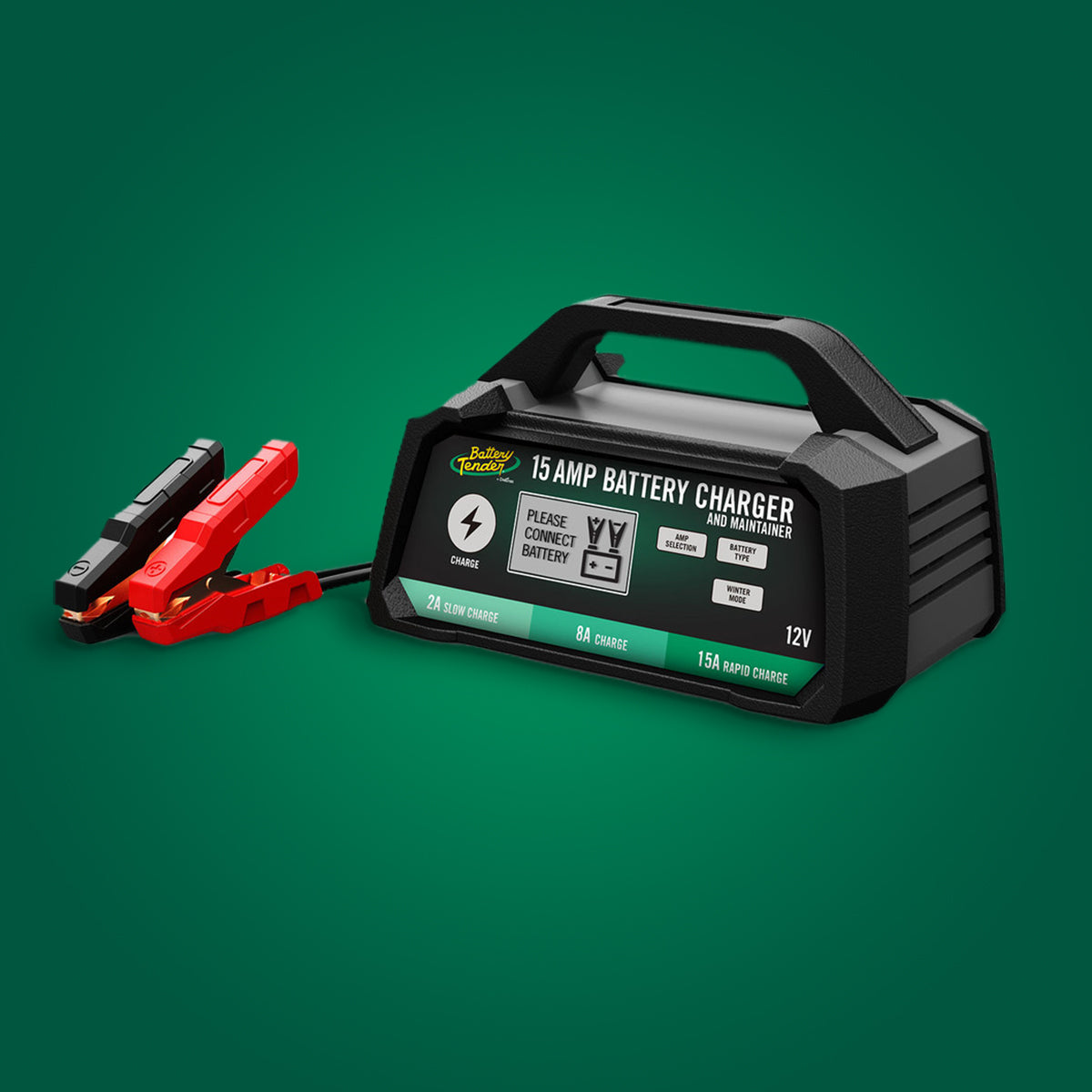
- 48V lead-acid carts: The Battery Tender PowerPlus 48V 15 Amp Battery Charger and Maintainer is the match for Club Car, E-Z-GO TXT/RXV, and Yamaha 48V packs.
- 36V lead-acid carts: Older E-Z-GO and Yamaha carts pair with the Battery Tender PowerPlus 36V 18 Amp Battery Charger and Maintainer. It recovers a 225 Ah pack from half discharge within a normal overnight window.
Before buying, confirm the output connector fits your cart's receptacle, because Club Car, E-Z-GO, and Yamaha use different plugs. If you run lithium, verify on the product page and with your battery maker that the charge profile is approved for your pack.
Preventing Repeat Charging Failures
Charging failures rarely appear out of nowhere. They build from daily habits:
- Recharge lead-acid packs after every use. Partial charges left sitting sulfate the plates.
- Avoid routine lead-acid discharges past 50%. Lithium tolerates 80% depth of discharge daily.
- Check flooded electrolyte monthly using distilled water only, and clean terminals every three months.
- Inspect the charging receptacle for heat discoloration at every service.
- Store lithium packs at 50 to 80% charge with the storage switch off, and charge only above freezing.
Charger quality matters as much as habits. A smart charger works in stages:
- Bulk: full current until the battery reaches roughly 80% charge.
- Absorption: constant voltage while current tapers off.
- Float: maintenance that keeps the pack topped off without overcharging.
Old-style timer and fixed-output chargers cook batteries in summer and undercharge them in winter. Staged charging is the principle the Battery Tender brand built the smart maintainer category on in 1965. Still, no charger can repair a shorted cell or hardened sulfation. A good charger prevents damage; it does not reverse it.
Frequently Asked Questions
Why is my golf cart charger not turning on?
Start with the basics: confirm the outlet works, set the tow/run switch to Run, and inspect the DC plug for burnt pins. Next, measure pack voltage. Most automatic chargers will not start if a deeply discharged lead-acid pack falls below their detection threshold, or if a lithium BMS has disconnected the pack. A blown fuse, tripped breaker, or damaged cord can also keep it dark.
How do I know if the batteries or the charger are bad?
Measure each battery's resting voltage after four hours off the charger. If one battery reads more than about 0.2V below the others, that battery is the problem. If the batteries are even but the charger never raises pack voltage above its resting reading after a few minutes connected, the charger is not delivering current and is the likely fault.
Why won't my lithium golf cart battery take a charge?
The battery management system is usually blocking it. Common triggers are a pack drained below its low-voltage cutoff during storage, charging below about 32°F, overheating, or a cell imbalance that hits the high-voltage limit early. A charger without the correct lithium profile, or one that cannot communicate with a factory BMS, will also be refused. Check the pack's app or fault codes first.
Can I use a 12V charger on a 48V golf cart?
Not for the pack. Every electric golf cart runs a 36V or 48V system, so it needs a charger matched to that full pack voltage, even when the pack is built from 6V, 8V, or 12V batteries in series. A 12V or 6V charger is only useful for recovering individual lead-acid batteries of the same voltage after disconnecting them from the string.
When should I replace golf cart batteries instead of charging them?
Replace lead-acid batteries when a hydrometer shows a 0.050 specific gravity spread between cells, when one battery will not hold voltage after a full charge, or when the pack is past four to five years of regular use. Replace the whole set at once, because a new battery in an aged string wears out unevenly.
Conclusion
A golf cart battery not charging is usually caused by a connection, a switch, a low-voltage lockout, or one bad battery, not a dead charger. Run the six-point check, determine whether you have a lead-acid string or a single lithium pack, measure voltage, and test charger output before replacing anything. If the charger is the weak link, choose one matched to your 36V or 48V pack and its chemistry. Explore the full Battery Tender charger lineup at batterytender.com and get your cart back on the course.