









Electric vehicles eliminate many maintenance tasks, but one critical component remains: the 12V accessory battery. This small battery powers essential systems and can strand you even with a fully charged traction battery. Battery Tender® explains everything EV owners need to know about their 12V battery system.
Why EVs Have 12V Batteries
The Role of 12V Systems
Your EV's high-voltage traction battery (typically 400–800V) powers the motors. However, virtually all automotive electronics operate on 12V:
- Computer modules and processors
- Contactors that connect/disconnect traction battery
- Lights, windows, locks, infotainment
- Safety systems (airbags, ABS, stability control)
- HVAC controls
- Charging system interface
The 12V battery boots the vehicle's computer system, which then closes high-voltage contactors to energize the main battery system. Without a functioning 12V battery, nothing works—even if your traction battery is fully charged.
DC-DC Converter
EVs use a DC-DC converter (similar to an alternator in gas vehicles) that steps down high voltage from the traction battery to charge the 12V battery. This system only operates when the vehicle is "on" or charging.
How EV 12V Batteries Differ
Higher Demands
- Frequent wake cycles from remote monitoring
- Keyless entry proximity sensing
- Security systems and telematics
- Pre-conditioning systems checking weather
- Battery thermal management monitoring
Typical parasitic draw: 50–150 milliamps (2–3x higher than gas vehicles)
Unique Challenges
- No alternator running during "coasting" (unlike gas engine idle)
- Infrequent driving in some EV households
- DC-DC converter only charges during drive or plug-in charge sessions
- Many EVs don't "trickle charge" 12V while parked, even when plugged in
Common 12V Battery Problems in EVs
Symptom: Vehicle Won't "Start"
- Actually: Vehicle won't power on
- Cause: Dead 12V battery
- Traction battery may be fully charged but inaccessible
- Cannot open frunk/trunk electronically
- Cannot unlock doors remotely
Symptom: Charging Port Won't Open
- 12V battery powers port actuator
- Dead 12V prevents charging access
- Can create circular problem: Need charge to charge
Symptom: Random Warnings or Errors
- Low voltage causes erratic computer behavior
- Warnings about systems being unavailable
- "Service required" messages
Maintenance Requirements
Testing Schedule
- Voltage check every 3 months
- Load test annually
- Replace every 3–5 years (typical EV 12V life)
Target Voltage
- Key off, fully charged: 12.6–12.8V
- While "on" or charging: 13.8–14.4V (DC-DC operating)
Winter Considerations
- EVs in cold climates face additional 12V stress
- Battery heating systems draw significant power
- Reduced driving in harsh weather
- Cold reduces 12V battery capacity just like any battery
Battery Tender Solutions for EVs
For Daily Drivers
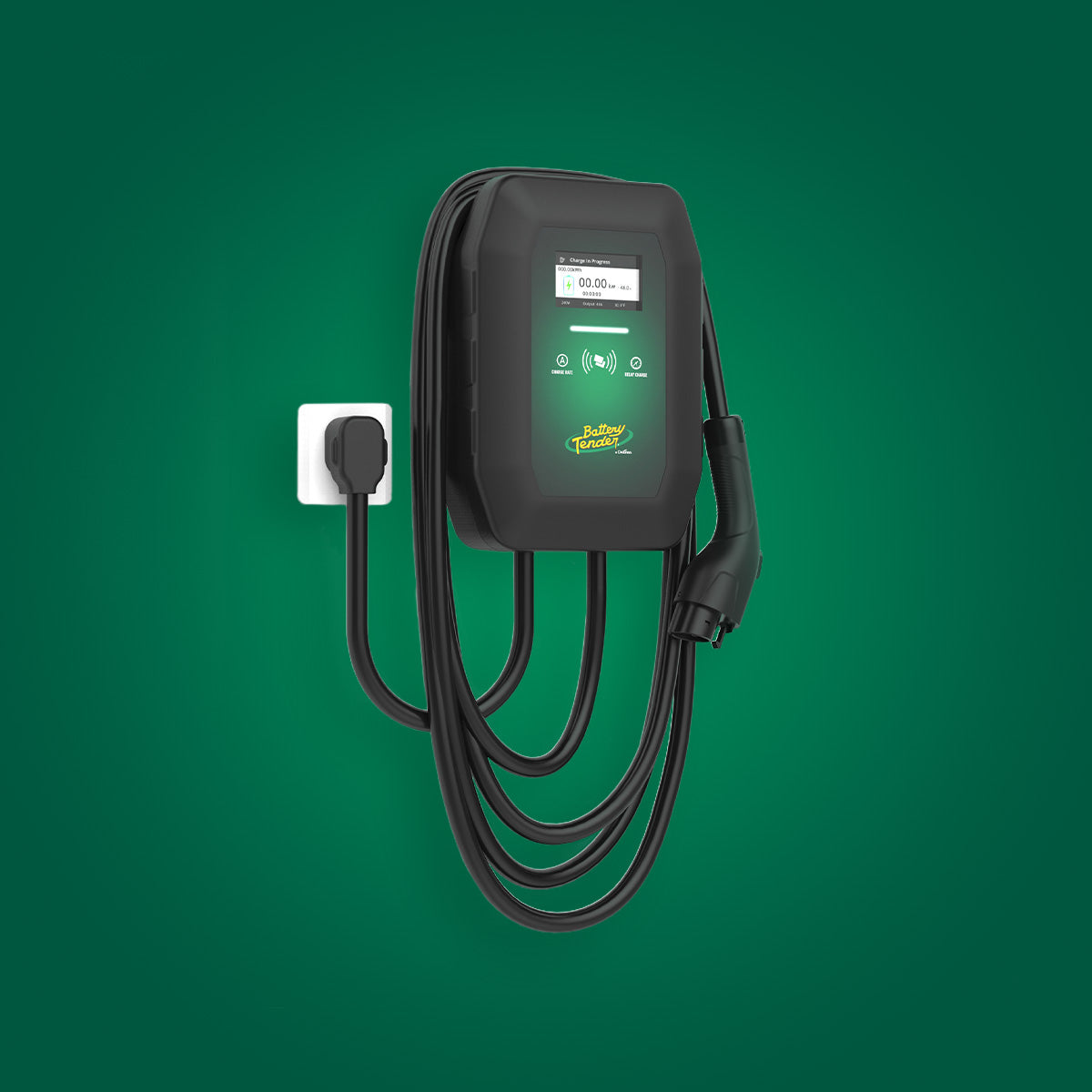
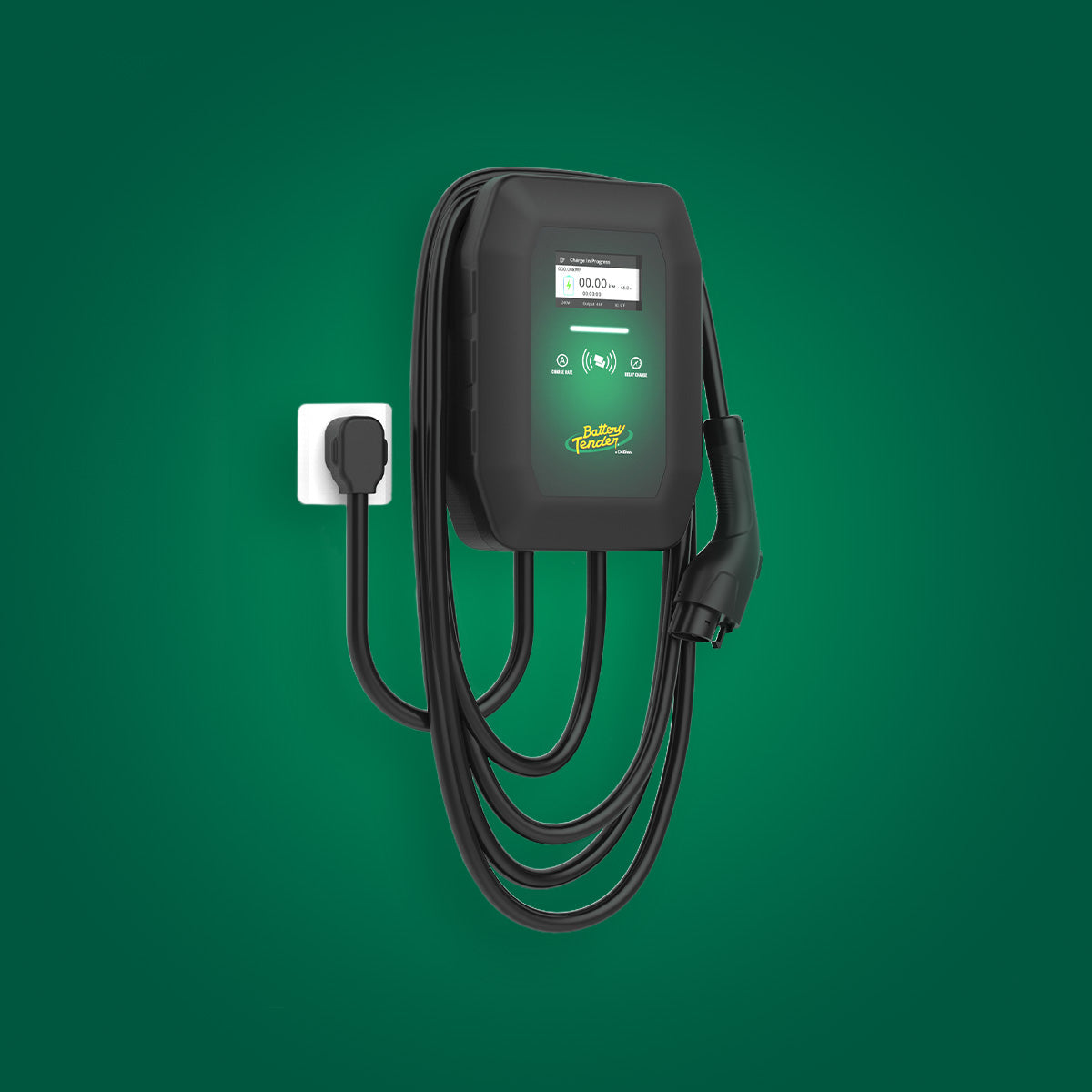
Battery Tender® eCharge 48 AMP, Level 2 Mountable Indoor Outdoor EV Charger
- At 48 AMPs (11.5kW), this is designed to recover range quickly
- Perfect for high-mileage users who need a full charge every morning
- Best suited as a primary, wall-mounted charging station
For Infrequent Use
Battery Tender® eCharge 32 AMP, Level 1+2 Portable EV Charger
- At 32 AMPs (7.6kW), it provides reliable overnight charging for vehicles driven less frequently
- Comes in a portable format (NEMA 14-50 or 5-15) for flexibility
- Offers plenty of power for standard home electrical circuits
For Long-Term Storage
- Maintain 50%–80% State of Charge (SoC): Do not store your EV at 100% or 0%. Keeping the high-voltage battery in the "middle" prevents cell degradation.
- Disable "Always-On" Features: Turn off Sentry Mode, cabin overheat protection, or frequent remote app check-ins to minimize "vampire drain" on the main battery pack.
- Tire Care: If storing for more than 3 months, slightly over-inflate the tires (per manufacturer limits) or use "tire cradles" to prevent flat-spotting from the heavy weight of the EV battery.
Accessing Your EV's 12V Battery
Tesla Model 3/Y
- Located under front trunk liner
- Access requires frunk opening (manual release if dead)
- AGM battery typical
Tesla Model S/X
- Located under rear seat or in front trunk
- May require plastic panel removal
Ford Mustang Mach-E
- Located under hood
- Traditional top-access design
Chevrolet Bolt
- Located under rear cargo floor
- Requires removal of floor panels
Nissan Leaf
- Located under hood (early models)
- Under cargo floor (newer models)
Consult your owner's manual for specific location and access procedures.
12V Battery Replacement
When to Replace
- Age 5+ years regardless of condition
- Failing load test
- Frequent low-voltage warnings
- Voltage below 12.4V when fully charged
Battery Options
- OEM replacement: $200–400 (dealer installation often included)
- Aftermarket AGM: $150–300
- Must match OEM specifications (size, terminals, chemistry)
Important: Many EVs require battery registration/programming after replacement. Dealer service may be required.
Winter-Specific EV 12V Care
Cold Weather Impacts
- Battery heating draws significant 12V power
- Reduced 12V capacity in cold
- Less driving typical in harsh weather
- More parasitic wake cycles (thermal management checks)
Prevention
- Maintain active Battery Tender eCharge connection
- Pre-condition vehicle while plugged in (reduces 12V load)
- Optimize charging schedules
- Monitor system health during cold snaps
FAQ
Q: Does my EV charge its 12V battery while plugged in?
A: Varies by manufacturer. Some do, some don't. Consult manual or test with voltmeter. Don't assume—verify!
Q: Can I replace my EV's 12V battery with a lithium battery?
A: Some EVs support lithium 12V batteries, others don't. Requires compatible DC-DC converter and battery management. Verify with the manufacturer before attempting.
Q: Why doesn't my EV charge the 12V battery automatically?
A: Cost and complexity. Adding constant 12V charging requires additional hardware, reduces efficiency, and increases vampire drain on the traction battery.
Q: Can I leave my eCharge connected during long-term storage?
A: Yes, it is highly recommended. Keeping your EV plugged into an eCharge charger during vacations or seasonal storage allows the vehicle to monitor and maintain the high-voltage battery at an optimal level while ensuring the 12V system remains charged and ready for use.
Don't let a forgotten 12V battery strand your otherwise perfect EV. Battery Tender charging and maintenance ensures your accessory battery matches your traction battery's reliability.
Browse automotive battery chargers suitable for EV 12V systems.