


Best Battery Charger for Car Owners: Size It Right (2026)
The best battery charger for car use is a smart, multi-stage charger sized to deliver about 10 to 20 percent of the battery's amp-hour rating, with 1 to 2 amps being enough for storage upkeep. Battery Tender® chargers combine that sizing with Infinite Sequential Monitoring (ISM), a four-stage process that tapers current as the battery fills and then holds it safely at full charge.
Most buying guides rank chargers by feature lists. This guide starts with the battery instead. Voltage, amp-hours, and chemistry determine which charger fits, and the charger's feature list matters only after those three numbers are known. The sections below cover sizing math, a battery-to-charger table, picks for three common driver situations, and a step-by-step charging procedure.
Key Takeaways
- Match charger output to 10–20% of battery amp-hours for recovery; 1–2A is enough for maintenance only.
- Confirm voltage (12V for modern cars, 6V for many pre-1956 classics) and chemistry (standard, AGM, GEL, lithium) before buying.
- Charging time ≈ (Ah × depth of discharge) ÷ charger amps, plus about 20% overhead.
- Chargers with ISM technology are safe to leave connected indefinitely; constant-current trickle chargers are not.
- Pair the charger with a battery tester and a portable jump starter for complete dead-battery coverage.
What Is the Best Battery Charger for Car Owners? Start With Three Numbers
Voltage, amperage, and chemistry decide the right charger, in that order. Get all three right and nearly any smart charger will do the job. Get one wrong and the charger either will not work or will work badly.
Voltage
Modern cars, trucks, and SUVs use 12V systems. Some pre-1956 classic cars still run 6V. A charger that cannot output the correct voltage is the wrong charger, regardless of amperage. Selectable-voltage models cover both.
Amperage
Amperage sets how fast the battery recovers. A common guideline is 10 to 20 percent of the battery's amp-hour (Ah) rating. A 60Ah battery therefore suits a 6A to 12A charger for recovery. Below that range, a deeply discharged battery takes a day or more to recharge. Above it, flooded batteries can overheat.
For maintenance only, 1 to 2 amps is sufficient. A parked car draws small parasitic loads, usually well under an amp, and a low-output maintainer easily covers them.
Chemistry
Standard flooded, AGM, GEL, and lithium batteries all use different charge voltages. AGM batteries are now common in vehicles with start-stop systems. A charger must support the battery's chemistry, or it will undercharge or overcharge the cells. Selectable-chemistry chargers remove the guesswork, and the label on the battery shows which type is installed.
Car Battery Charger Sizing Table: Matching Amps to Battery Size
Match the charger to the battery's amp-hours, not to the vehicle's size. The table below applies the 10–20 percent guideline to common car battery sizes.
| Vehicle Type | Typical Battery | Recovery Range (10–20% of Ah) | Suggested Charger |
|---|---|---|---|
| Compact car or hatchback | 40–50Ah | 4–10A | 2A for maintenance; 8A setting for deep recovery |
| Midsize sedan or crossover | 50–65Ah | 5–13A | 8A setting |
| SUV or pickup | 65–80Ah | 7–16A | 8A or 15A setting |
| Diesel truck (single battery) | 90–110Ah | 9–22A | 15A setting |
| Multi-car garage | Up to four batteries | 1–2A per battery for upkeep | Multi-output maintainer |
Charging Time Math
Use this formula: (battery Ah × depth of discharge) ÷ charger amps = approximate hours. Add roughly 20 percent because current tapers during the Absorption stage. For a 60Ah battery that is 50 percent discharged, the deficit is 30Ah.
- 15A charger: 30 ÷ 15 = 2 hours, about 2.4 hours with overhead.
- 8A charger: 30 ÷ 8 = 3.75 hours, about 4.5 hours with overhead.
- 2A charger: 30 ÷ 2 = 15 hours, about 18 hours with overhead.
Trade-off: a 2A unit is gentle and ideal for storage, but it is slow as a recovery tool. A 15A unit recovers fast but is more charger than a 40Ah battery needs.
Best Battery Charger for Car Use by Driver Situation
Daily Driver and Weekend Second Car
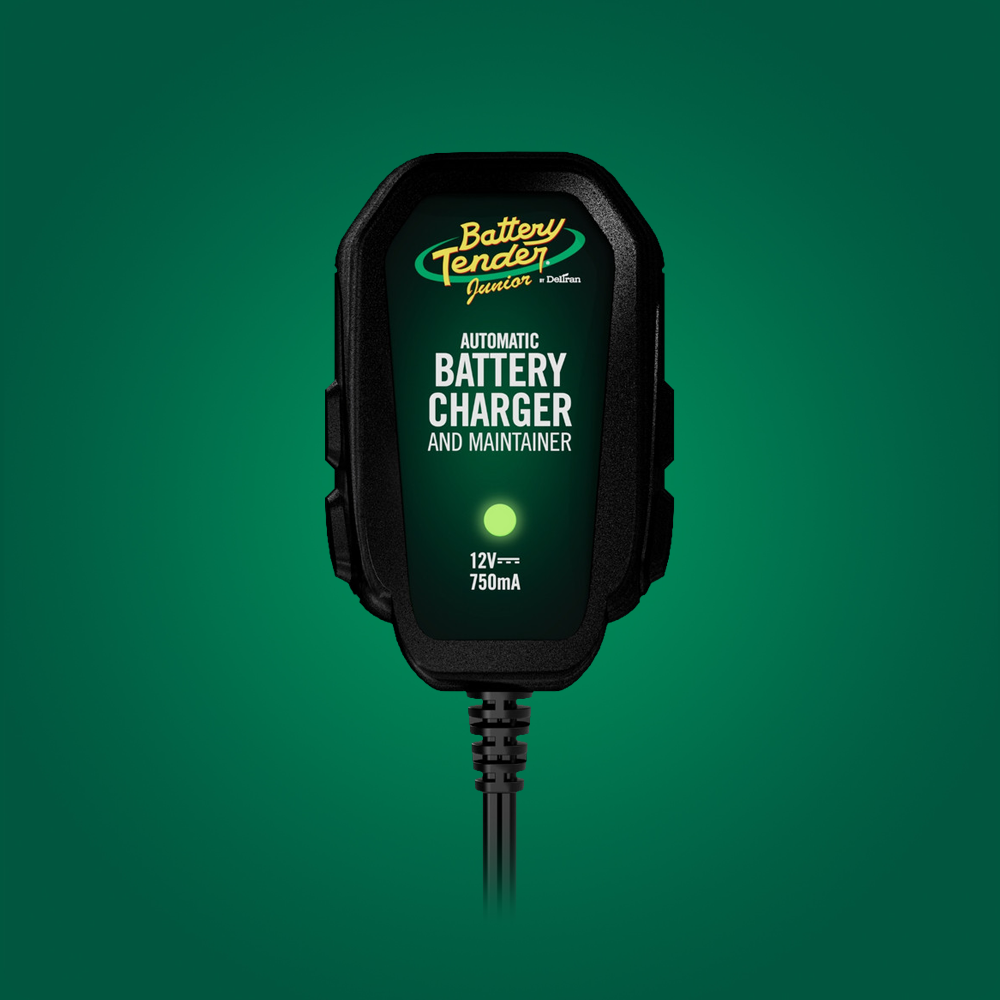
A midsize car with a 45–65Ah battery that sits for weeks between drives needs a low-output maintainer, not a fast charger. The 6V/12V selectable Battery Tender Plus delivers 2 amps, which is enough to hold a parked car's battery at full charge. It also includes temperature compensation, which adjusts the charge voltage in cold garages and warm sheds. The 6V setting suits a classic car or two.
Battery Tender Plus 6V/12V 2 Amp Battery Charger and Maintainer
Trucks, SUVs, and Deep Recovery
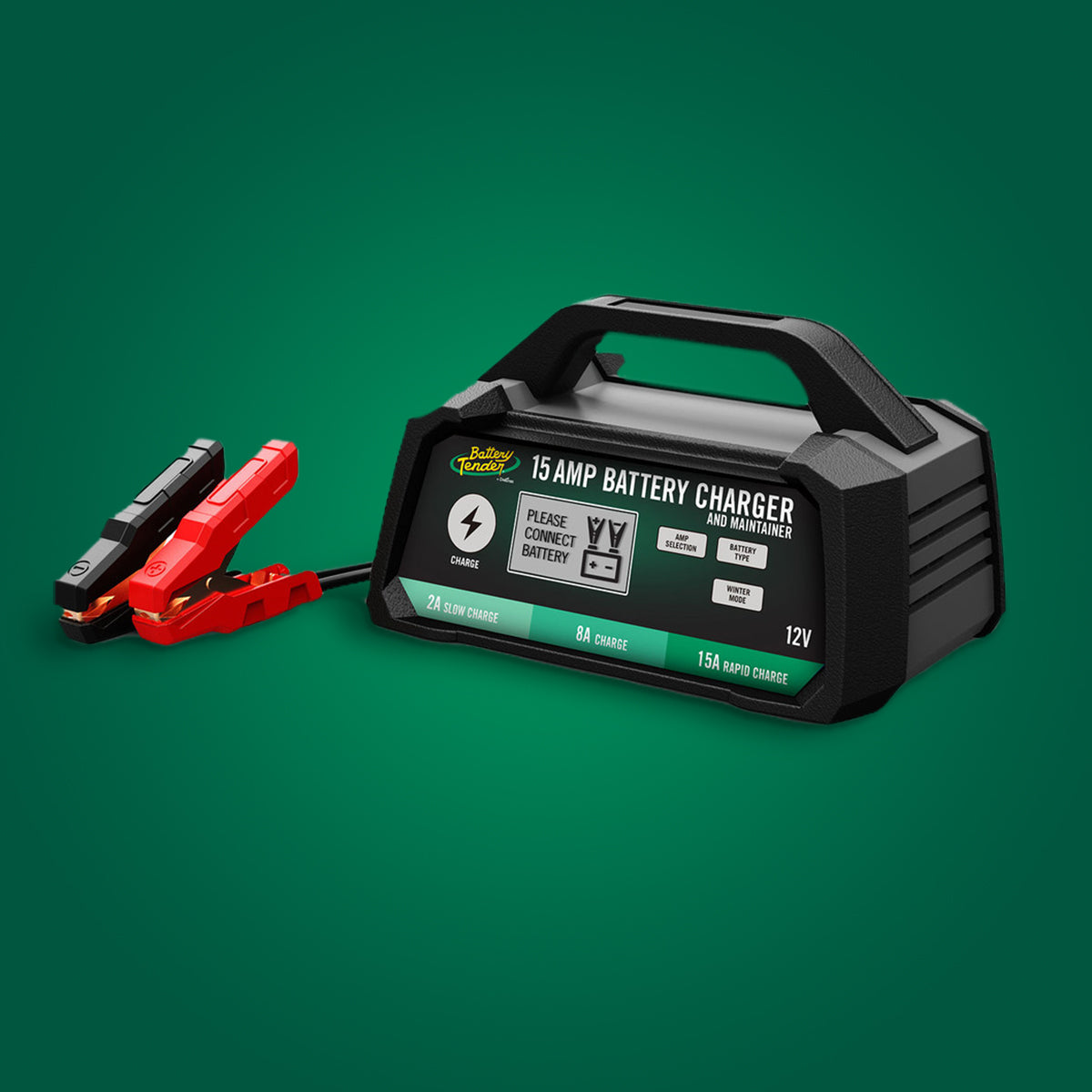
Larger batteries of 65–110Ah, including diesel truck batteries, need more output to recover from a deep discharge. The Battery Tender Power Tender 15/8/2 offers selectable 15A, 8A, and 2A rates with selectable chemistry. Use 15A to recover a large truck battery, 8A for midsize cars, and 2A for long-term maintenance. One unit then covers every vehicle in a mixed household.
Battery Tender Power Tender 15/8/2 Amp 12V Battery Charger and Maintainer
Multi-Car Households
Owners with several cars, a classic, and a lawn tractor can avoid swapping one charger between batteries. The Battery Tender 4-Bank charger provides four separate 1.25A outputs. That is enough to maintain four 12V batteries at once, with each battery connected independently. A standby generator battery follows the same sizing logic; see the Generac generator battery maintenance guide for that setup. At 1.25A per bank, this charger is for maintenance and light top-ups, not deep recovery.
Battery Tender 4-Bank 12V 1.25 Amp Battery Charger and Maintainer
What Makes a Smart Charger Safe to Leave Connected?
A smart charger is safe to leave connected when it stops forcing current into a full battery. ISM does this through four stages:
- Initialization: tests the battery and applies a gentle current to determine its condition.
- Bulk Charge: delivers full rated current until the battery reaches about 80 percent state of charge.
- Absorption: holds voltage constant while current tapers, which helps dissolve sulfate crystals.
- Float Maintenance: supplies charge pulses only when voltage drops.
Conventional trickle chargers behave differently. They deliver constant current regardless of battery state, so a full battery keeps receiving current. Over weeks, that heats the battery, dries out the electrolyte, and shortens its life. Float-only chargers are safer but slower, because they lack the Absorption stage.
Sulfation is the practical payoff. Lead sulfate crystals build up on plates when a battery sits partially discharged, and a charger that holds a full charge prevents that buildup. Batteries kept on a maintainer commonly last well beyond the typical 2–3 year lifespan, with 5 years or more achievable.
Temperature compensation adds another layer of protection. Nearly all Battery Tender chargers include temperature compensation to adjust for charging in extreme heat or cold. Choose a Battery Tender Plus or Battery Tender Power Tender charger for any unheated garage.
How to Charge a Car Battery Step by Step
Follow this sequence for any car battery:
- Park and power down. Turn the ignition off and keep the charger unplugged from the wall.
- Ventilate. Charge in an open or ventilated area. Batteries can vent hydrogen gas, so keep sparks and flames away.
- Confirm voltage and chemistry. Read the battery label and set the charger accordingly.
- Connect the positive clamp first, then the negative clamp to a clean chassis ground or negative terminal.
- Plug the charger into the wall. Watch for the charging indicator.
- Let ISM run. The charger moves to Float Maintenance automatically, so leave it connected if the vehicle will stay parked.
- Disconnect in reverse. Unplug from the wall first, then remove the negative clamp, then the positive.
Check Battery Health Before and After
A charger cannot fix a failed battery. A battery with a weak cell may appear to accept a charge and then fail on the next cold morning. Testing the battery before and after charging separates a discharged battery from a worn-out one. The Battery Tender 12V / 6V Battery Tester suits that job, covering both modern 12V batteries and older 6V classic-car batteries.
Battery Tender 12V / 6V Battery Tester
Carry a Backup for Dead-Battery Emergencies
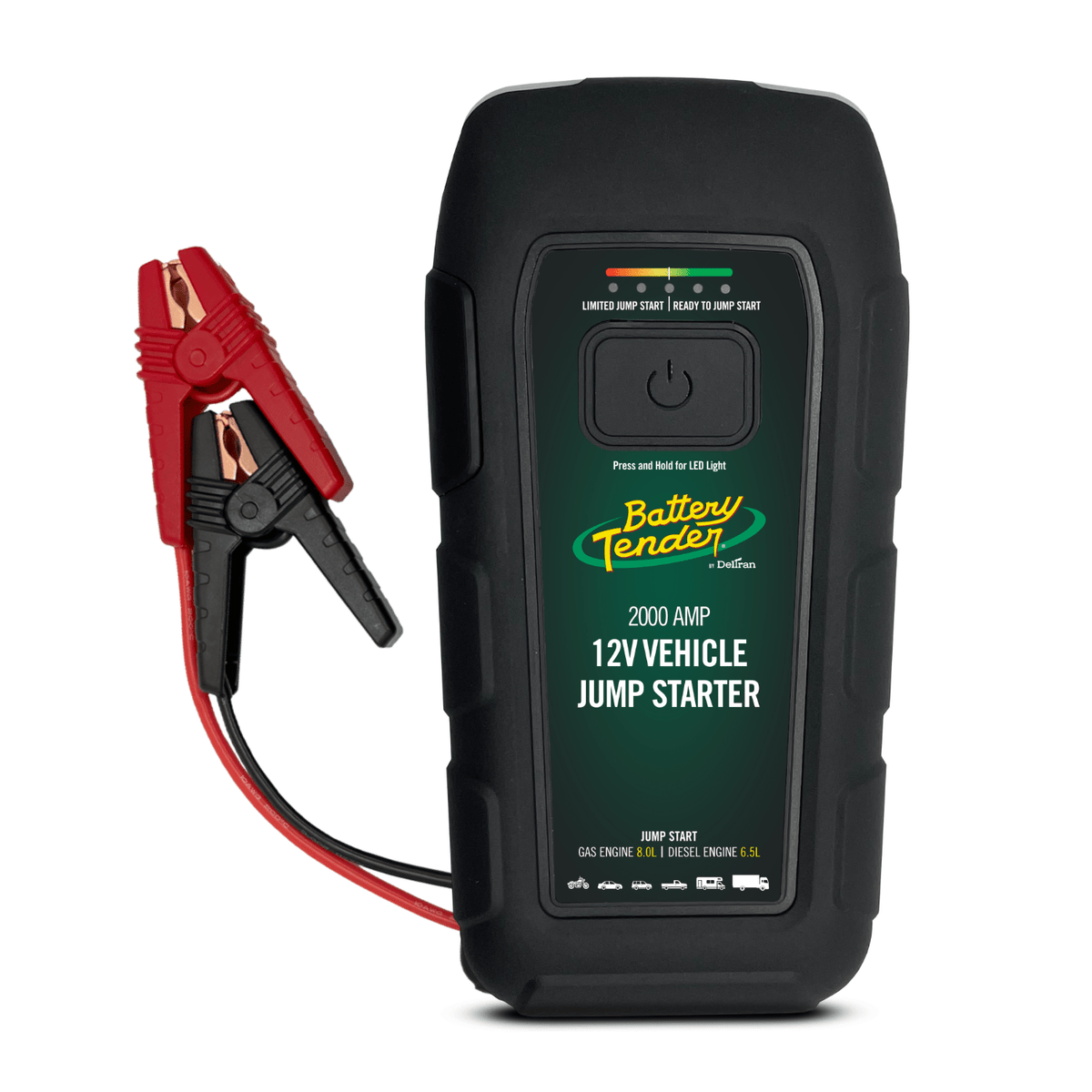
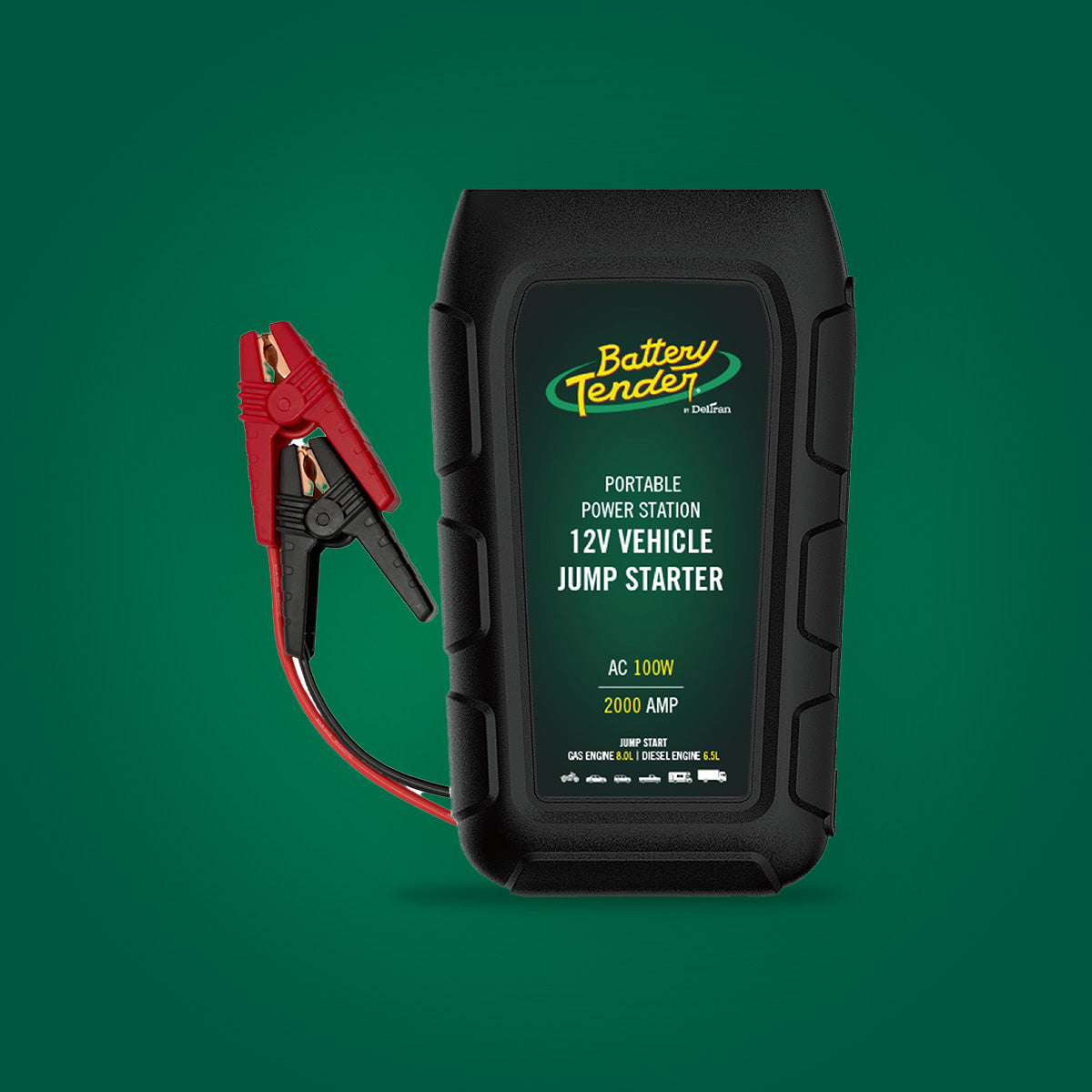
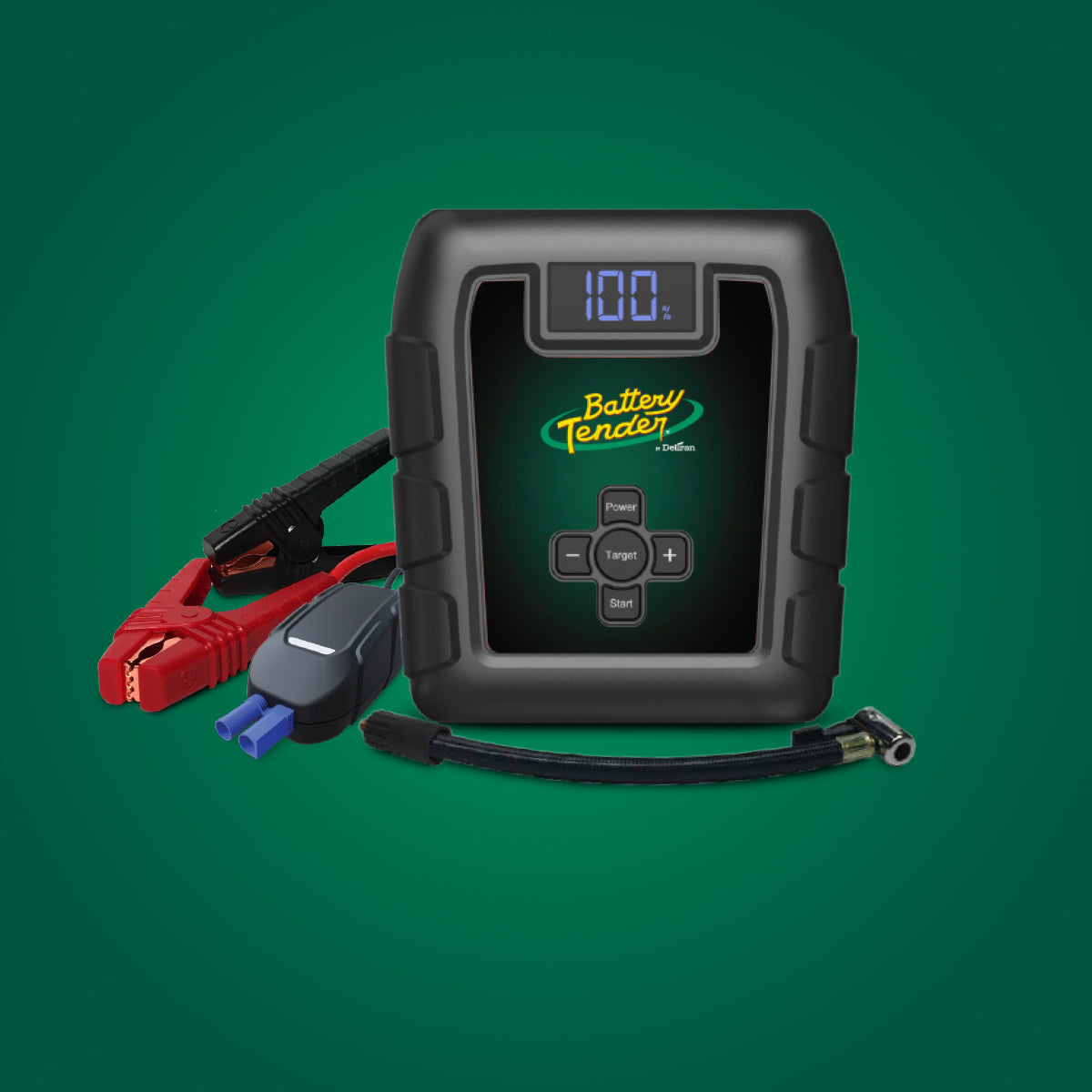
A maintainer prevents most dead batteries, but a car left parked at the airport can still return to a dead battery. A portable jump starter with a built-in inflator covers both a dead battery and a low tire. The Battery Tender Jump N Start 800 Amp is rated for engines up to 4.0L gas or 2.0L diesel, which fits most compact and midsize cars. Owners of large V8 trucks or diesels should choose a higher-amp unit.
Battery Tender Jump N Start 800 Amp Jump Starter and Tire Inflator
Frequently Asked Questions
What size battery charger do I need for a car?
Choose a charger that delivers about 10 to 20 percent of the battery's amp-hour rating for recovery, and 1 to 2 amps for pure maintenance. A typical 60Ah car battery needs 6 to 12 amps to recharge in a reasonable time, while 2 amps handles winter storage upkeep. Always confirm voltage (12V for modern cars) and chemistry (standard, AGM, GEL, or lithium).
Is a higher-amp charger bad for a car battery?
No, provided the charger is a smart multi-stage unit. ISM technology tapers current as the battery approaches full charge, so a 15-amp charger will not force 15 amps into a nearly full battery. Problems come from unregulated chargers that push constant current. For flooded batteries, keep output under about 20 percent of capacity to limit heat.
Can a car battery charger stay connected all winter?
Yes, when the charger uses ISM technology. In the Float Maintenance stage, the charger supplies pulses only when voltage drops, so a Battery Tender Plus or Battery Tender Power Tender charger can stay connected for months. Constant-current trickle chargers are different: they keep pushing current and can overcharge the battery, boil off electrolyte, and shorten its life.
How long does it take to charge a dead car battery?
Use (amp-hours × depth of discharge) ÷ charger amps, then add about 20 percent. A 60Ah battery that is 50 percent discharged holds a 30Ah deficit. At 8 amps, 30 ÷ 8 is 3.75 hours, or about 4.5 hours with overhead. At 2 amps, the same battery takes roughly 18 hours.
Conclusion
The best battery charger for car use comes down to matching voltage, amperage, and chemistry to the battery rather than to the vehicle. Use a 2A maintainer for storage, an 8A to 15A charger for recovery, and a multi-output unit for households with several batteries. Next step: read the amp-hour rating on the battery label, apply the sizing table above, and pick the matching charger from the Battery Tender charger collection.