


36 Volt Charger Guide: Match Pack, Plug & Amps (2026)
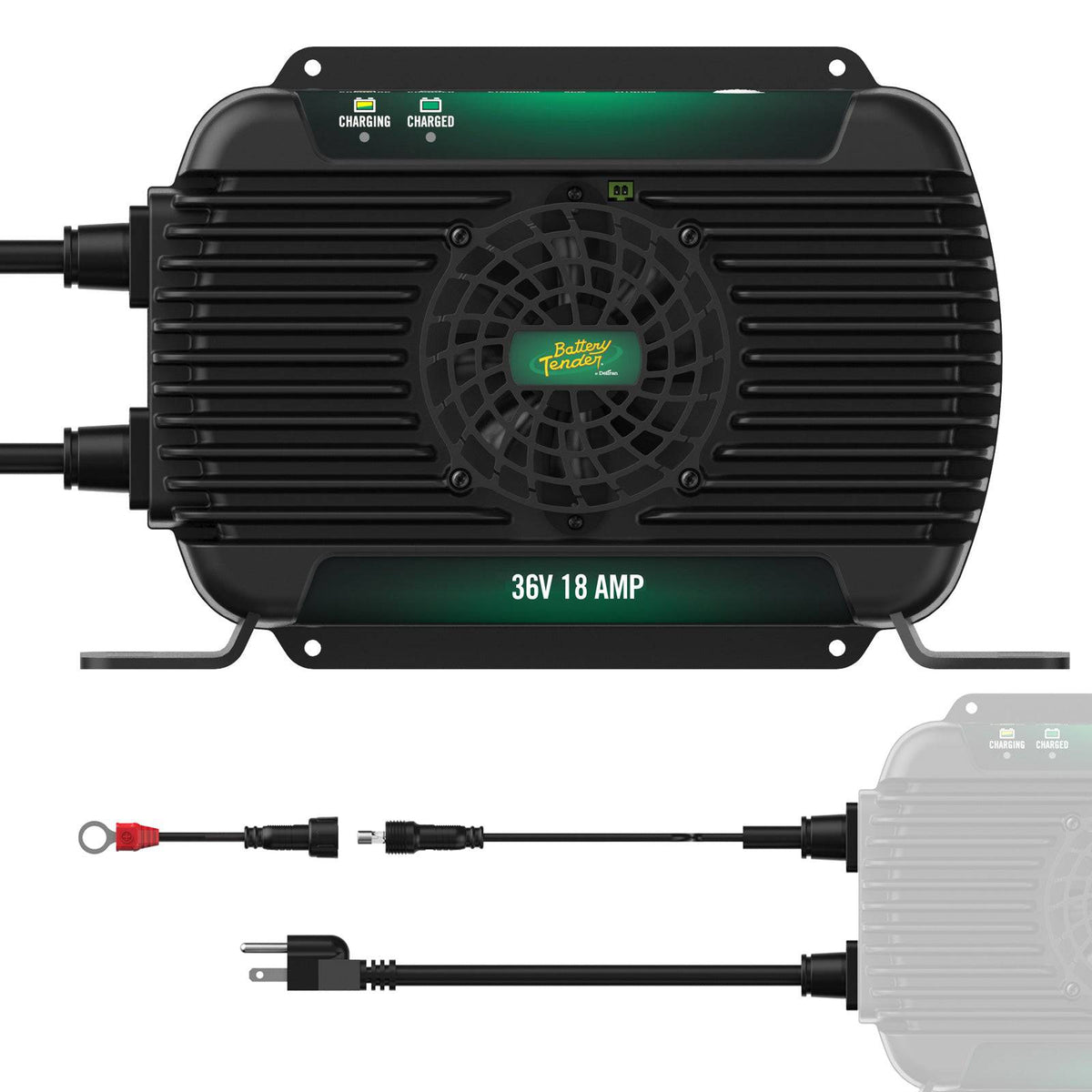
A 36 volt charger must match three things: the total pack voltage, the battery chemistry, and the amp-hour (Ah) capacity. For a 36V lead-acid pack in a cart or equipment, the Battery Tender® PowerPlus 36V 18 Amp charger covers packs of roughly 100 to 250Ah and can stay connected safely between uses.
Most buying mistakes happen before the purchase. Owners assume a pack is 36V, but the pack may be six 6V batteries, three 12V batteries, or a lithium module with its own battery management system (BMS). Each build charges differently. This guide shows how to confirm what is under the seat, size the amps with real math, and connect the charger correctly. For broader cart coverage, see the Cart Charger Guide: Match Voltage, Chemistry & Amps (2026).
Key Takeaways
- A 36V lead-acid pack has 18 cells in series. It rests near 38.2V when full and needs a charger built for 36V, not 12V or 48V.
- Measure total pack voltage with a multimeter before buying. Label assumptions cause most wrong-charger purchases.
- Charging time equals (Ah × depth of discharge) ÷ charger amps. A 225Ah pack at 50% discharge needs about 6.25 hours at 18A, plus charging losses.
- Infinite Sequential Monitoring (ISM) adapts through four stages. Constant-current chargers do not, and they overcharge a full pack.
- Match the plug to the cart. The Battery Tender PowerPlus 36V E-Z-GO Crow Foot Plug covers one common connector style.
What Does a 36 Volt Charger Actually Charge?
A 36 volt charger charges a battery pack with a nominal voltage of 36V, which is 18 lead-acid cells wired in series (18 × 2V). The pack can be built several ways, and the build determines your charging profile.
The most common lead-acid builds are six 6V deep-cycle batteries or three 12V deep-cycle batteries, both wired in series. Both give 36V nominal and both rest near 38.2V when fully charged. Lithium 36V packs also exist. They use a BMS that sets its own voltage limits, so confirm chemistry compatibility on the charger product page or manual before you buy.
| Pack Build | Nominal Voltage | Resting Voltage, Full | Where You See It |
|---|---|---|---|
| Six 6V lead-acid in series | 36V | About 38.2V | Golf carts, utility vehicles |
| Three 12V lead-acid in series | 36V | About 38.2V | Floor scrubbers, small industrial equipment, older carts |
| 36V lithium pack with BMS | 36V nominal | Varies by cell count; read the pack label | Newer carts, retrofits |
One rule holds across every build: voltage must match. A 24V charger undercharges a 36V pack. A 48V charger overcharges it and can damage the batteries.
How to Confirm Pack Voltage Before Buying a 36 Volt Charger
Measure the pack at its main positive and negative terminals with a digital multimeter. This 2-minute check confirms your voltage and prevents the wrong-charger returns that labels and assumptions cause.
- Turn the vehicle or equipment off and remove the key. Let the pack rest at least 2 hours after use or charging for an accurate reading.
- Set the multimeter to DC volts, range 200V or auto.
- Touch the probes to the pack's main positive and main negative terminals, the two ends of the series string, not a single battery.
- Read the number. A healthy 36V lead-acid pack reads about 38.2V full and about 36.2V at 50% discharge. Below roughly 31.5V (10.5V per 12V battery), the pack is deeply discharged.
- Measure each battery separately. A spread of more than 0.5V between batteries of the same type points to a weak battery dragging the string.
- Record the Ah rating printed on each battery. Series wiring keeps the Ah of one battery, so six 225Ah 6V batteries make a 225Ah pack.
Check water levels in flooded batteries before charging. Cover the plates with distilled water if exposed. Wear eye protection and keep sparks away, since charging produces hydrogen gas.
What Amp Rating Does a 36V Pack Need?
An 18A output suits most 36V lead-acid packs between roughly 100 and 250Ah. Use the charging time formula to check: (Ah × depth of discharge) ÷ charger amps = approximate hours.
| Pack Capacity | Ah Removed at 50% Discharge | Approx. Hours at 18A (before losses) |
|---|---|---|
| 100Ah | 50Ah | 2.8 hours |
| 150Ah | 75Ah | 4.2 hours |
| 225Ah | 112.5Ah | 6.25 hours |
| 250Ah | 125Ah | 6.9 hours |
Add roughly 15% for charging losses and the Absorption taper. A 225Ah pack discharged to 50% is therefore ready in about 7 hours, which fits an overnight cycle.
Why Bigger Is Not Always Better
A charger with too many amps for a small pack heats the batteries and wears the plates. A pack under about 60Ah is a poor match for an 18A charger. Stay within the amp range the battery manufacturer lists, and let the charger taper current on its own.
Why Smart Charging Beats Constant-Current on 36V Packs
A smart charger changes its output as the batteries fill, while a constant-current unit pushes the same current whether the pack is at 50% or 100%. That difference decides pack life, because every battery in a 36V string pays for an overcharge.
Battery Tender chargers use Infinite Sequential Monitoring (ISM), a proprietary four-stage process:
- Initialization: tests the pack and applies gentle current to learn its condition.
- Bulk Charge: delivers full rated current until the pack reaches about 80% state of charge.
- Absorption: holds voltage constant while current tapers, bringing the pack to full charge without overheating it.
- Float Maintenance: monitors the pack and adds charge only when voltage drops, so the pack can stay connected indefinitely.
Conventional trickle chargers hold constant current regardless of battery state, so a full pack keeps getting current and heats. Float-only chargers hold one voltage, which is gentler but slower, and they skip the Absorption stage. Preventing sulfation matters because it is the leading cause of early failure in stored lead-acid batteries. Packs kept on a smart maintainer routinely outlast packs left to sit discharged.
Temperature Matters in a Garage or Shed
Lead-acid charging voltage should drop as batteries get warmer. A common correction is about 3 mV per cell per °C. A charger with temperature compensation adjusts its output automatically, so check the product page or manual for this feature. It matters for a cart stored in an unheated barn in January or a hot shed in July.
Which Battery Tender Products Fit a 36V Setup?
Battery Tender PowerPlus 36V 18 Amp: Primary Pick for 100–250Ah Lead-Acid Packs
The Battery Tender PowerPlus 36V charger delivers 18A through the four-stage ISM process and uses an IP68-rated housing, so it tolerates washdown and outdoor placement. That makes it a good fit for a golf cart pack of six 6V batteries or an equipment pack of three 12V batteries.
Battery Tender PowerPlus 36V 18 Amp Battery Charger and Maintainer
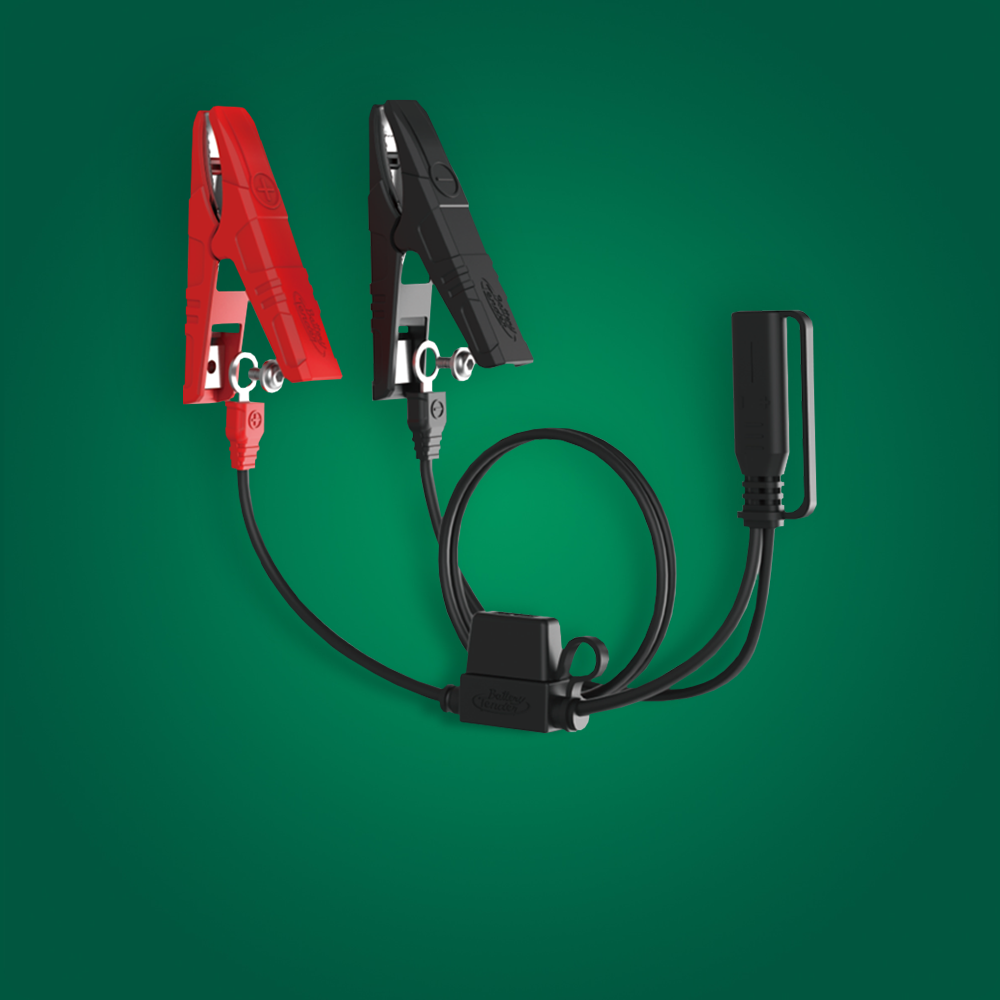
Battery Tender PowerPlus 36V E-Z-GO Crow Foot Plug: Connector Match
Carts built with a 2-prong angled crow foot receptacle need a matching DC plug, or the charger will not connect. This accessory cable carries that plug style. Check your cart's receptacle shape first, since E-Z-GO and other brands use several connector types.
Battery Tender PowerPlus 36V E-Z-GO Crow Foot Plug
Where Battery Tender eCharge Fits: Not a Substitute
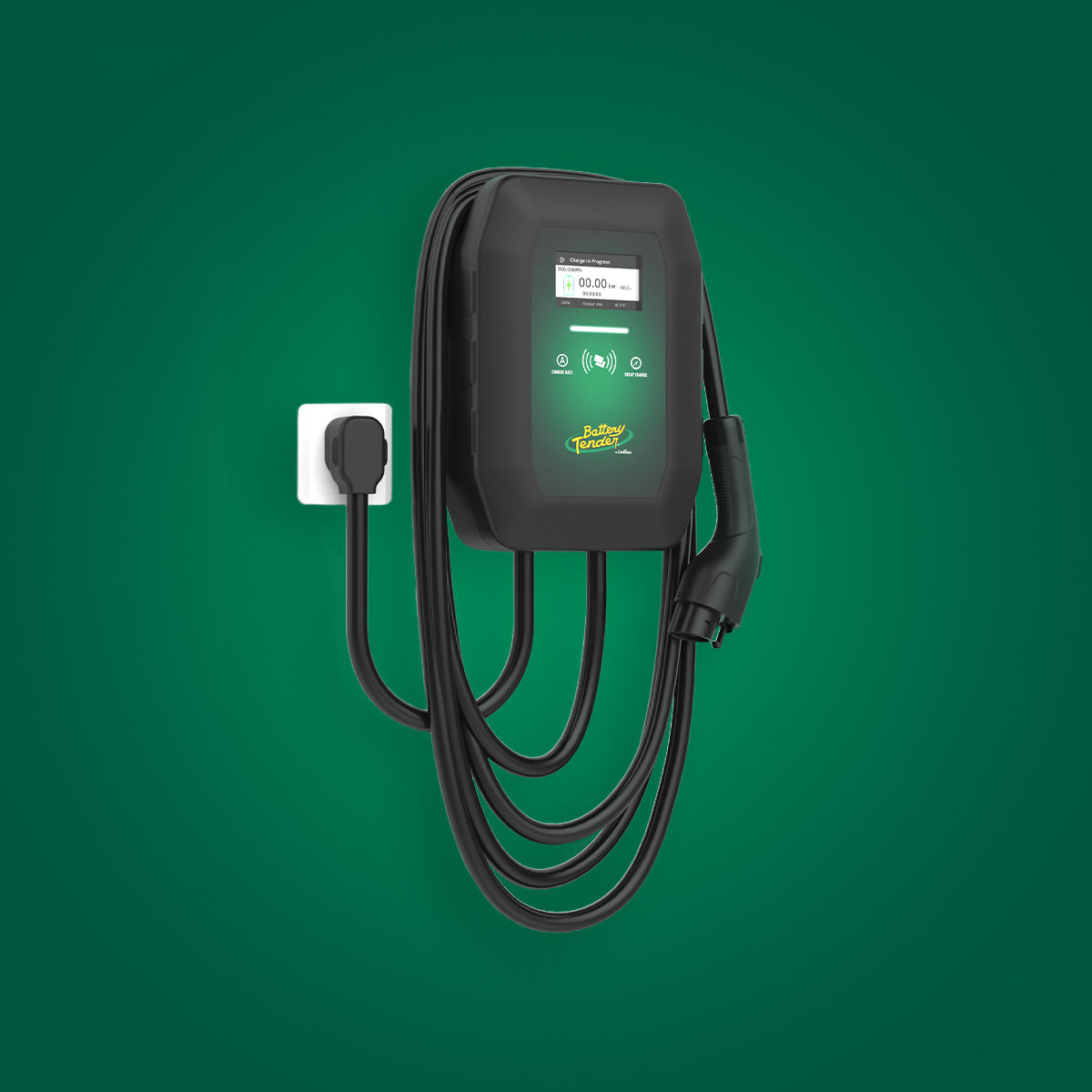
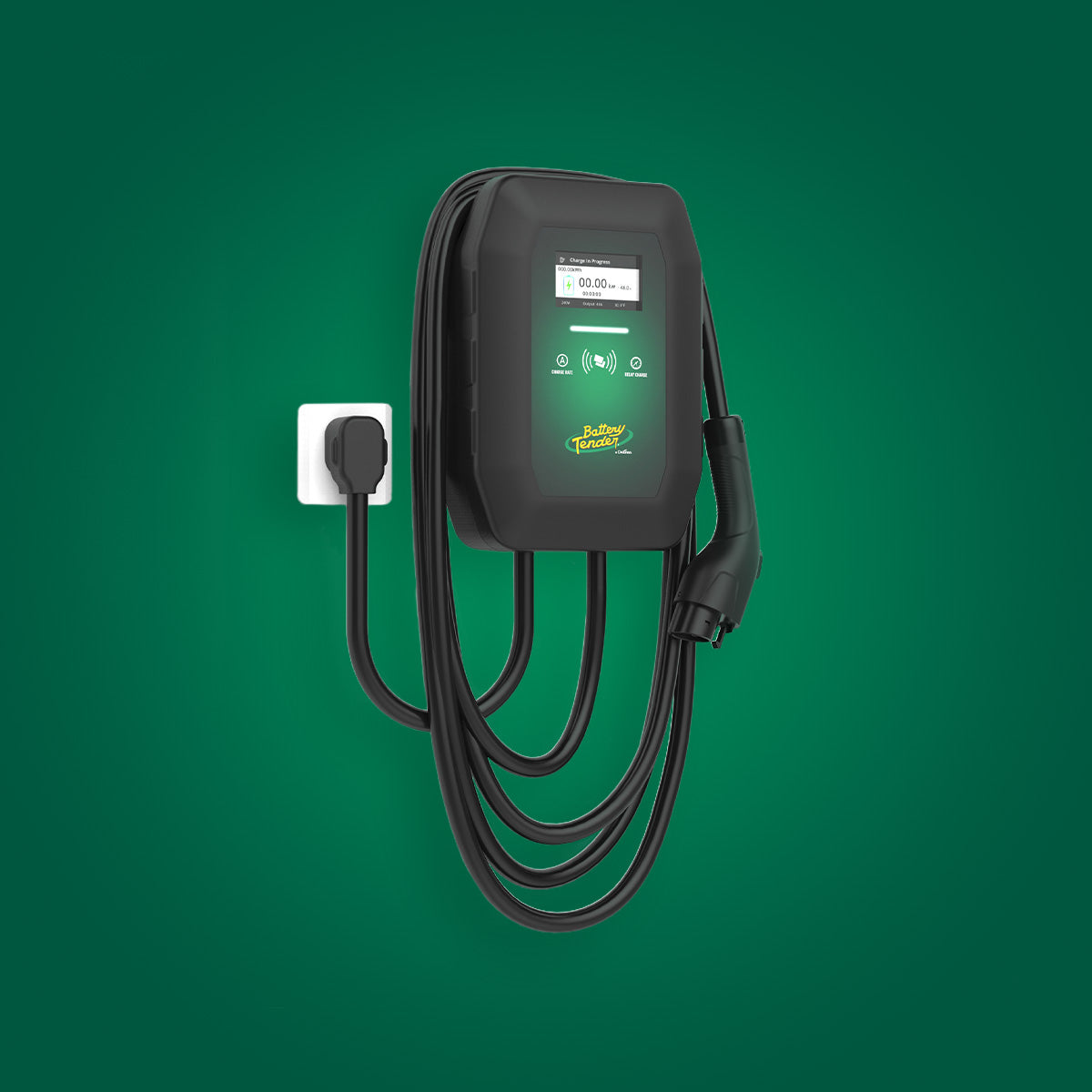
An EV charger and a 36 volt charger do different jobs. A Battery Tender eCharge unit supplies AC power to the onboard charger in a car, which converts it to DC. A 36 volt charger sends controlled DC directly into the pack. Do not plug an electric car cable into a cart or try to charge a cart from an EV station.
Garages that hold both a cart and an electric car often need both. The Battery Tender eCharge 16 Amp Level 1 unit uses a standard 120V outlet and suits overnight charging at home. For a deeper look, read the Level 1 Charger Guide: 120V EV Charging Explained (2026).
Battery Tender eCharge 16 Amp Level 1 EV Charger
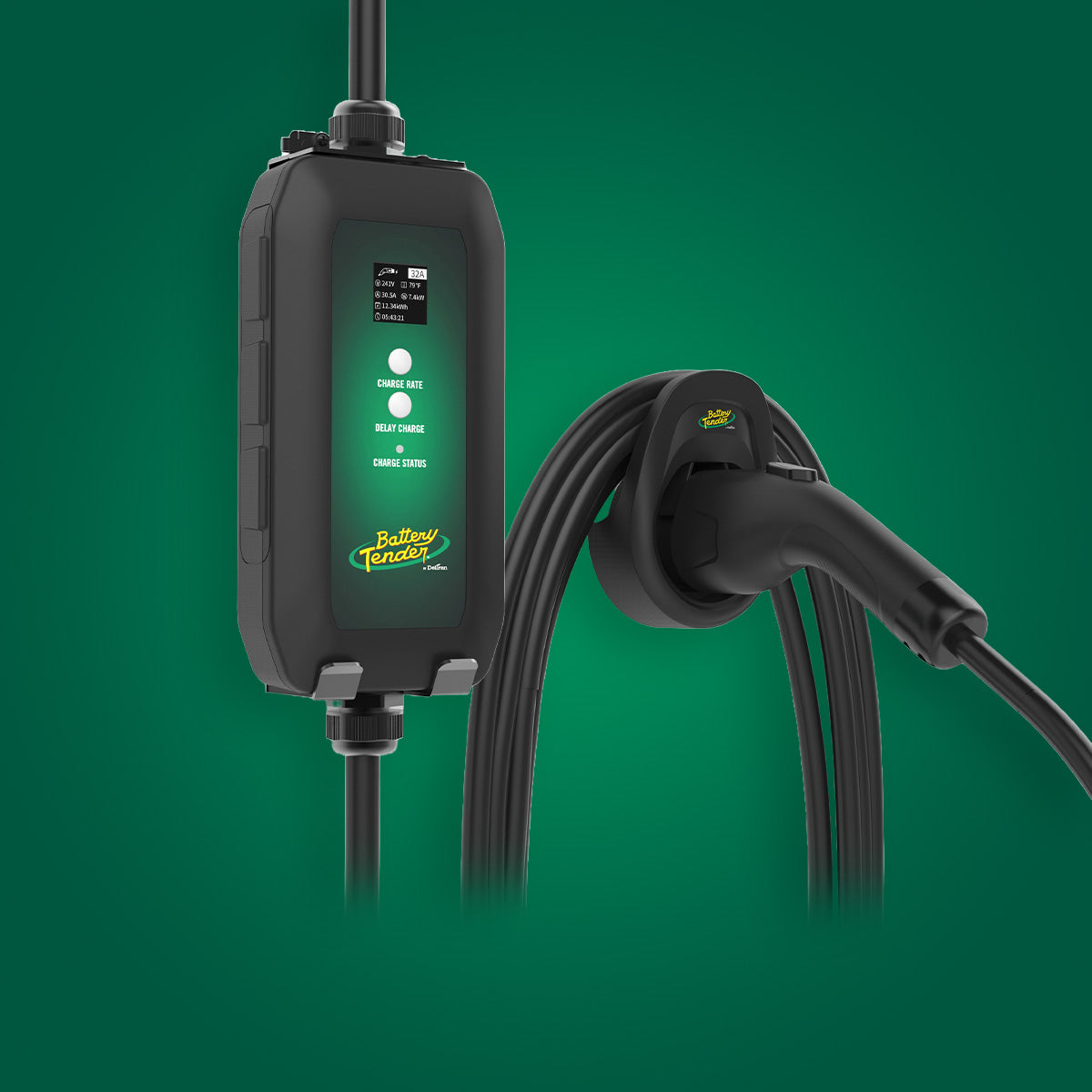
The Battery Tender eCharge 32 Amp Level 1+2 unit runs on 120V or 240V, so it suits households that plan to upgrade the outlet later. It is also sold at Costco.com.
Battery Tender eCharge 32 Amp Level 1+2 EV Charger
How to Connect a 36 Volt Charger
- Park the vehicle on a flat, ventilated surface and switch it off.
- Confirm the AC cord is unplugged from the wall.
- Insert the DC plug fully into the cart receptacle or connect the ring terminals to the pack's main terminals.
- Plug the AC cord into a grounded outlet.
- Check the charger indicators to confirm it has started, then leave it connected.
- To disconnect, unplug the AC cord first, then remove the DC plug.
Frequently Asked Questions
What voltage should a 36 volt charger put out?
A 36 volt charger is built for a 36V nominal pack and automatically sets its own charging voltage. For flooded lead-acid, the Absorption stage typically runs around 42–44V, with a lower maintenance voltage afterward. Choose the charger by pack voltage, and never use a 48V or 24V unit on a 36V pack.
Can I use a 12V charger on one battery in a 36V pack?
A 12V charger can charge a single 12V battery if it is disconnected from the series string. Charging individual batteries leaves them at different states of charge, which strains the pack. Charging the whole string with a 36V charger keeps the batteries working as one matched set and is the safer routine.
How long does a 36 volt charger take to charge a golf cart pack?
A 225Ah pack discharged to 50% removes 112.5Ah. Dividing by 18A gives 6.25 hours, and charging losses add about 15%. Expect roughly 7 hours. A pack discharged to 80% needs about 11.5 hours, so plan a full overnight cycle after heavy use.
Is it safe to leave a 36 volt charger connected all winter?
Yes, if the charger uses a smart maintenance stage. Infinite Sequential Monitoring (ISM) sends current only when voltage drops, so a full pack is not overcharged. A constant-current charger cannot do this and will boil electrolyte or heat batteries if left connected. Check flooded water levels monthly during long storage.
Is a 36 volt charger the same as an EV charger?
No. An EV charger such as a Battery Tender eCharge unit supplies AC power to a car's onboard charger, which converts it to DC. A 36 volt charger converts AC to DC itself and sends it straight to the pack. The connectors and voltages differ, so the two are not interchangeable.
Conclusion
Choosing a 36 volt charger comes down to three checks: measure the pack voltage, confirm the chemistry and Ah rating, and match the plug to the cart. Run the charging time math before buying, and choose smart ISM charging over constant-current units to protect every battery in the string. Your next step is to measure your pack and note the Ah rating of each battery. Then browse the Battery Tender battery charger collection to confirm the match.