



Battery Chargers for Automotive Use: Beat Parasitic Drain (2026)
The right battery chargers for automotive use match the battery's voltage and offset the vehicle's constant electrical drain, then hold the battery at full charge without overcharging it. A Battery Tender® smart maintainer does this automatically with four-stage charging, so a car that sits for weeks stays ready to start.
Most battery advice focuses on age or weather. Modern vehicles have a quieter problem. Alarms, keyless entry, and control modules pull current around the clock, even with the key out. This guide explains how that drain works, how Infinite Sequential Monitoring (ISM) counters it, and how to size a charger for your vehicle. Last updated: 2026.
Key Takeaways
- A parked car with a 50 milliamp (mA) drain removes about 1.2 amp-hours (Ah) per day, or roughly 36 Ah over 30 days.
- A resting battery at 12.4V is only about 75% charged, and sulfation starts when batteries sit below full charge.
- Match charger voltage first (6V, 8V, or 12V), then amps to battery size.
- A four-stage ISM maintainer is safe to leave connected indefinitely. Conventional constant-current trickle chargers are not.
- Pair a maintainer with a jump starter so a dead battery never strands the vehicle.
What Are Battery Chargers for Automotive Use Really Fighting?
They fight parasitic drain and self-discharge, which together empty a parked battery faster than most owners expect. Even a healthy lead-acid battery loses a few percent of its charge each month, and heat speeds that up.
Parasitic drain adds to that loss. Once a vehicle's modules go to sleep, a typical draw runs around 20 to 50 mA, and heavily equipped vehicles can draw more. At 50 mA, the math is simple: 0.05 A × 24 hours = 1.2 Ah per day. Over a 30-day storage period, that is about 36 Ah. That is more than 70% of a typical 50 Ah battery's capacity, so a month of sitting can leave it unable to start the engine.
Voltage gives a quick health check. A resting 12V battery reads about 12.6V or higher when full. At 12.4V it holds roughly 75% charge, and near 12.0V it is close to 25%. Lead sulfate crystals harden when a battery stays in those low states, which permanently reduces capacity.
Trade-offs worth knowing
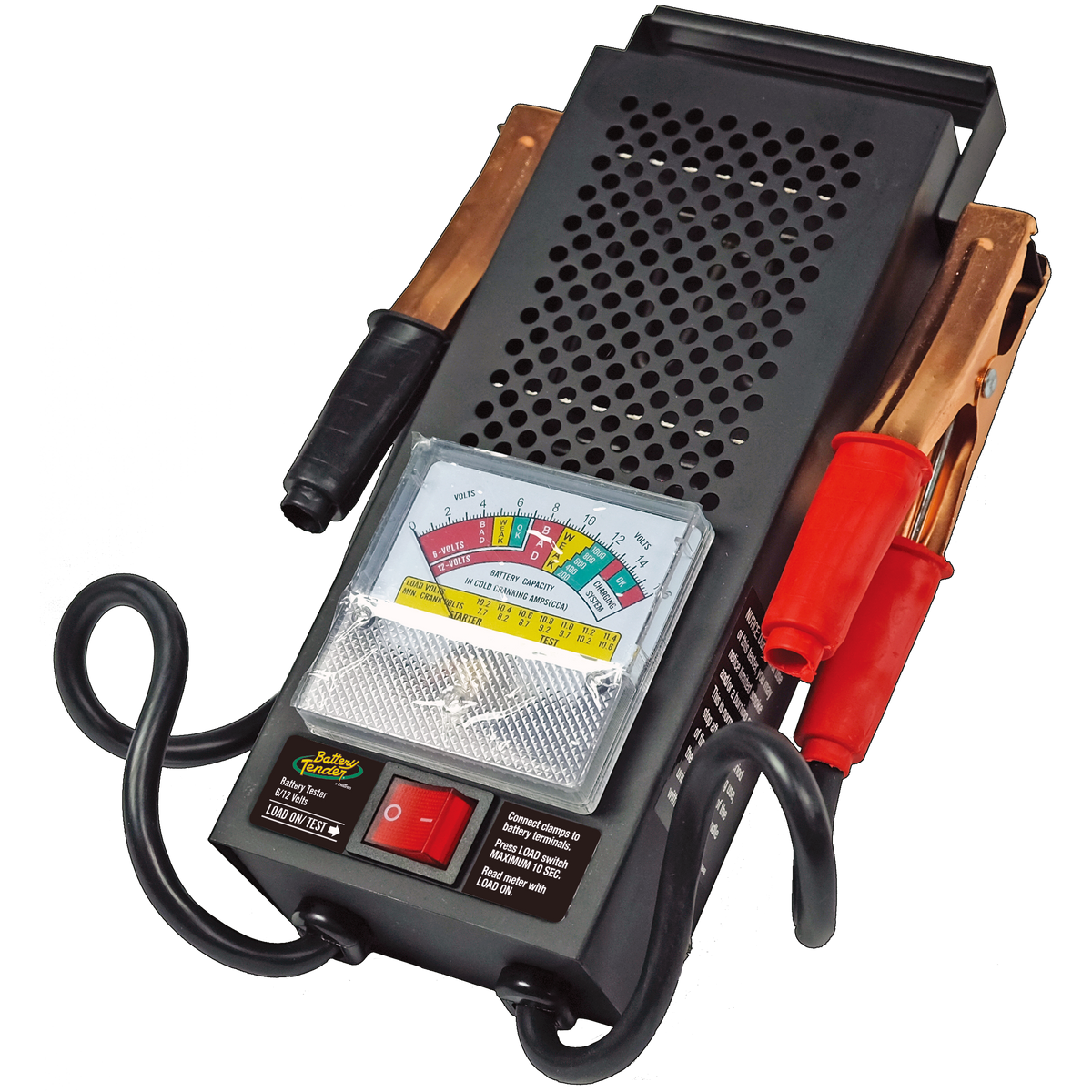
A maintainer cannot revive a battery with shorted cells or one that is several years past its service life. It also cannot fix a drain above a few hundred milliamps, which points to a wiring or module fault. If the battery voltage keeps falling while a charger is connected, test the battery and check the circuit before blaming the charger.
How Does Infinite Sequential Monitoring Handle Automotive Battery Drain?
Infinite Sequential Monitoring (ISM) is the four-stage process in Battery Tender chargers, and it adjusts output to the battery's actual condition instead of pushing a fixed current. The four stages work in order:
- Initialization: the charger tests the battery and applies gentle current to determine its condition.
- Bulk Charge: constant current at the charger's full rated output brings the battery to about 80% state of charge.
- Absorption: voltage holds constant while current tapers, which completes the charge and helps dissolve sulfate crystals.
- Float Maintenance: the charger delivers pulses only when voltage drops, which covers parasitic drain without overcharging.
Other charger types behave differently. A float charger applies only constant voltage, so it skips the Absorption stage and recovers a battery more slowly. A conventional trickle charger delivers constant current whether the battery needs it or not, which risks overcharging over weeks. Our guide to why smart maintainers win over a car trickle charger covers that comparison in detail.
Temperature matters too. Battery Tender Plus chargers include temperature compensation, which adjusts charge voltage for a cold or hot garage. The article on temperature compensation battery chargers for cold climate charging explains why that matters below freezing. Keeping a battery from sitting discharged also helps it last five or more years instead of the typical two to three.
Which Battery Chargers for Automotive Batteries Fit Your Vehicle?
Voltage decides the first cut, and battery capacity decides the amp rating. Use the table below as a starting point.
| Vehicle scenario | Battery | Charger fit |
|---|---|---|
| Pre-1956 classic car | 6V, up to 80Ah | Battery Tender Plus 6V (1.25A) |
| Antique car with 8V system | 8V, 14–80Ah | Battery Tender Plus 8V (1.25A) |
| Daily driver, mostly short trips | 12V, 40–70Ah | Battery Tender Charge N Start 1120 (1A charger plus jump start) |
| Multi-car collection or small fleet | 6V/12V, several vehicles | Battery Tender Power Tender 10-Bank (4A selectable) |
Specialty voltages: 6V and 8V
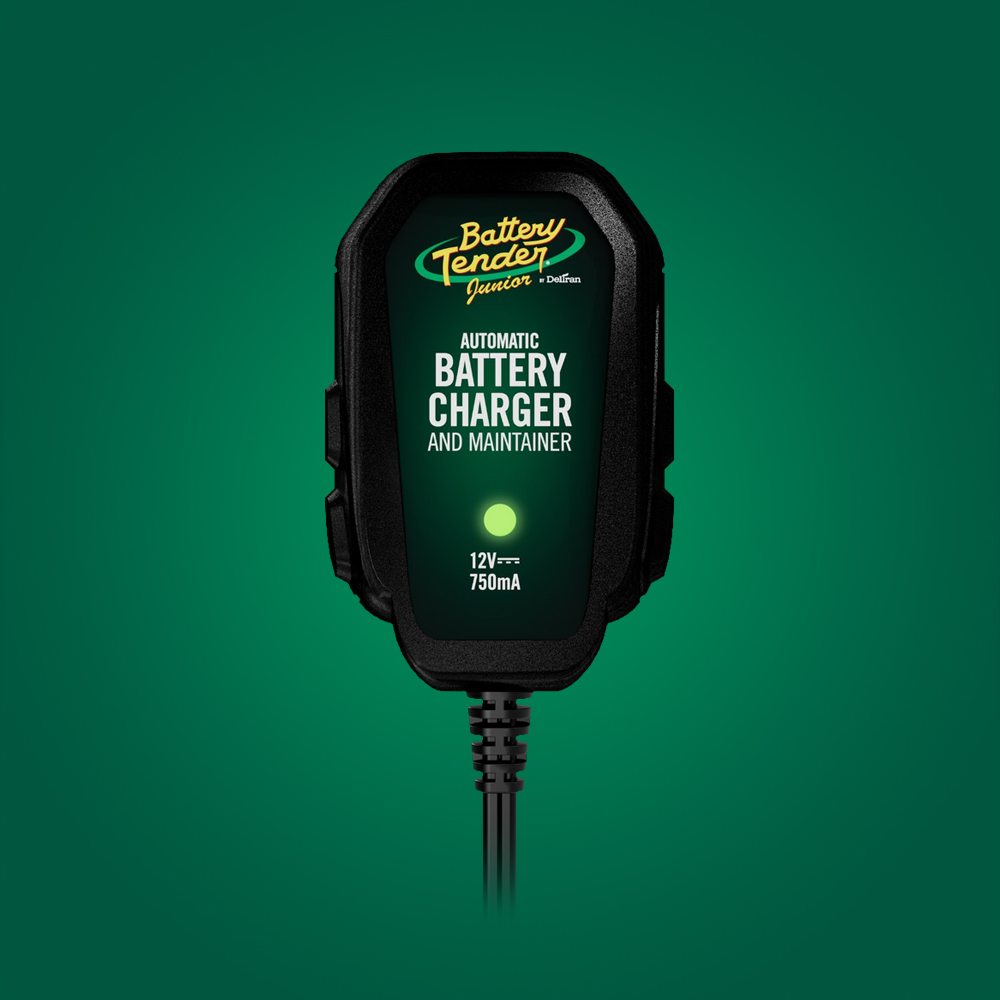
Many classic owners assume they must hunt down a rare charger. They do not. Charging a 6V battery with a 12V unit risks damage, so voltage must match exactly. The Battery Tender Plus 6V charger suits pre-1956 American cars, vintage British cars, and older tractors, with a rating that covers batteries from 14 to 80Ah. At 1.25 amps, it also stays gentle enough for months of connection.
Battery Tender Plus 1.25 AMP 6V Battery Charger and Maintainer
Some antique vehicles from the early automotive era used 8V systems. Those owners rarely find a matching charger on a store shelf. The Battery Tender Plus 8V charger fills that gap, with the same four-stage ISM process and temperature compensation as its 6V sibling.
Battery Tender Plus 1.25 AMP 8V Battery Charger and Maintainer
The 12V daily driver
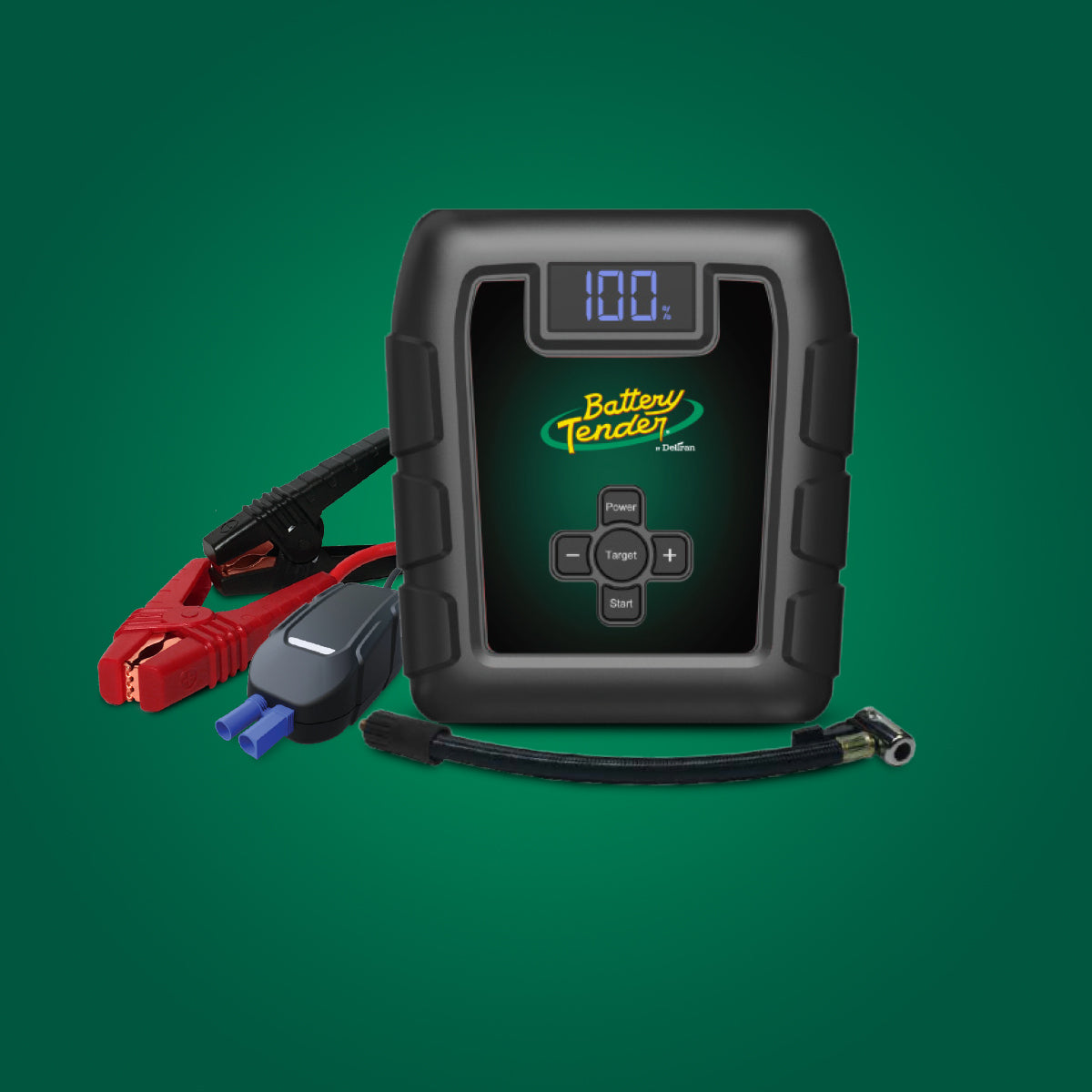
A daily driver on short trips never fully recharges, because a 10-minute drive rarely replaces the energy used to start the engine. A Battery Tender Charge N Start 1120 covers that driver in one unit. Its 1A charger section maintains 12V batteries (standard, AGM, GEL, and lithium), and its internal lithium-ion pack delivers a 1,200A jump start for engines up to 6.0L gas or 4.0L diesel.
Battery Tender Charge N Start 1120 — 1 Amp Battery Charger & 1200 Amp Jump Starter
Collections and fleets
Owners with several vehicles save space and cords with a multi-bank charger. Each bank in the Battery Tender Power Tender 10-Bank runs its own ISM cycle, so a nearly full battery on one bank never affects a deeply discharged battery on another. The 6V/12V selectable output lets a 6V classic sit next to a 12V sedan on the same unit.
Battery Tender Power Tender 10-Bank 4 Amp 12V/6V Battery Charger and Maintainer
Charging time math
Use this formula: (battery Ah × depth of discharge) ÷ charger amps = approximate hours. For a 50Ah battery at 50% discharge on a 1.25A charger: (50 × 0.5) ÷ 1.25 = 20 hours. Add a few hours for the Absorption stage. A 70Ah battery at 50% takes (70 × 0.5) ÷ 1.25 = 28 hours. At 1.25A, a 50 mA vehicle drain uses only 4% of the output, which leaves plenty of margin.
How Do You Connect Battery Chargers for Automotive Use Step by Step?
Connect the charger to the battery before plugging into the wall, and follow the same order in reverse to disconnect. This prevents sparks near the battery.
- Park and shut off. Turn off the ignition, lights, and accessories. Work in a ventilated space.
- Check the voltage. Confirm the battery is 6V, 8V, or 12V and select the matching charger.
- Inspect the battery. Look for cracks, bulging, or leaking electrolyte. Do not charge a damaged battery.
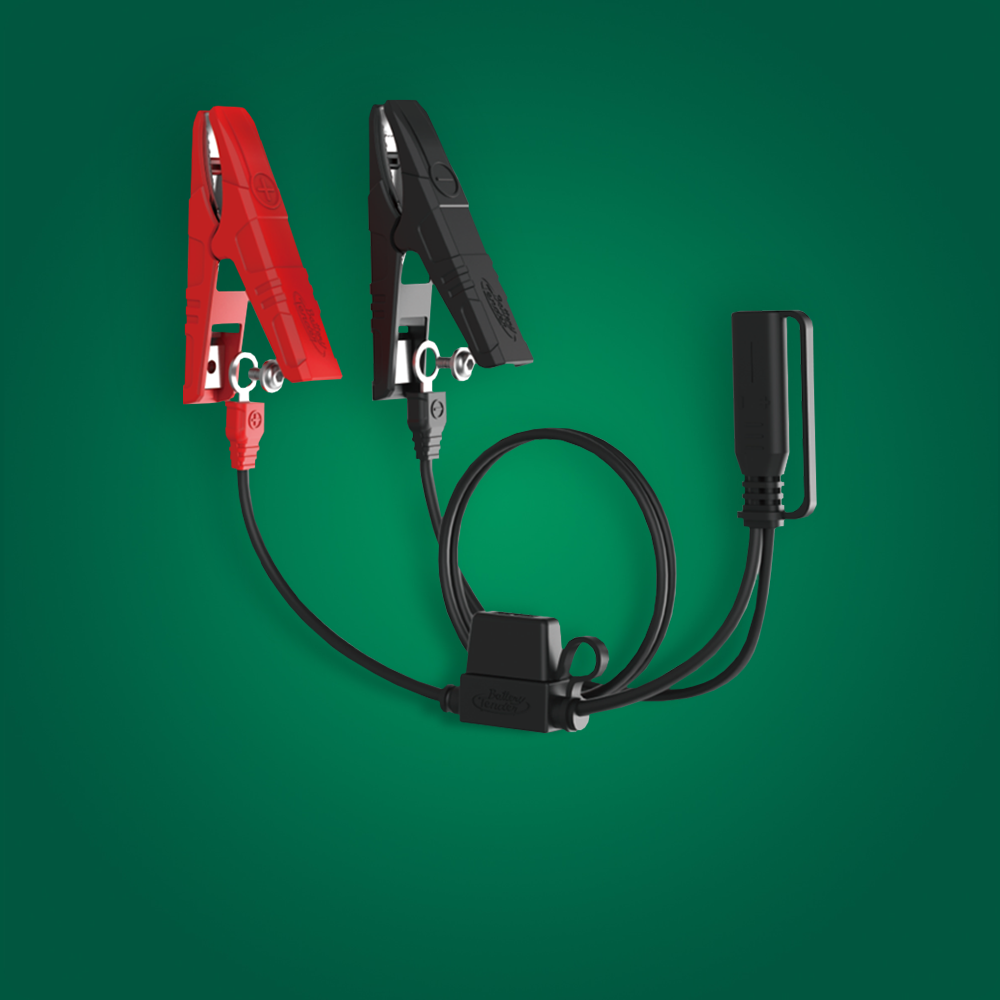
- Connect the leads. Attach the red clamp to the positive terminal and the black clamp to the negative terminal or a clean chassis ground. A permanent ring terminal harness keeps the connection ready for the next season.
- Plug in. Plug the charger into a grounded outlet and confirm the indicator shows charging.
- Verify. After 24 hours, check that the charger shows maintenance mode and measure resting voltage at 12.6V or above on a 12V battery.
- Disconnect safely. Unplug from the wall first, then remove the clamps, negative first.
Never charge a frozen battery or one that hisses or smells of sulfur. Flooded batteries release hydrogen gas, so keep sparks and flames away.
What Accessories and Backup Do You Need With Automotive Battery Chargers?
A short cord is the most common reason a maintainer ends up unused. Garage outlets are rarely beside the battery, and a hood-up cable stretched across a floor becomes a trip hazard. Each cable in the set below runs 25 feet, so a charger can sit by the outlet while the lead reaches the battery.
A four-pack suits owners with several vehicles. Run one cable to each parking spot so the next connection takes seconds.
Battery Tender 25ft SAE Quick Disconnect Extension Cable 4-Pack
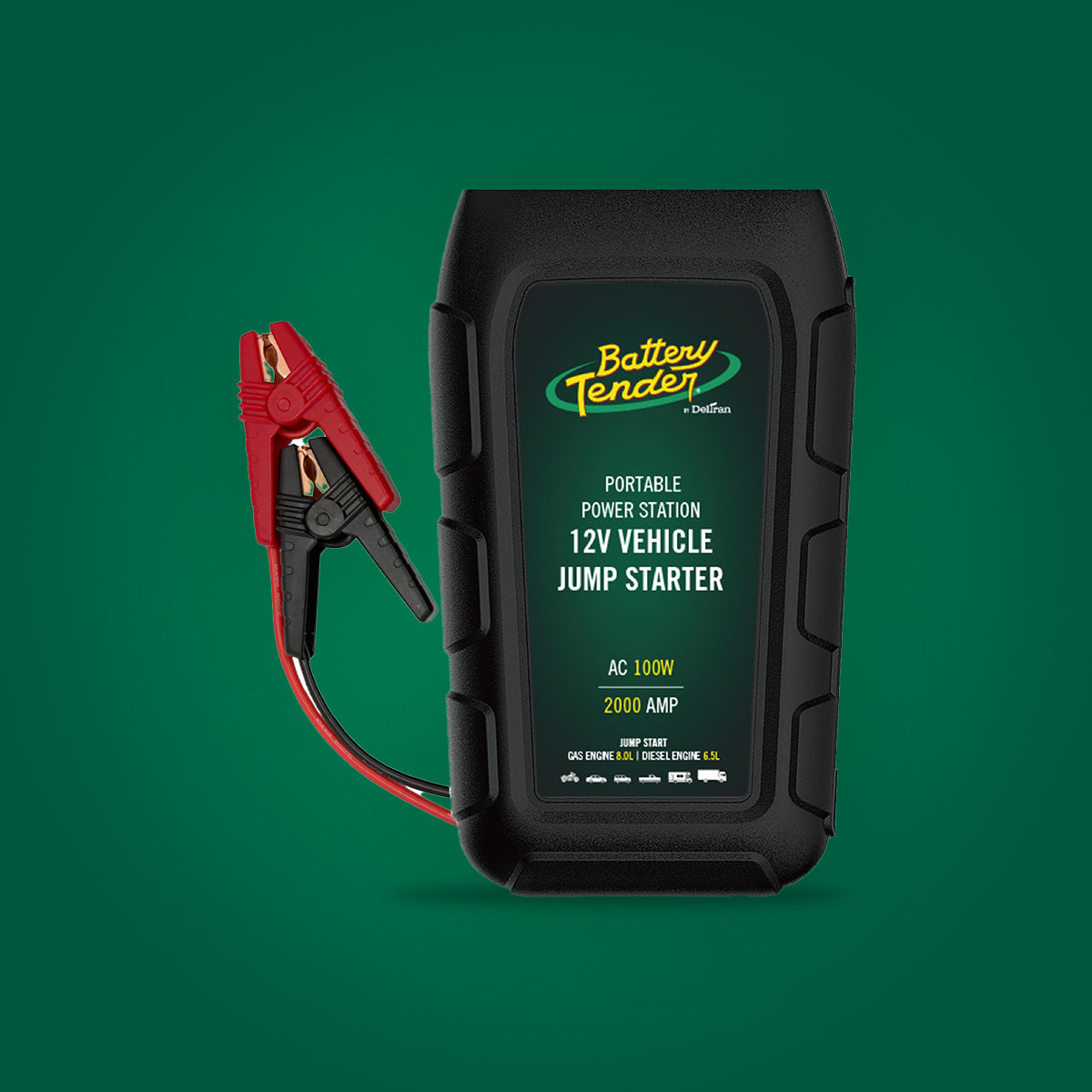
Backup matters as well. A maintainer prevents most dead-battery events, but it cannot help if the car sits unplugged for a week while traveling. A jump starter such as the Battery Tender Charge N Start 1120 covers that scenario. To compare more models, browse the full range of Battery Tender battery chargers.
Frequently Asked Questions
What size battery chargers for automotive batteries do most cars need?
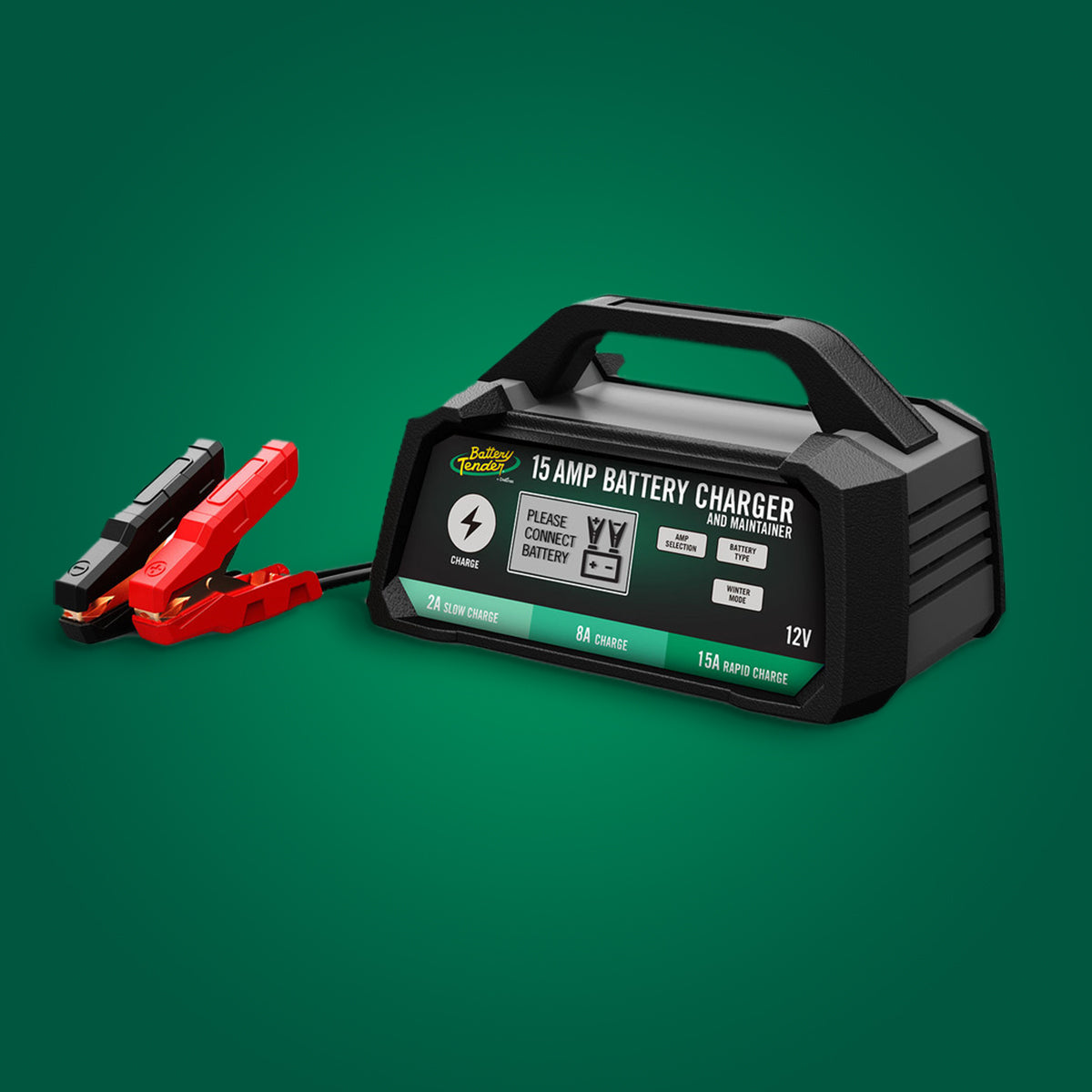
Most cars on a maintenance routine do well with a 1 to 1.25 amp charger. That output covers parasitic drain of 20 to 50 mA with a large margin and is gentle on batteries from 14 to 80Ah. Larger chargers of 4 to 10 amps recover deeply discharged batteries faster but are not required for maintenance.
Can I leave an automotive battery charger connected all winter?
Yes, if it uses four-stage ISM charging. The Float Maintenance stage only delivers current when voltage drops, so the battery cannot overcharge during months of connection. A conventional trickle charger lacks this control and can overcharge a battery. Always confirm the charger is a smart maintainer before leaving it connected.
How do I know if my car has a parasitic drain problem?
Watch for a battery that is healthy at purchase but dead after one to two weeks of sitting. A multimeter on the 200 mA range, placed in series with the negative cable, shows the draw. A reading above about 50 mA after the modules sleep (usually 15 to 45 minutes) suggests a fault worth tracing.
Do I need a different charger for AGM or lithium car batteries?
AGM and standard lead-acid batteries need chargers with matching charge profiles, and lithium batteries need chargers that support lithium chemistry. Many modern Battery Tender models offer selectable chemistry. Check the product page for chemistry support before connecting, because charging the wrong chemistry shortens battery life or creates safety risks.
How long does it take to charge a 12V car battery at 1.25 amps?
A 50Ah battery at 50% discharge takes about 20 hours: (50 × 0.5) ÷ 1.25 = 20. Add a few hours for the Absorption stage. A 70Ah battery at the same discharge needs about 28 hours. Deeply discharged batteries need longer, so plan overnight charging or a weekend connection.
Conclusion
Choosing battery chargers for automotive use starts with two facts: the battery's voltage and the vehicle's constant drain. Match voltage first, then pick an output that covers drain with margin, and favor a four-stage ISM maintainer that can stay connected for months. Add a long extension cable for easy access and a jump starter for emergencies.
Next step: measure your battery's resting voltage today, note its voltage and amp-hour rating, and compare it to the table above. Then browse the Battery Tender battery charger collection to find the unit that fits your vehicle.